Table of Contents
What is Artificial intelligence?
Introduction
1.1 What is Artificial Intelligence?
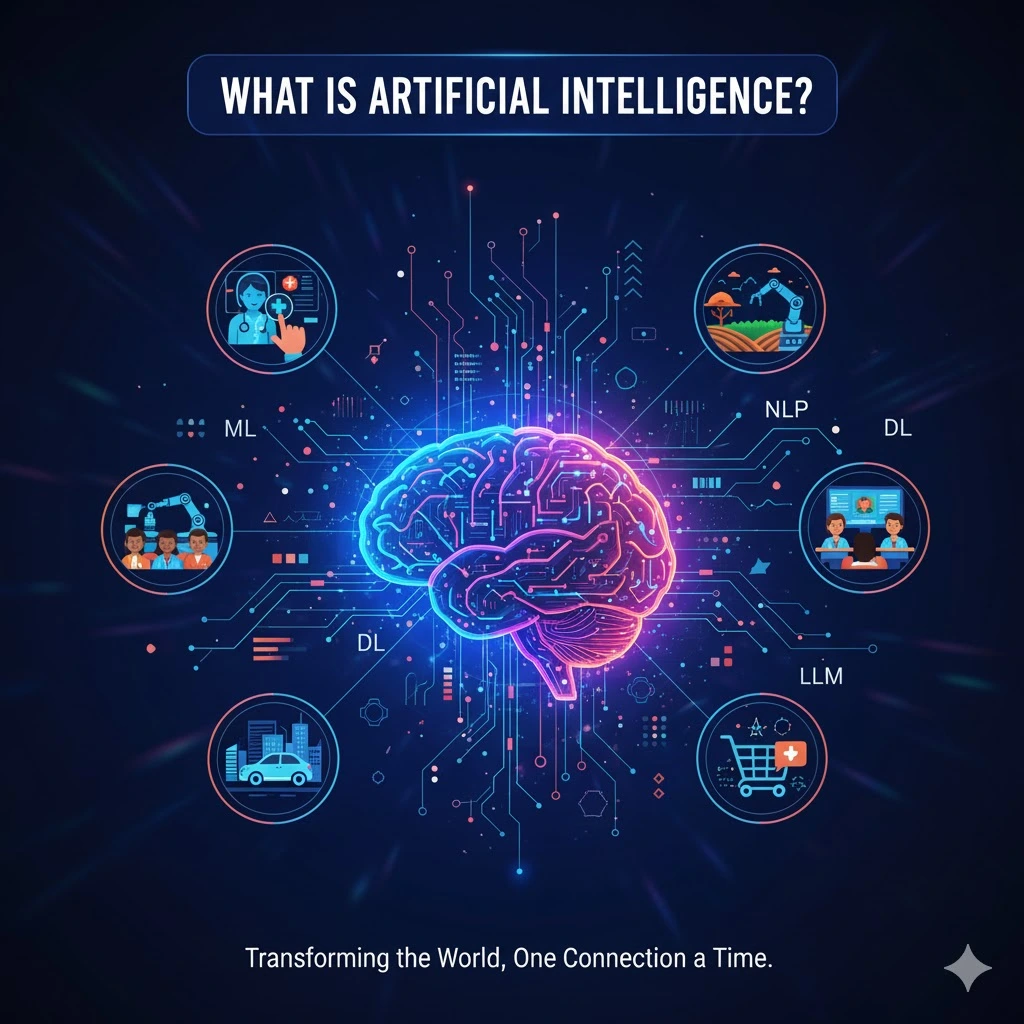
Should you request Siri to remind you about something or you have left Netflix to suggest you your next show, you have encountered What is artificial intelligence. In the simplest form, it can be a situation where machines are programmed to perform tasks that would otherwise have taken what could be referred to as thought or at least human intellect, on the ability to recognize patterns, predict or even solving problems.
1.2 Why does AI feel so perplexing?
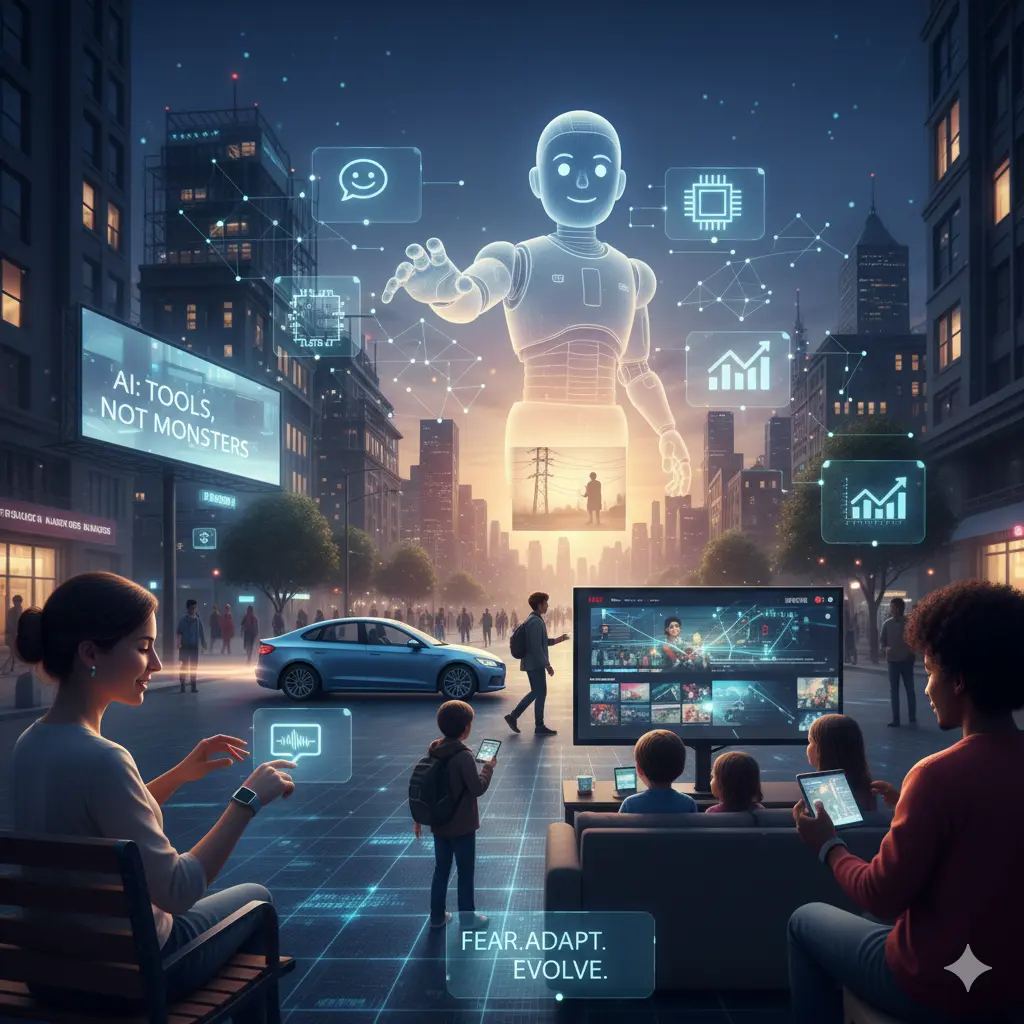
Is intimidating only to the extent that it has so many masks. One day it is a chat robot that allows you to purchase more and the other day it is a self-driven car. Add in frightening news headlines about robots replacing people in jobs and it is no wonder people are unnerved. However, the truth is that AI is not a single monster in itself, it is a collection of tools. It scares us initially, like electricity scares us; we become in love with it only somewhat later, and the same time start fearing that we cannot live without it. This is why, people frequently pose such kinds of question as what is artificial intelligence in order to comprehend its potential and risks.
How AI Works
2.1 Examples You Already Use Everyday
- Google Maps
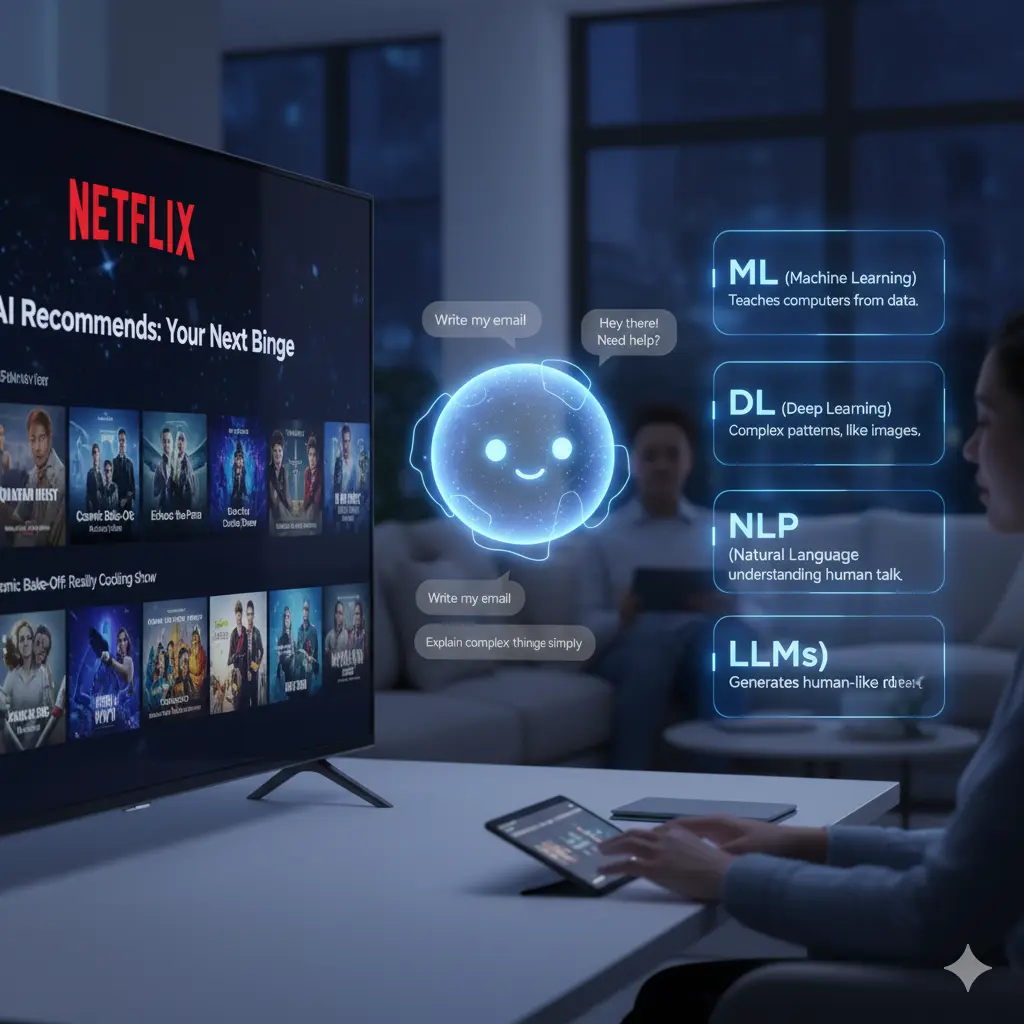
- Netflix
- ChatGPT: Chat with this bot, write your email and say complex things in plain English.
2.2 Breaking Down the Jargon
The scary acronyms? Let’s simplify:
- ML (Machine Learning)
- DL (Deep Learning)
- NLP
- LLMs
Today: How Far Are We Really? Industry Use Cases & Strategy (2024–2025)
3.1 Growth & Startup Investments
industry is set to touch $300+ billion in the global market value by 2025, and India being a melting pot of innovation. Just last year, Indian startups raised $1.2 billion in funding, catching swell opportunities in fintech, healthtech and edtech. Consider it the digital gold rush, with data as its currency.
The market of the industry is poised to reach a global market worth in excess of 300+ billion by 2025 and India is a melting pot of innovation. Indian startups alone have secured funding of $1.2 billion just last year, which is swelling in fintech, healthtech as well as edtech. Anything that is what Is Artificial Intelligence is fueling this fast expansion and changing the startup ecosystem, and this is what we should refer to as the digital gold rush, where data is the currency.
3.2 Jobs: Created vs. Replaced
Yes, it replaces monotonous work with robotics, but there is also the other aspect of the coin: the roles are also being created. Fields like ethics, timely engineering, data labeling and AI-based marketing are expanding remarkably rapidly. In fact, according to a collection of studies in the industry, artificial intelligence will create more than it will kill, just as computers did in the decades after the 2000s.
3.3 Adoption in Companies
Over 80% of global businesses and close to 60% of Indian companies are already integrating what is artificial intelligence into their operations be it in customer service chatbots or supply-chain optimization, according to surveys. Once I can confirm, track and trace that on the internet with some sort of truth engine,” Nelson continued, “if your company is ignoring it the way businesses ignored the internet in 2000 they’re left behind.”
Types of Artificial intelligence Explained
4.1 The Classic Three
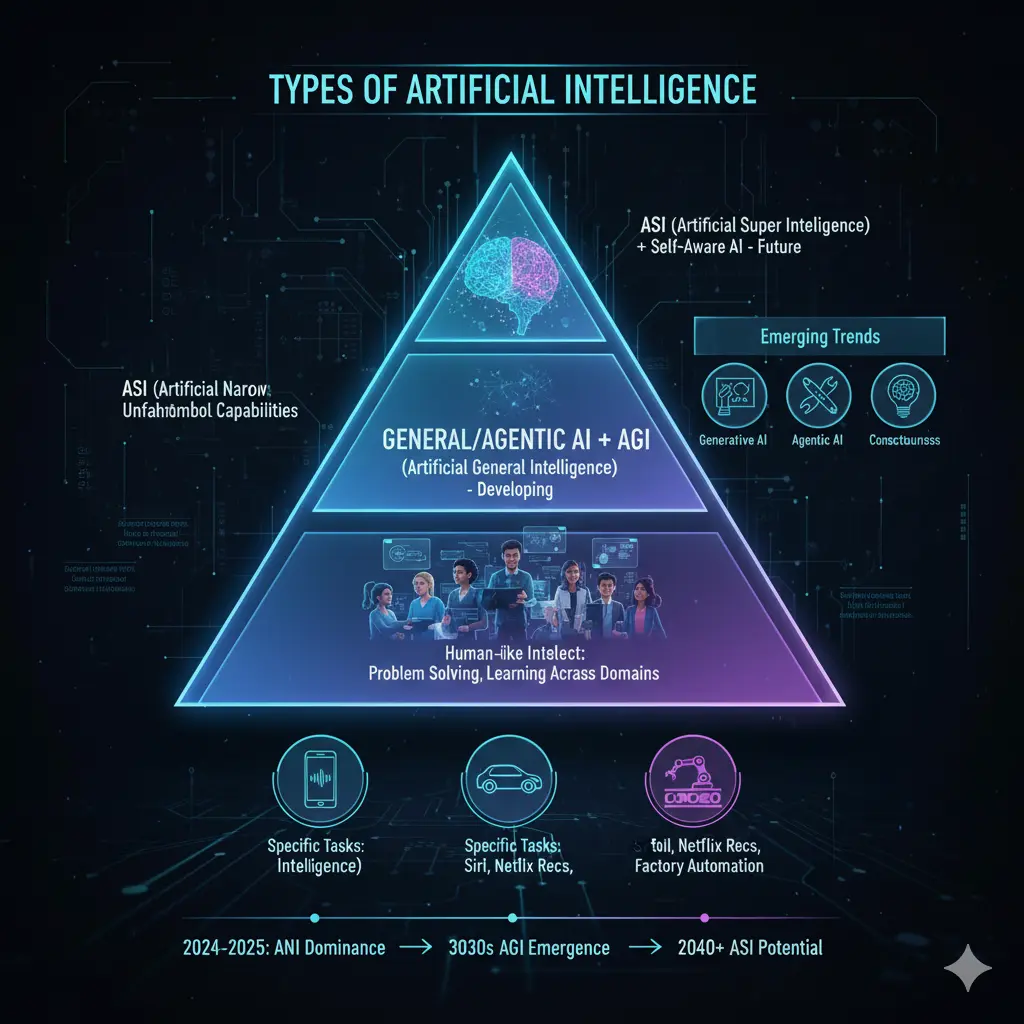
ANI , AGI , ASI
4.2 Emerging Trends
Generative / Agentic / Consciousness
4.3 Visual Snapshot
Picture an infographic pyramid:
- Base → ANI (today)
- Middle → General/Agentic Artificial intelligence + AGI (developing)
- Peak → ASI + Self-aware AIs (future).
The Beginner’s Guide
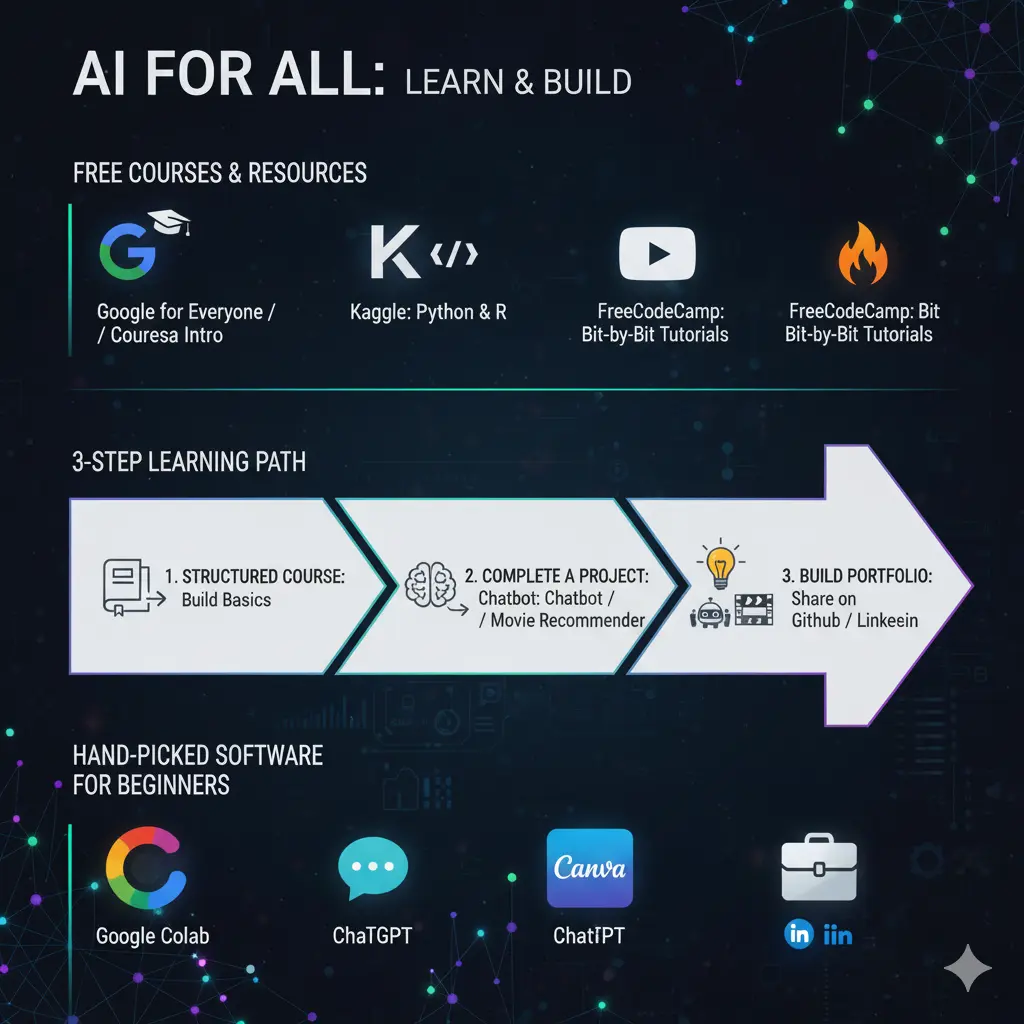
5.1 Free Courses and Resources
- Google for Everyone and Intro at Coursera are more beginner-oriented.
- Kaggle provides learning exercises in Python and R that you can work through right in the browser.
- YouTube channels such as FreeCodeCamp break down bit by bit.
- These should be easy enough to implement in classrooms and will provide learners with great tools to build on for themselves.
5.2 Learning Guidelines
Consider your path as 3-steps:
- 4 Take some sort of structured course (build basics).
- Complete a small project (chatbot or movie recommender).
- Portfolio (share projects on GitHub or LinkedIn).
5.3 Hand Picked Software for Beginners
- Google Colab
- ChatGPT
- Canva
AI In Everyday Life
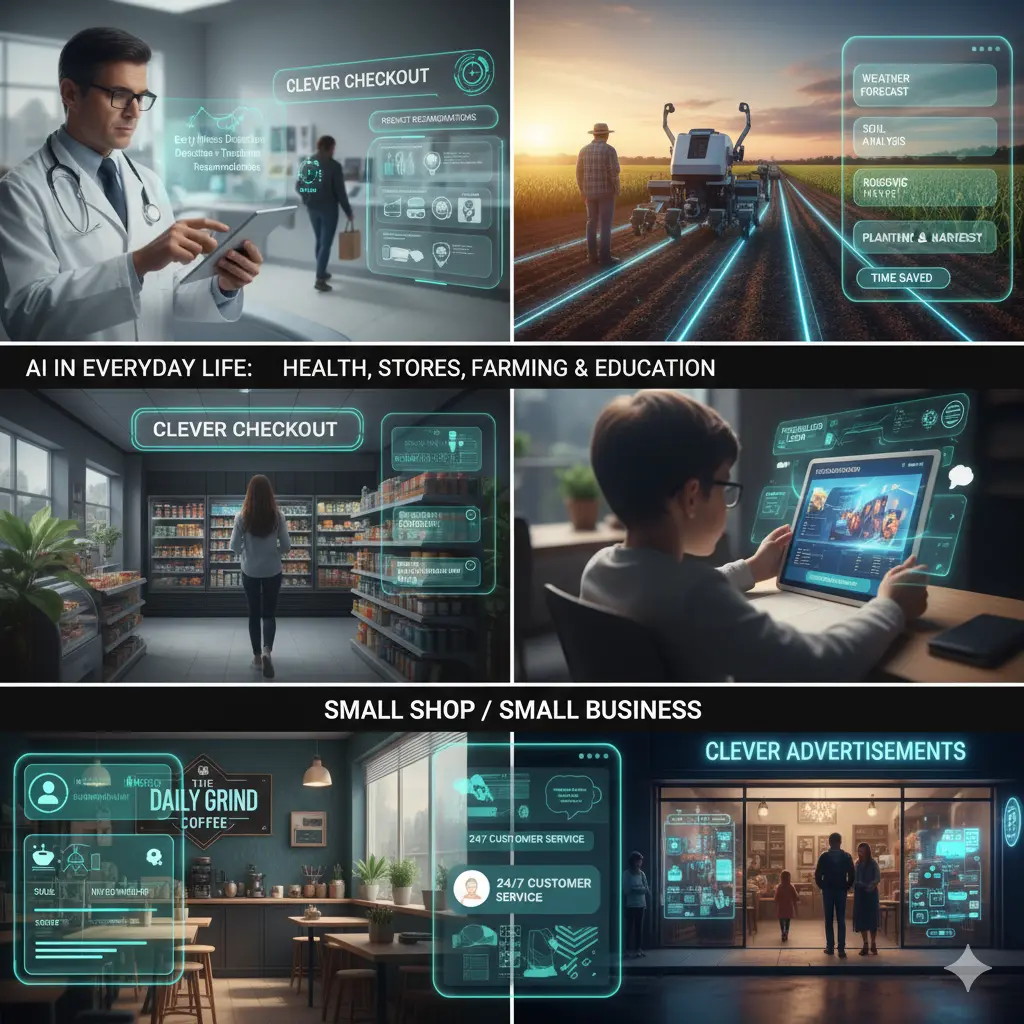
6.1 Applied to health, stores and farming, educational learning
- health first. used by doctors to identify illness early. It makes treatment recommendations and Quick.
- Next are stores. clever checkout. Not a long line. It’s almost unsettling when product recommendations appear.
- Are you farming? Significant. forecasts the weather. Examine the soil. Direct the planting and harvesting of robots. Time is saved by farmers.
- education as well. Lessons that are made just for you. Take your time learning.
6.2 Use case scenarios: small shop / small business
benefits small businesses, Really.
- Keep tabs on sales. Control inventory. It’s nearly magical to predict what will sell next.
- Chatbots respond to consumers around-the-clock. People are drawn in by clever advertisements.
Actionable Content: How to Safely Begin Working
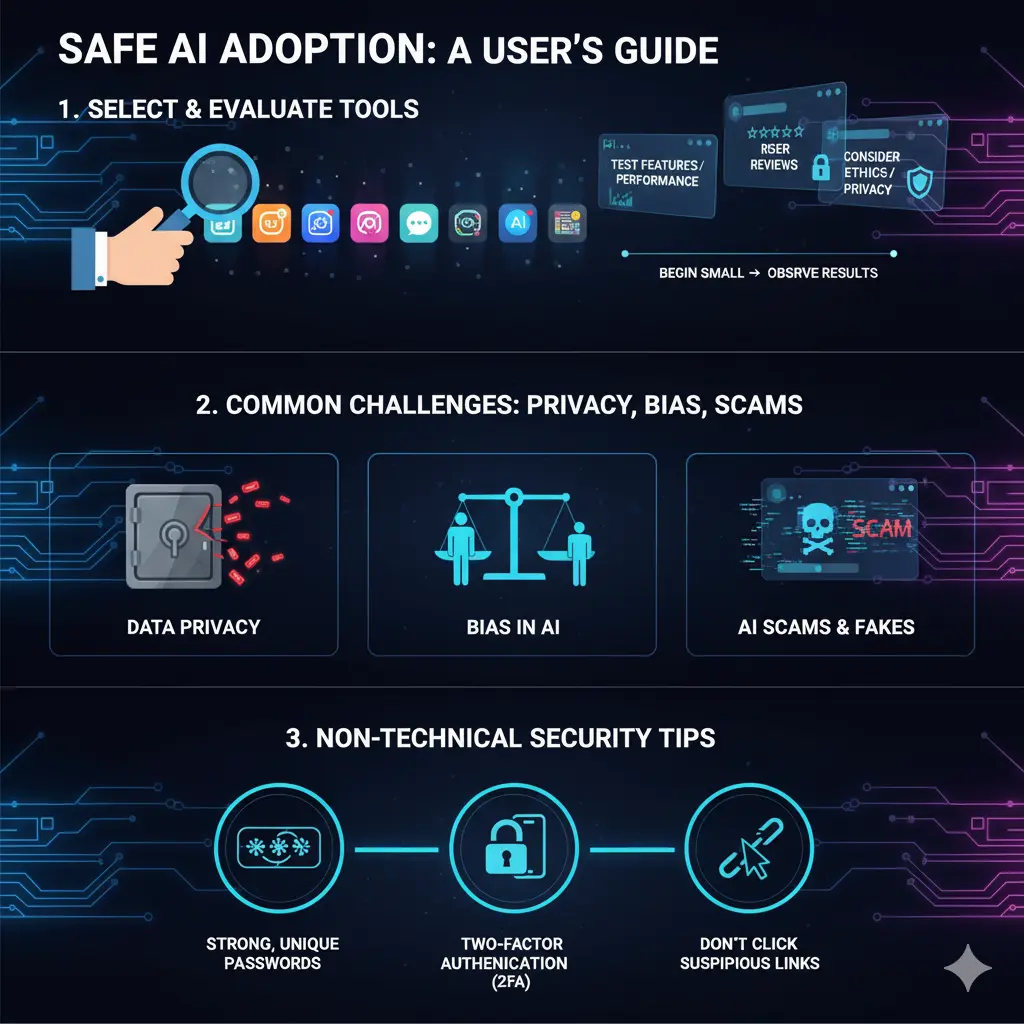
7.1 Select & / Judge Tools (products)
Test the features. Evaluate performance. Read reviews by users. Think about ethics. Data privacy is important. Begin modestly. Try it out. Observe the outcomes. Not all tools are suitable. Remember that before adopting any AI solution, it is always best to know What Is Artificial Intelligence and understand how it can be made to work within your workflow.
7.2 Common challenges: privacy, bias, scams
is not flawless. I mean it.Data leaks can make privacy difficult. Unfair outcomes arise when bias creeps in. There are scams that use phony tools and make false claims.
7.3 Non technical security tips
Use strong, unique passwords. Turn on two-factor authentication. Don’t click weird links.
Advantages (The Positive Perspective)
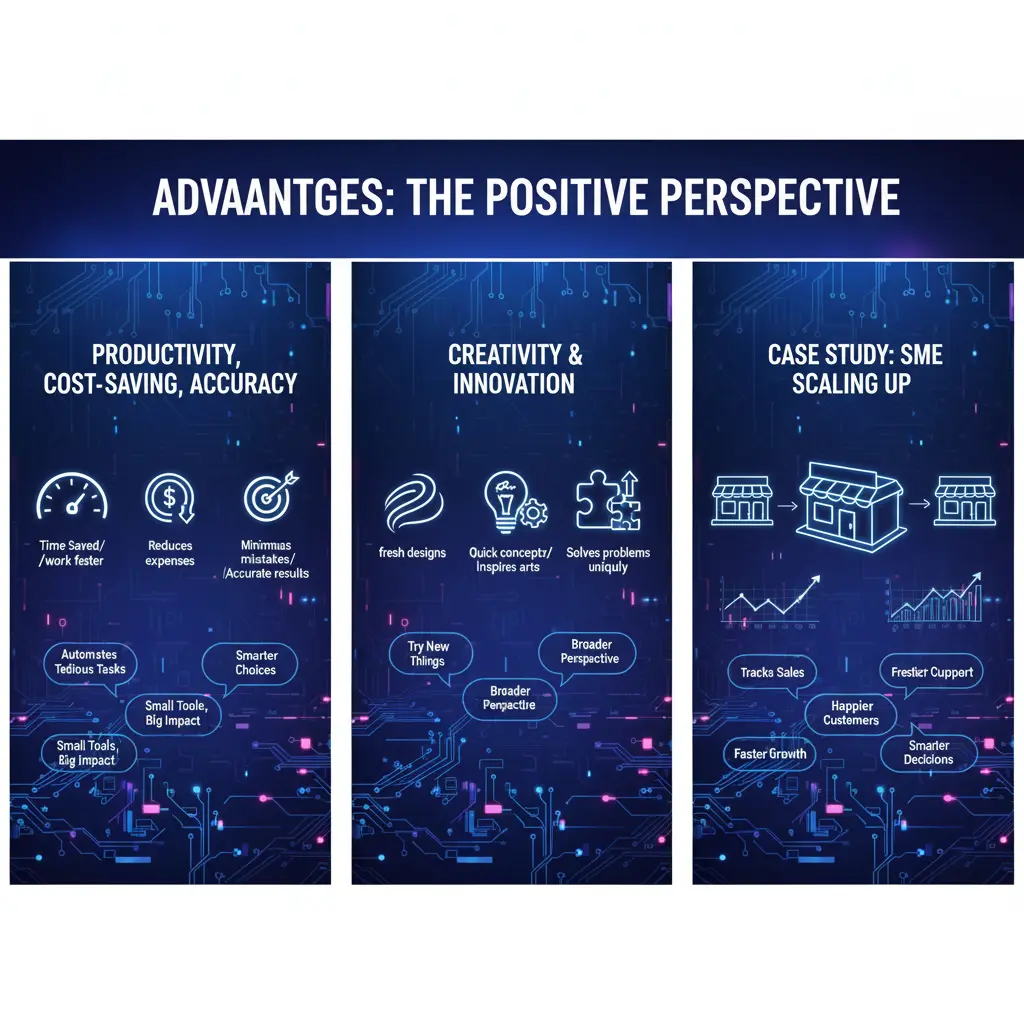
8.1 Productivity, cost-saving, accuracy
Saves time. Really. Reduces expenses. Minimizes mistakes. Automates tedious chores. Helps to make smarter decisions. Work more quickly. Spend less money. More accurate results. Tiny instruments. Significant effect. Easy. That is the strength of what is artificial intelligence when used wisely in the daily activities and business processes.
8.2 Creativity & innovation
Encourages innovation. Quick concepts. Fresh designs. Resolves issues in a unique way. Inspires science, business, and the arts. Feel free to try new things. Have a larger perspective. Work more efficiently. It’s a partner. Easy. Strong. That’s the true power of what is artificial intelligence when understood and applied correctly.
8.3 Case study: SME that uses for scaling Business Up
tracks sales. Predict demand. Automate support. Results? Faster growth. Happier customers. Smarter decisions. Tiny shop. Now scalable. Efficient. isn’t just tool. It’s game-changer. Simple. Powerful.
Pains and Struggles (The Real Issues)
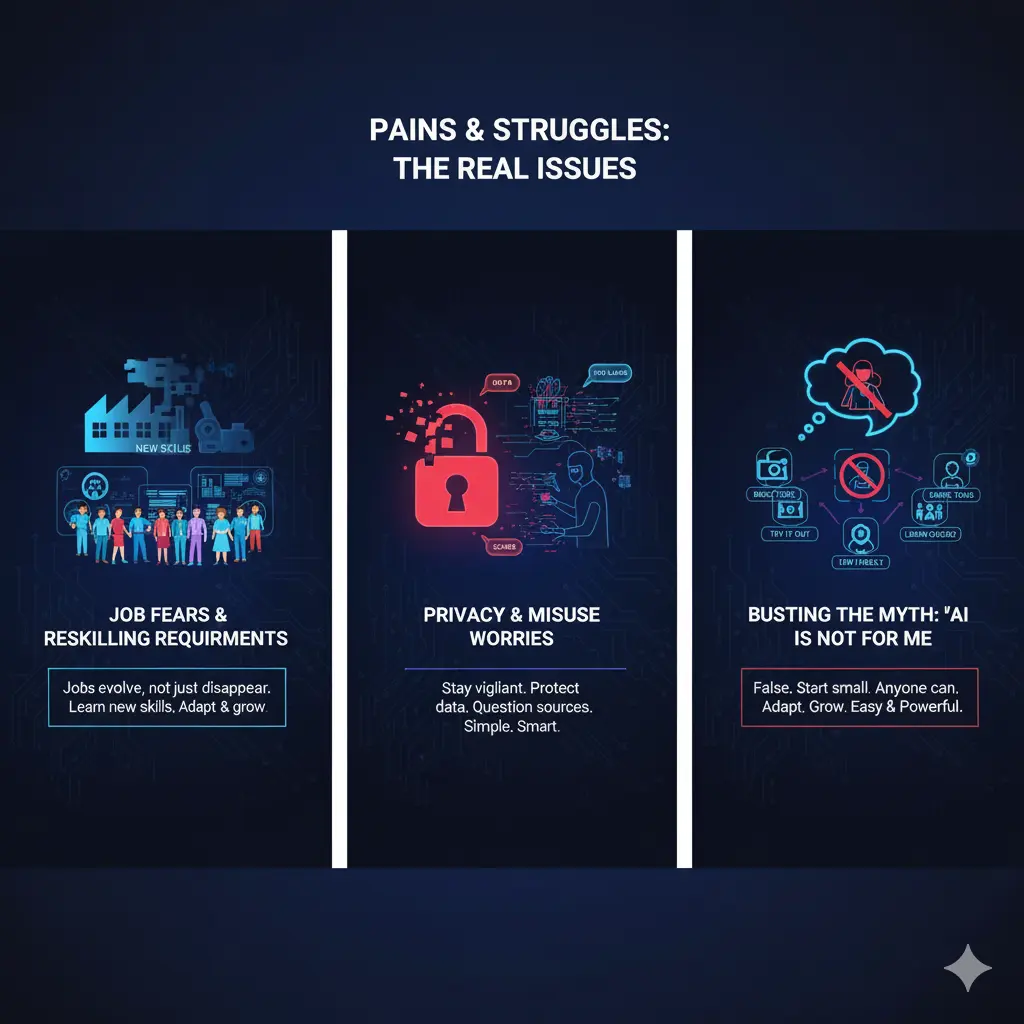
9.1 Job fears & reskilling requirements
transforming the workplace. Jobs go away. Some change over time.Reskilling is the answer. Acquire new skills. Develop your technical and creative skills.
9.2 Privacy & misuse worries
Data can leak. Info misused. Scams appear. Stay alert. Question sources. Protect passwords. Think before sharing. Small steps. Big protection. Simple. Smart. And always remember, even with the rise of what is artificial intelligence, security begins with awareness.
9.3 “Artificial intelligence is not for me” mindset – Busting the myth
Do you think Artificial intelligence isn’t for you? False. Begin modestly. Try it out. Make use of basic tools. Learn quickly. Anyone can do it. It isn’t exclusive. Give it a shot. Adjust. Expand. Easy and strong. Understanding what is artificial intelligence is the first step to realizing how accessible and powerful it can be for everyone.
Case Studies & True Stories
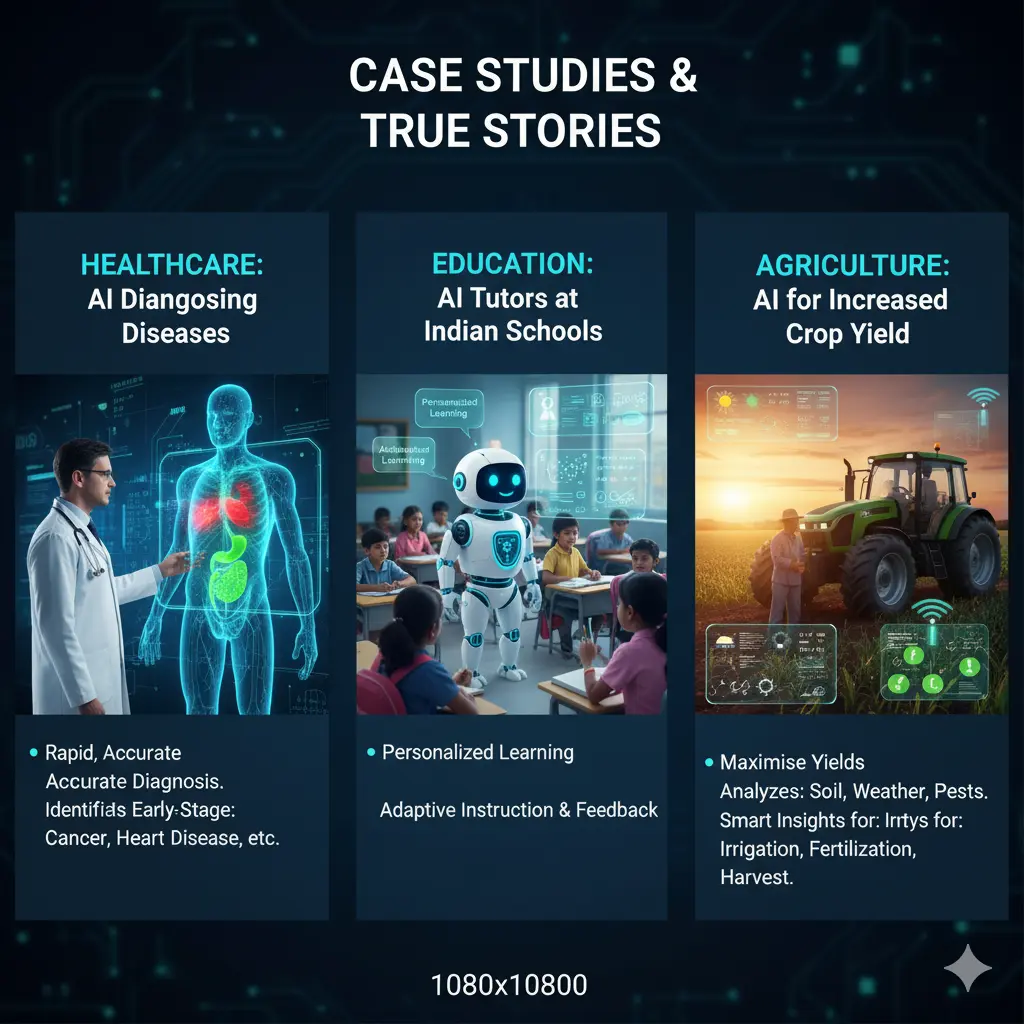
10.1 Healthcare: AI diagnosing diseases
With its rapid and accurate diagnosis of diseases, AI is revolutionizing health care. It examines images and scan reports of patients along with their medical records to spot the early stages of problems like cancer, heart disease, and others.
10.2 Education AI tutors at Indian schools
And Indian schools are being infiltrated by AI tutors, which offer personalised learning to students. These androids vary in their rate of providing instructions, responding to queries and providing feedback. They are still in their infancy, but they generally aim to assist teachers and improve knowledge and compensate any deficiencies in classroom to classroom learning – a practical example of what is artificial intelligence creating is the future of the education sector.
10.3 Agriculture: AI for Increased Crop Yield for the farmers
AI in farming to maximize yields by analysing soil health, weather trends and early identification of pests. Using what is artificial intelligence-enabled technology to monitor soil moisture, plants and environmental conditions, the tools are designed to give smart insights and real-time data that support more effective decision making about irrigation, fertilization and harvest, in turn yielding higher productivity, less waste and more sustainable farming.
Excerpt: Future Reveal & Trends (Within 5–10 Years)
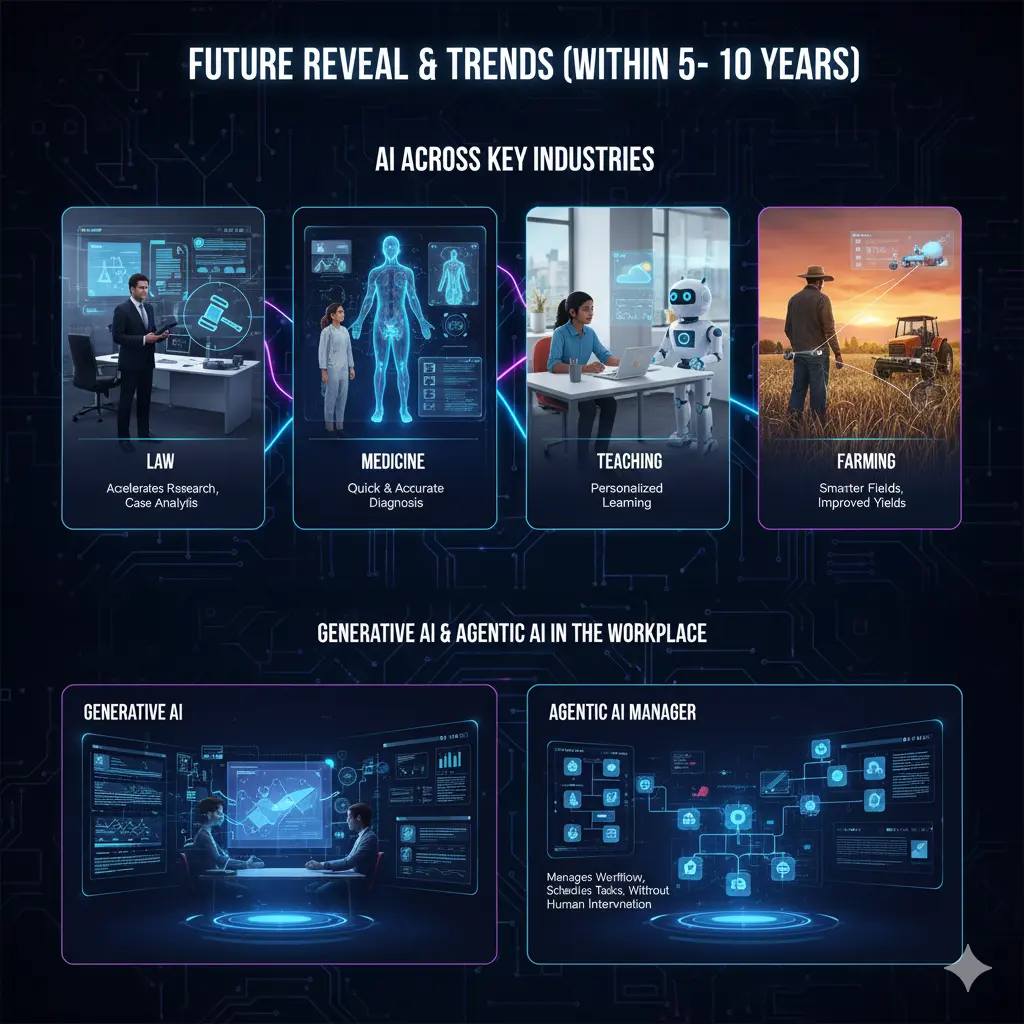
11.1 AI in law, medicine, teaching and farming.
AI is a driving transformation across India’s key industries. In legal, it is a tool that accelerates research and case analysis. In medicine it is an aid to quick and accurate diagnosis. In education AI gives a very personalized learning. In agriculture it tells the weather, farms fields and improves yields which in return makes each field smarter and more efficient a clear example of what is artificial intelligence is revolutionizing multiple sectors.
11.2 Generative AI and agentic AI in the workplace
Generative AI is changing the way businesses work in producing text, design, code, and using automation on multimedia. Decision-capable Agentic AI can do more: it can also be tasked with managing workflow, and in some cases even scheduling work to occur without the need for human intervention. Learning what is artificial intelligence helps us understand how these advanced tools are transforming productivity and business processes.
Skills for the AI Era
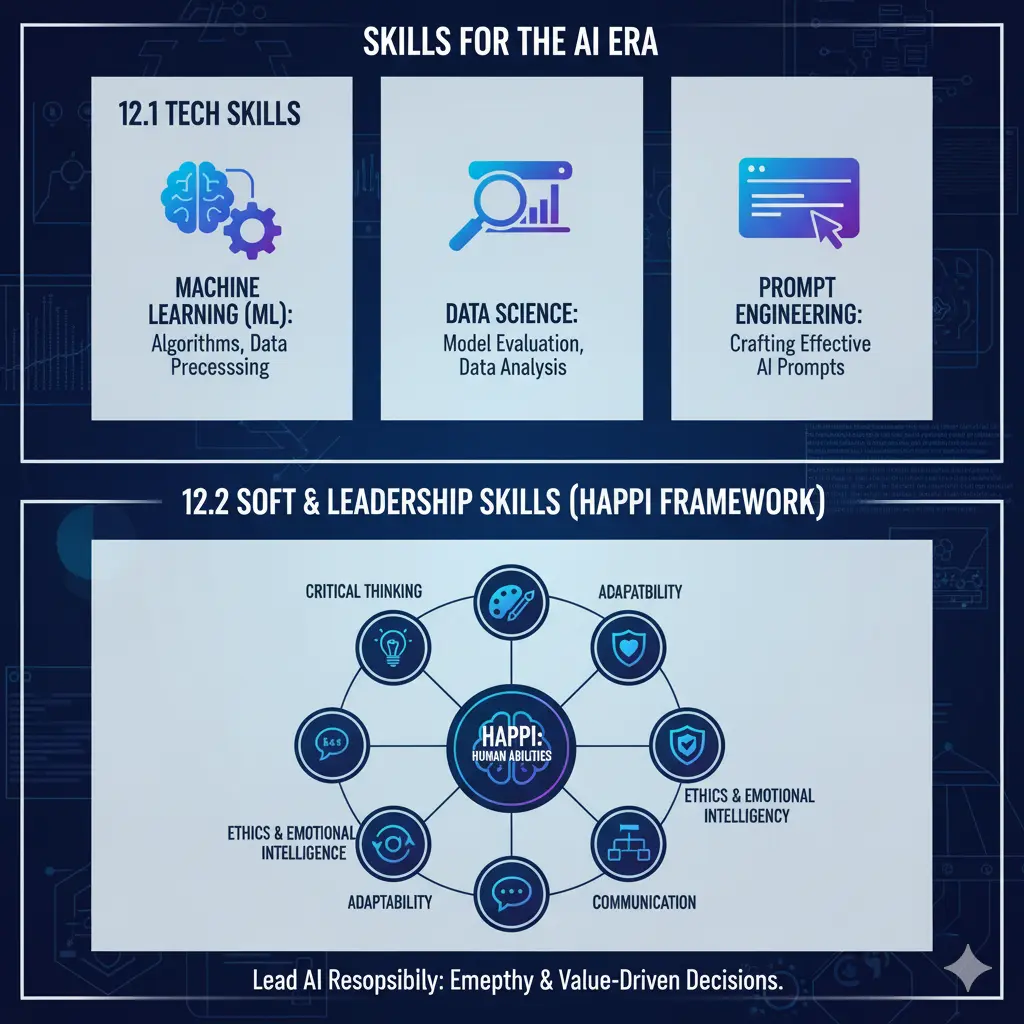
12.1 Tech (ML, data science, prompt eng)
The ability to learn machine learning, data science and timely engineering skills are viewed as essential in the AI age. To completely understand what artificial intelligence is and how to use it effectively, you need to know a little about algorithms, data preprocessing, model evaluation and writing good AI prompts.
12.2 LT XIV: Soft skills (thinking capacity, creative ability, ethics)
In today’s age of A.I., soft and strong human skills are as essential as technical ones. To augment AI with human, you need HAPPI (human ability of critical thinking, creativity, emotional intelligence, and power of ethics) and to lead AI responsibly it’s adaptability, communication, problem-solving – a decision after empathy and value. This balance is at the heart of what is artificial intelligence when aligned with human strengths.
AI vs Traditional Software
13.1 Rule-based vs learning-based comparison
Rule-based AI is kind of like a robot that’s been programmed with a set of rules it follows those rules and it’s really good at simple, linear tasks: think sorting emails or doing basic sums where you already know the answer. Learning-based A.I. such as machine-learning models, on the other hand, is more agile.
it learns and gets smarter over time by churning through masses of data which makes it way better at messy, evolving problems where you’re in a position to adapt on the fly, like recognizing faces in photos, forecasting traffic patterns, or even powering some of the top 5 AI for video creation tools used in today’s digital world. This distinction helps explain what is artificial intelligence and why it’s transforming so many industries.
13.2 Why AI Title: Gets better by the year.
Shape publié A new class of learning algorithms for power system transient stability analyses. Utilichern and Carlos Relvas, the rationalists of corruptibility Reactivate the sequence of different alarms and different problems; do not classify events.
AI is constantly leveling up year by year, thanks to great big data boondoggles on which to train brainy algorithms dreamt up in research labs, better hardware like smarter GPUs, and billions of dollars poured into innovation it’s evolution on steroids! This rapid advancement shows just how powerful what is artificial intelligence has become in driving technology forward.
Myths & Misconceptions
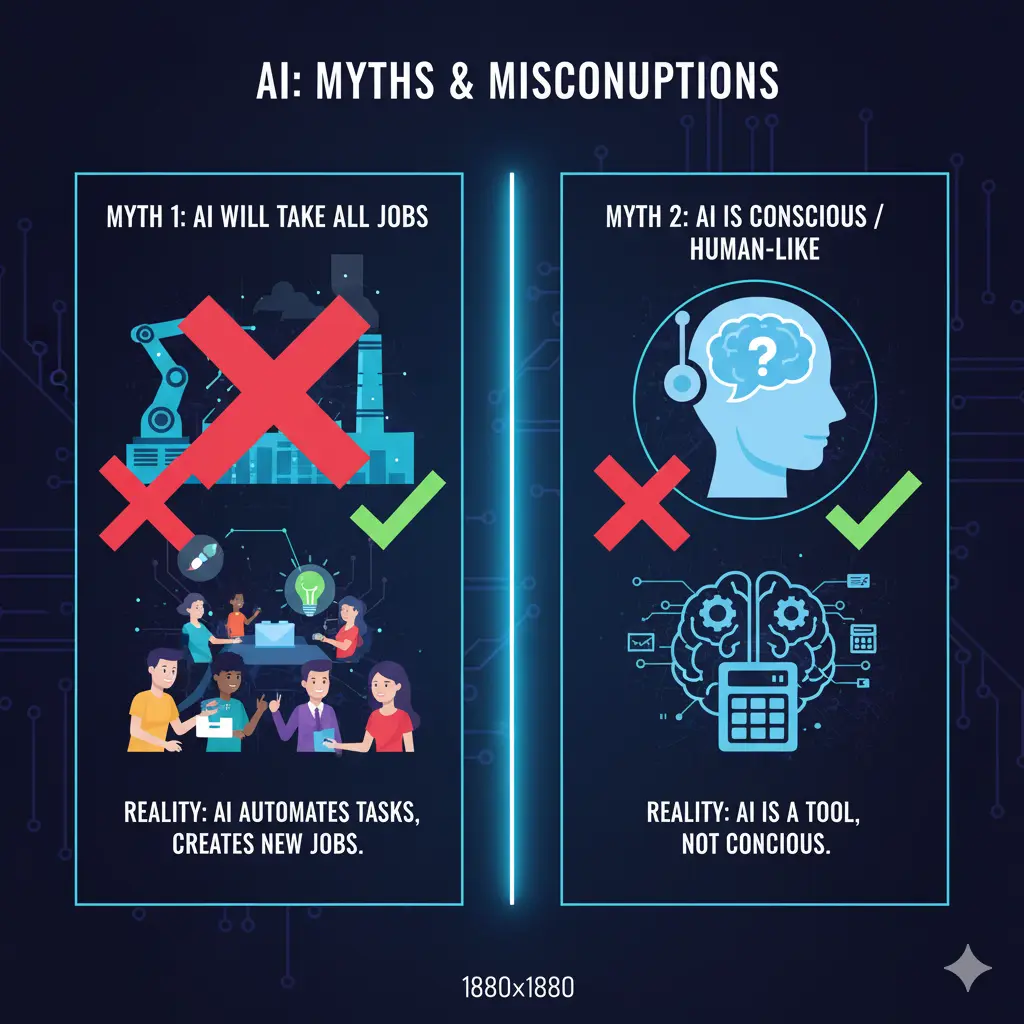
14.1 “AI will take all jobs”
Nah, AI isn’t coming for all the jobs it’s more of a super tool that automated away all the boring stuff, leaving us to do creative, human-touch work that machines can’t touch.
14.2 “AI is conscious / human like” Oh Jesus Christ this again.
Nah, AI isn’t really conscious or humanity-like it’s just a clever copycat, crunching patterns from data to talk or produce, but not in possession of genuine feelings, self-awareness, that flash of legitimate soul we humans have. This is the core truth behind what is artificial intelligence powerful, yes, but still fundamentally a tool, not a sentient being.
Visual Recap Section
15.1 AI Infographic Roadmap for Students I don’t use the A word lightly in education!
Hey students! Get started with AI by taking some intro classes in Python and the fundamentals of math, then move into machine learning for just a few bucks on Coursera. Collaborate on cool projects, debate ethics, and land internship your AI future is limitless! Learning what is artificial intelligence early will give you a strong foundation to innovate and excel in this fast-growing field.
15.2 Graphic: The ups and downs of AI
AI’s perks? It increases efficiency, ignites innovation and takes on hard problems like climate change. But beware of pitfalls: job shuffles, inequitable decisions, privacy perils and ethical headaches moderation in all things if we are to wield its power wisely!
15.3 Table: AI Types and Examples, Industries
AI is available in the form of machine learning (forecasting trends, for example, Netflix recs in entertainment), natural language processing (chatbots like Siri in customer service), and computer vision (self-driving cars in automotive). Understanding what is artificial intelligence helps us see how these technologies impact everyday life and drive innovation across industries.
Conclusion
Wrap-up: AI is inequality here and abroad”>AI as opportunity + responsibility
AI may increase inequality at home and abroad if uncontrolled but it’s also a golden opportunity for growth and innovation. Our responsibility? By guaranteeing equitable access, ethical development and inclusive policy: which lifts everyone up, not leaves anyone behind. Forward-thinking partners like Shark Mondo, a digital marketing agency, also highlight how AI can be harnessed responsibly to create opportunities that benefit all.