Table of Contents
Introduction
This is because technology is transforming more rapidly than ever and this trend characterizes our lifestyle, employment and communication. Going to the future (2026 and beyond) one will have to be on the lookout of the top 10 technology trends so that they could not be left behind and continue being competitive in the big picture, both in business, government, and individuals. Research conducted by Simplilearn, the World Economic Forum (WEF) and Gartner showed the areas where innovation will be applied in order to reinvent industries.
With the help of this analysis, the most prominent top 10 AI trends in technology are agentic systems, which are autonomous, XR, wearables, quantum computing, and many more. This is aimed at finding a hint of how these technologies will impact our day-to-day existence, introduce additional opportunities, and address worldwide issues to have a clear picture of how the digital future is going to be.
Strategic Foresight: How to Read Emerging Technologies
Identifying weak vs. strong signals
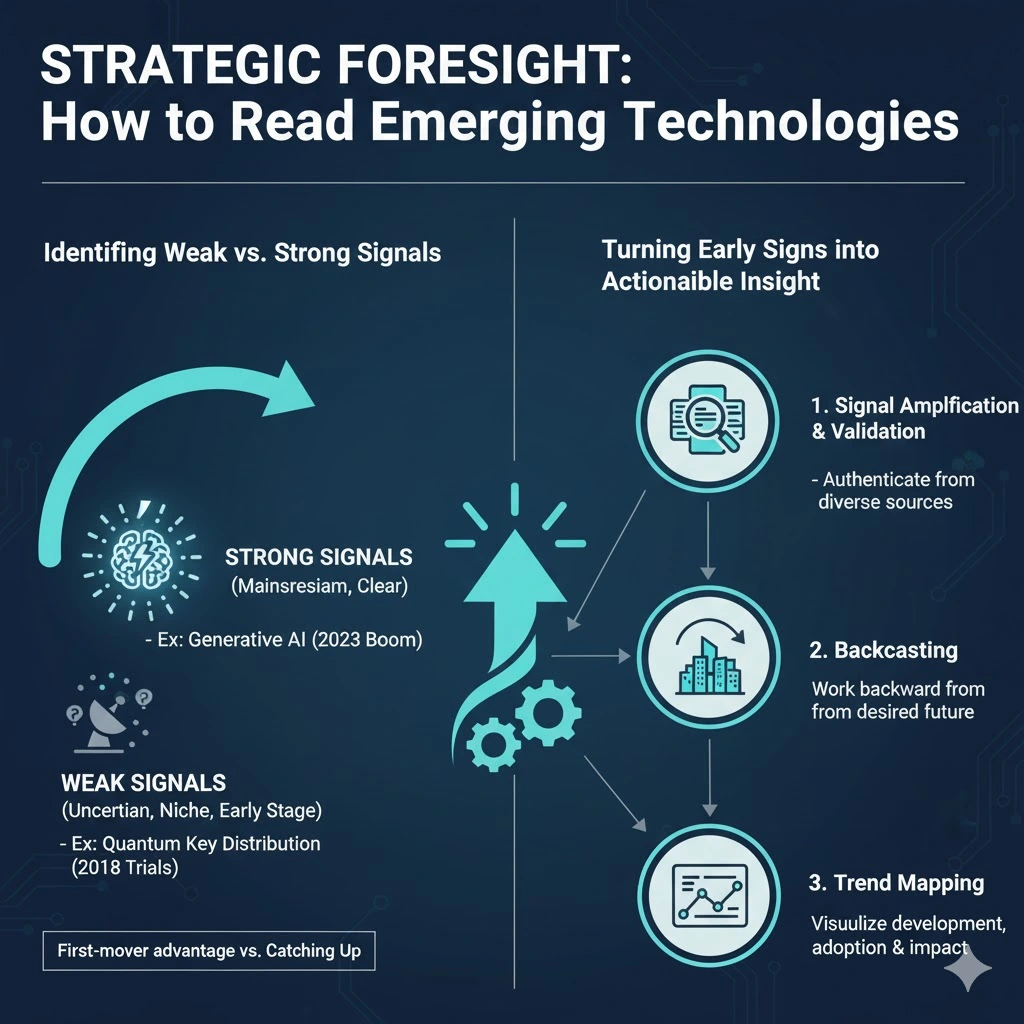
- Strategic foresight usually initiates its work with scanning for the indications, small signs, or evidences at the earliest stage for what the future might be or what the future has in store for us. The future is very unpredictable, so we try to look for the right signal at the earliest phase that might tell us about the emerging technologies, including the top 10 technology trends.
- In general, weak signals may be regarded as the most unpredictable, bizarre and so on signs which may not be easily revealed. They are frequently discovered or noticed in focus patents, test products, fringe communities or odd market trends. We have had very many real life examples of the cases of weak signals.
- In 2018, there were trials that were conducted popularly known as “Quantum Key Distribution Trials,” which were considered to be weak signals at an earlier phase. But if we talk about now in the year 2025, they are considered as one of the strongest signals to be present in telecom planning and are part of the top 10 technology trends. Even if they were considered weak signals initially, they are important for us because they provide a first-mover advantage if we or anyone happens to notice them.
- The weak signals are uncertain and unusual and are therefore difficult to detect whereas strong signals are very easy to read and detect, as they are usually on the mainstream adoption, regulation and media coverage.
- One of the biggest examples of a strong signal was generative AI, which overtook the whole world in 2023 after shifting from weak to strong immediately. It became one of the top 10 technology trends, leading major organizations to struggle to grab the opportunity and take advantage of the situation presented before them, i.e., not being able to come up with proper solutions, draft frameworks, and help the public integrate AI into everyday workflows.
Turning early signs into actionable insight
After identifying the signals the next step that comes is transforming and turning them into actionable insight. Turning them into actionable insight is where the true value of identifying signals lies. There lies a systematic process of analysis and interpretation which is involved in actionable insight:
- Signal Amplification and Validation – After identifying or detecting a potential signal, the next required step is amplification of the signal, seeking authenticating evidence from different and numerous sources. Usually, validation involves assessment of the source whether it is credible or not and whether the information is consistent. This process helps organizations understand which emerging technologies, including the top 10 technology trends, are worth monitoring and acting upon.
- Backcasting – Backcasting is a technique where the organisations should take necessary steps to reach the optimum or the desirable future that an organisation require and they do so by backcasting, i.e., working back to identify the policies, decisions and actions required to reach that future.
- Trend Mapping – This is also one of the techniques used by organizations to predict a certain future for a trend and gain actionable insights about it. Mapping is considered a practice in which organizations identify how a technology trend is performing, its development progress, adoption, and the impact it is leaving on society. This helps them narrate the optimum trajectory that the technological trend, including the top 10 technology trends, is actually following.
Methodology & Data Sources
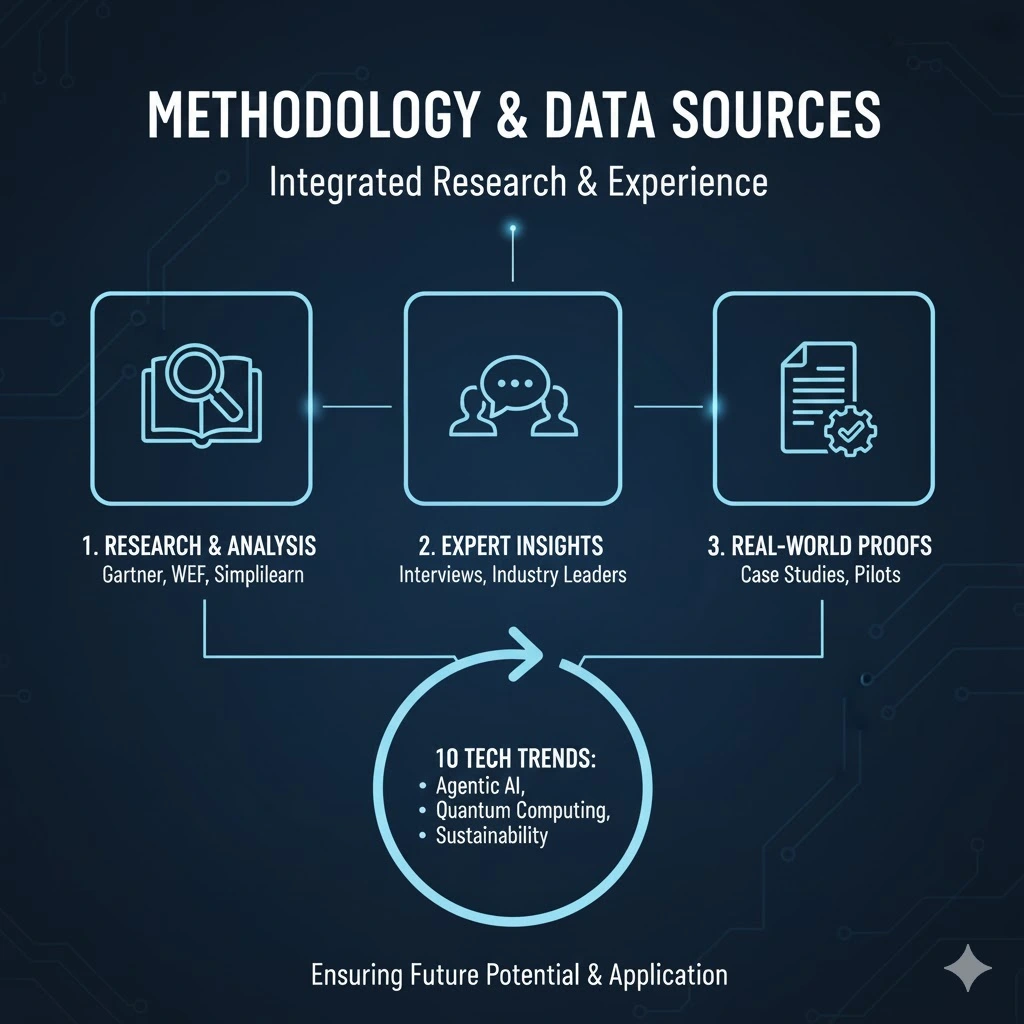
The 10 tech trends were discerned by a cautious methodology that integrates research and experience. To start with, the advanced coverage of the topic by different sources was analyzed; in particular, Gartner, WEF, and Simplilearn were identified as the primary sources providing updated information regarding one and the same topic, helping to track the top 10 technology trends effectively.
Second, the information about industry perceptions, researchers and leaders of the majority of innovations were collected through interviews and responses of the expert panels. Finally, in order to put into practice, case studies, early examples of adoption, and real-life pilots were studied. This combination contributed to ensuring that the trends that were selected, including Agentic AI and AI-Native Infrastructure to Quantum Computing, Sustainability, and Green Technologies, are not only possible in the future but also real in life in different spheres.
Competitor Landscape & Trend Alignment
There are three major tech companies in 2026 Simplilearn, WEF, and Gartner. They all focus on the same tech trends like AI, quantum computing, and smart devices, but there is quite a difference between the three. WEF always thinks about how tech could change the industry, society, and standard of living, while Simplilearn looks at trends in terms of what skills people need. Simplilearn focuses on their technology to create more job opportunities for people and to track the top 10 technology trends shaping the future.
Gartner resembles them, only because they are preoccupied with so many other things such as how enterprises will utilize their technology and how much they will invest on them as well as on how much they need to invest on them. This demonstrates the fact that similar businesses develop in various ways and pay attention to different things.
Top 10 Technology Trends For 2026
1. Agentic AI & Autonomous Agents
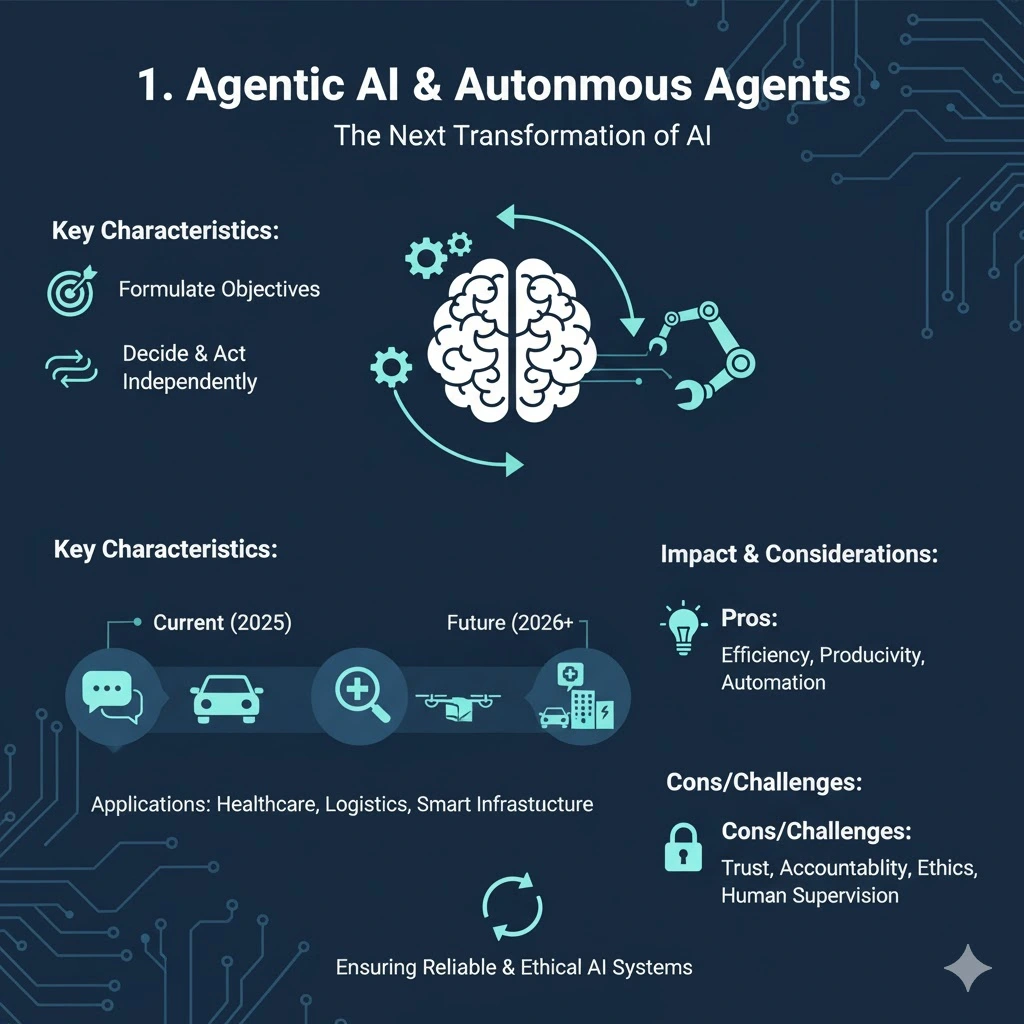
The next transformation of artificial intelligence is agentic AI, in which systems acquire a higher level of independence. These AI models can formulate their objectives, arrive at decisions, and perform actions without human supervision, unlike relying on programmed instructions all the time. They are more like digital agents who can anticipate and adapt to shifts in circumstances, accomplishing duties in a clever and flexible manner. Agentic AI is considered one of the top 10 technology trends shaping the future of intelligent systems.
Already, robots start to exercise their influence upon our daily life. Examples of AI-based chatbots that respond to the questions of customers or self-driving vehicles that go round the roads without human effort are a part of these systems. They will be more significant in healthcare, logistics, education and smart infrastructure in the future (2026 and even later). To take an illustration, it reminds an AI agent tracking the well-being of the patient, real-time deliveries, or managing the consumption of renewable energy in the urban area.
Efficiency and productivity is the largest value of agentic AI. Through automation of routine or repetitive work processes, individuals are able to be more creative and strategic in how they approach their work. Meanwhile, one should also discuss the challenges of trust, accountability, and safety. With this type of technology gaining popularity, questions of autonomy versus human supervision will be particularly important in ensuring the construction of reliable and ethical AI systems. Agentic AI is recognized as one of the top 10 technology trends driving the future of intelligent and autonomous systems.
2. AI Native Infrastructure: Building What Comes Next
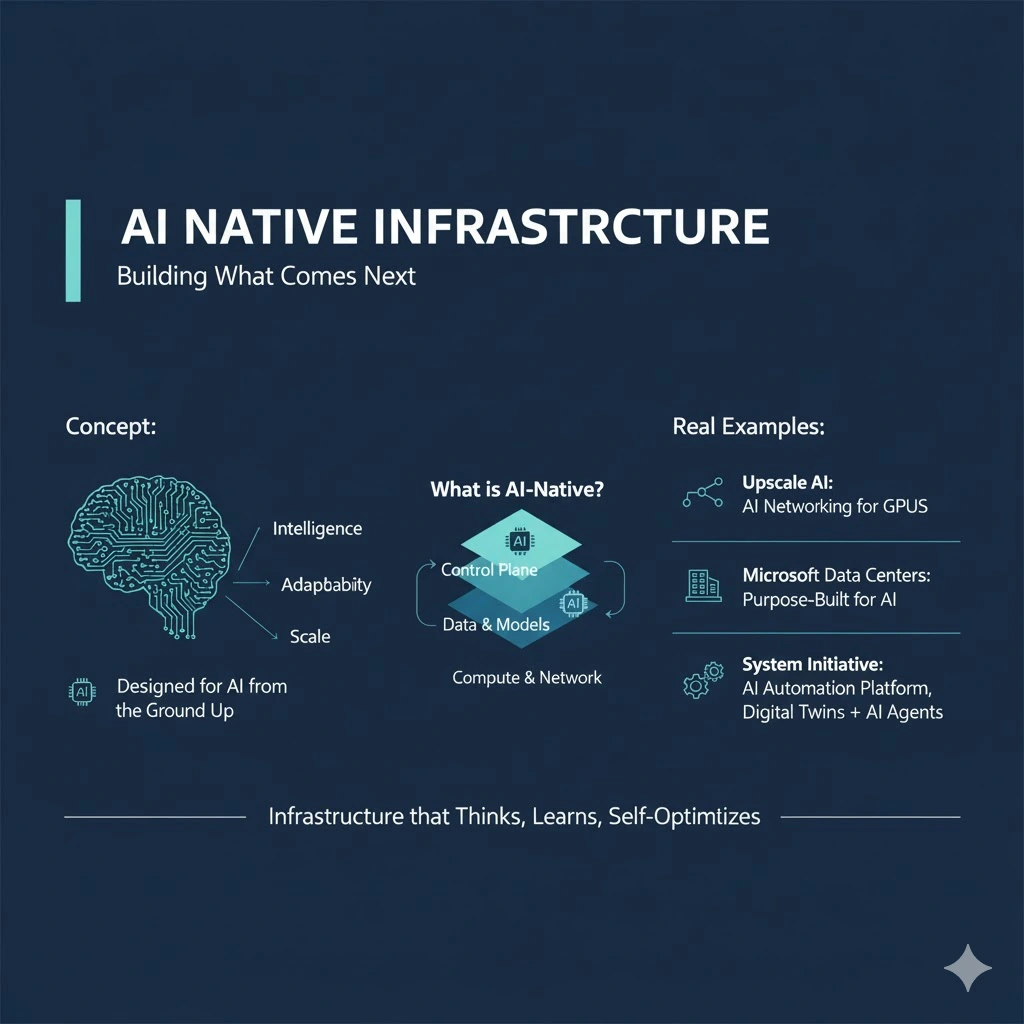
Imagine if infrastructure servers, networks, data centers did not just support AI, but was made for AI from the ground up. That is the idea of AI-native infrastructure: systems designed with intelligence, adaptability, and scale as core features instead of tacking them on later. It is the next evolution beyond cloud-native or data center-first all about infrastructure that thinks, learns, and self-optimizes. AI-native infrastructure is considered one of the top 10 technology trends shaping the future of intelligent computing environments.
What is AI-Native Infrastructure?
Some white papers suggest the concept of AI-native to create systems where AI is not an overlay tool, but rather a component of the architecture itself. The white paper AI-Native by Ericsson explains what it means to telecom: layers of maturity, data-model integrate and few layers, compute and control planes. It is known that AI-native systems are among 10 top technology trends of the future of telecom and intelligent infrastructure.
Real Examples and Trends
- Upscale AI, a start-up, has raised more than 100 million dollars merely to create AI networking infrastructure, based on open standards, to reconsider networking in which interconnects, hardware and OS layers are designed to work in large clumps of GPUs and XPUs.
- Recently Microsoft has had purpose-built data centers around the world, designed with AI workloads in mind: dense racks, special cooling, high speed interconnect, etc.
- System Initiative introduced what it claims is the first AI-native automation platform in infrastructure. It incorporates the digital duplicates of the live infrastructure and AI agents capable of suggesting and implementing adjustments (subject to human permission), thereby saving time and effort in the operations.
3. Edge-First Architectures & Privacy-First AI
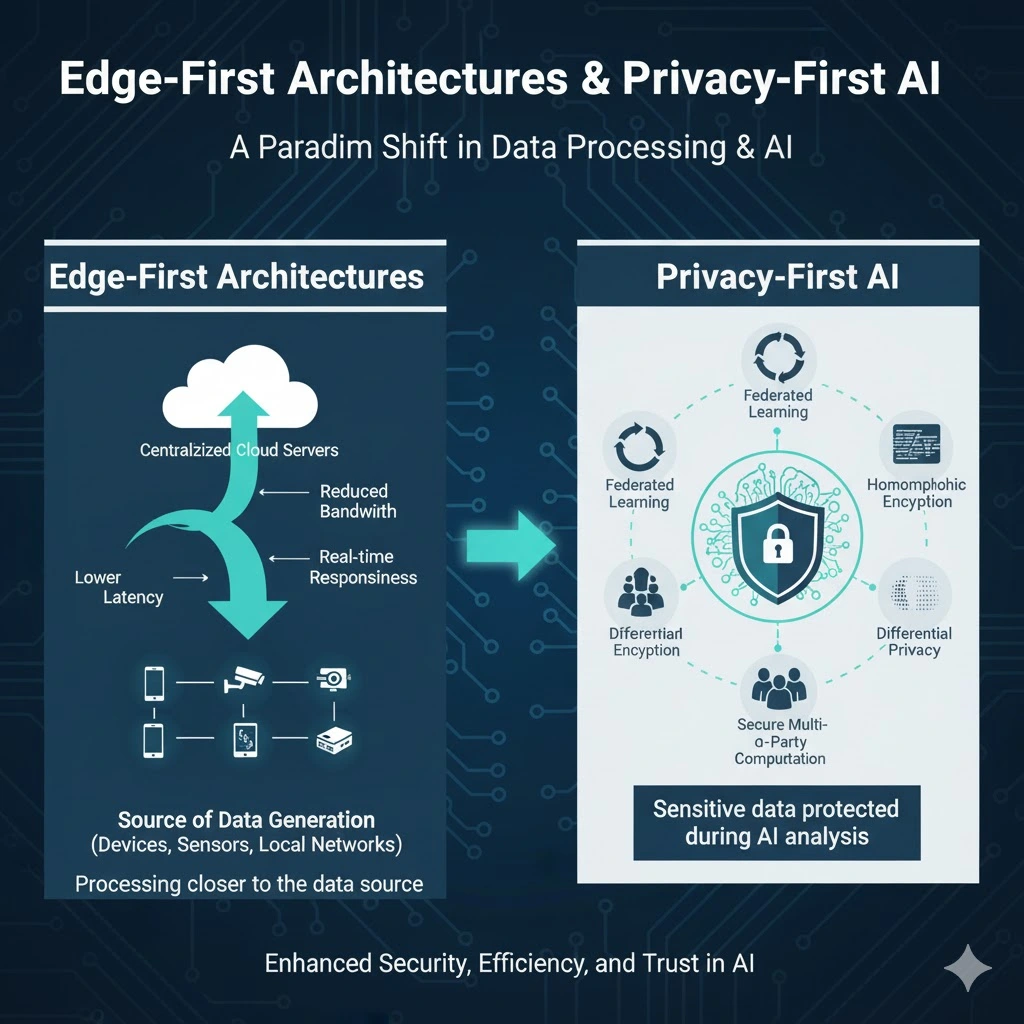
In this trend, there was a significant perspective shift regarding how and where data is processed and how artificial intelligence (AI) is actually utilized. Edge-First Architectures move computational power and AI processing closer to the source while keeping certain priorities in mind, i.e., the need for lower latency, reduced bandwidth consumption, and enhanced real-time responsiveness. Edge-First Architectures are recognized as one of the top 10 technology trends shaping the future of distributed and intelligent computing.
They try to keep both of these processes away from centralized cloud servers and closer to the source of data generation, which consists of devices, sensors, and local networks. Privacy-First AI, one of the top 10 technology trends, prefers to embed privacy-preserving techniques directly into AI development and deployment. This includes integrating components like differential privacy, federated learning, homomorphic encryption, and secure multi-party computation, which are crucial to ensure that all sensitive data is well protected during or after AI analysis.
4.Extended Reality
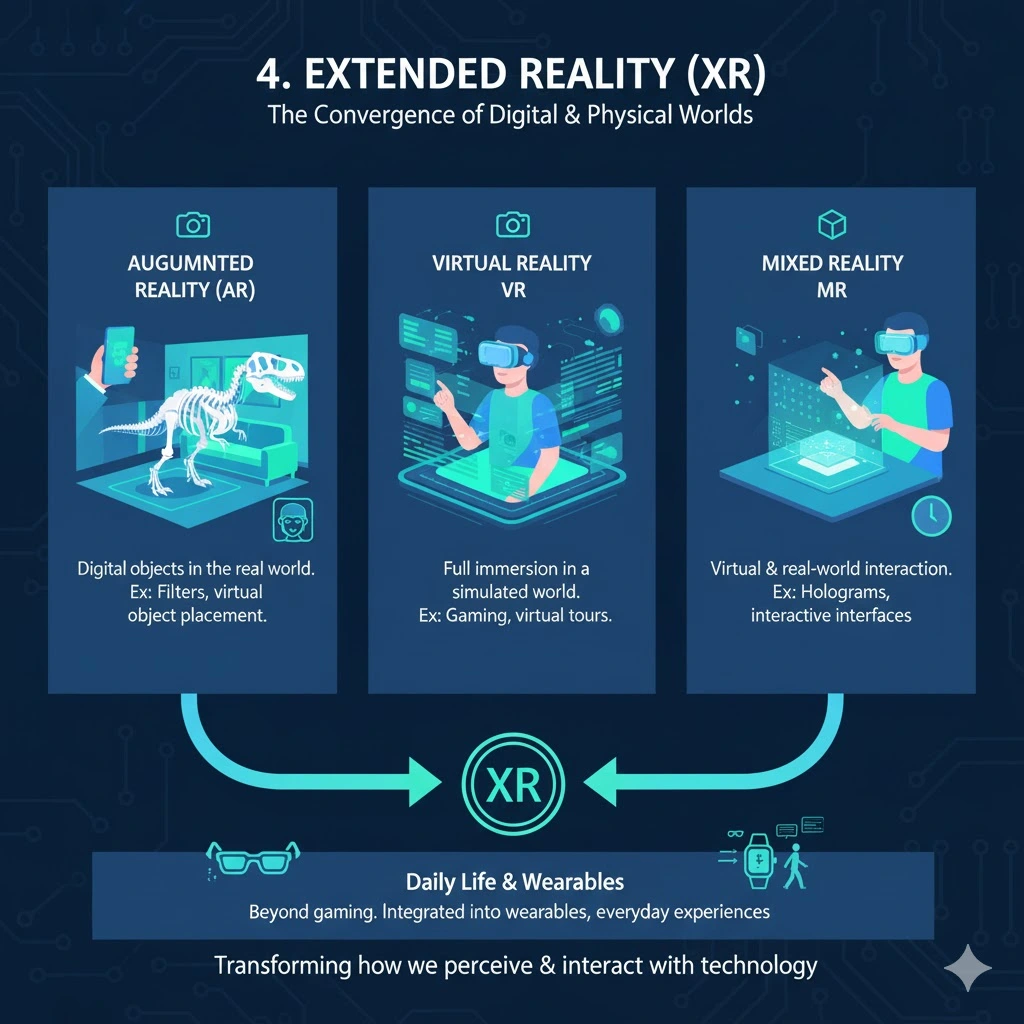
- One of the fastest trends in technology is Extended Reality or u can say XR. It is one of the augmented reality, virtual reality and mixed reality are converged so that the digital world becomes physical to us.
- AR as abbreviated as augmented reality, AR is one of the aspects that we have all experienced in our day to day lives be it through filters or location of something in your room, AR involves bringing the digital world to the real one by removing your environment.
- Mixed Reality goes a notch higher because in the mixed reality we will find virtual and reality interacting with each other in 2026 we will have holograms where we can interact with something that is truly on your table.
- XR is becoming so rapid that now it is not only among gamers and techies, but it is going to enter our lives soon because nowadays there are so many VR devices, and it is being used in our life to add XR to the wearables glasses such as meta glasses that are being introduced.
5. Wearables & Bio-Integrated Technologies
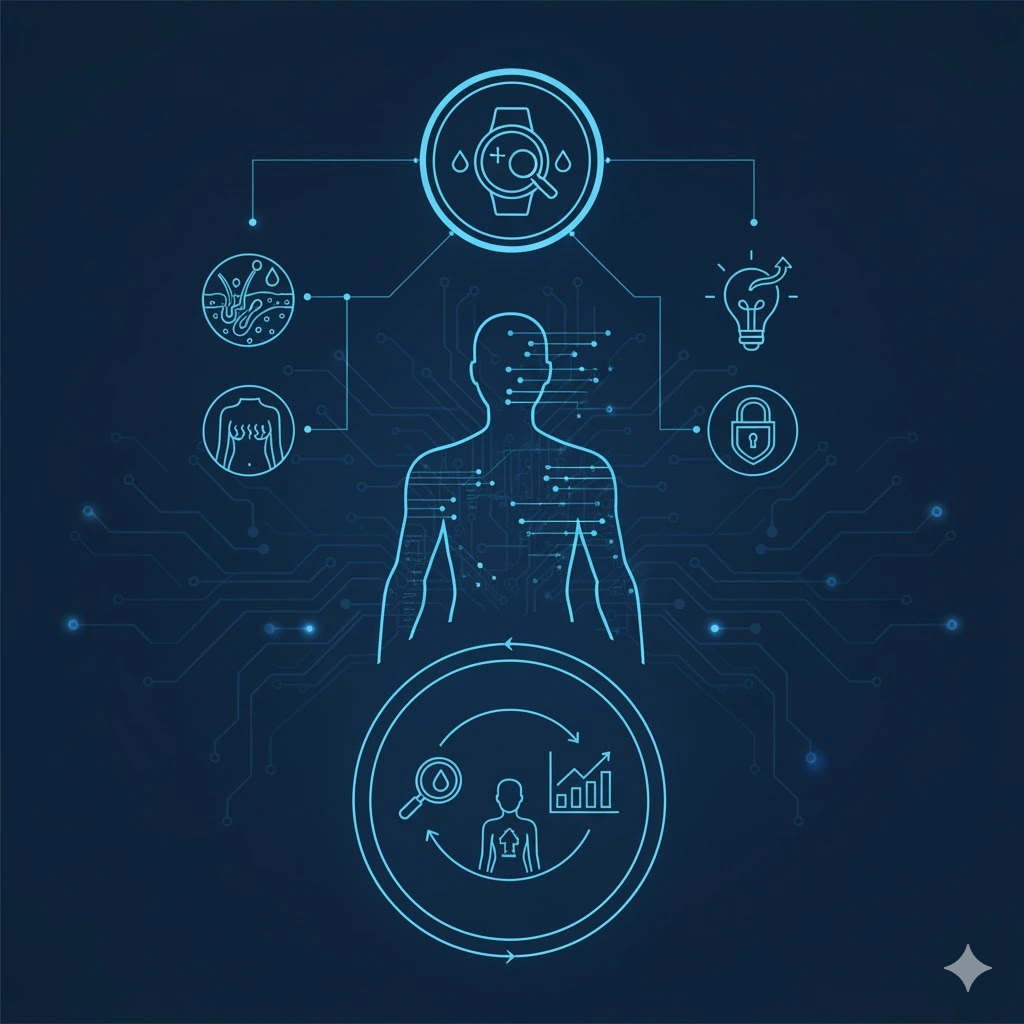
Wearables and Bio-Integrated Technologies: Where We are Heading
You know how fitness trackers, smartwatches, and health bands have become part of our everyday gear? Well, the next big thing is that these devices do not just sit on our bodies, they become part of them. Enter Wearables & Bio-Integrated Technologies, recognized as one of the top 10 technology trends: tech so close to the body, so in tune with biology, they might as well be second skin.
What’s New & Exciting
There are a bunch of really cool developments lately:
- Researchers have developed a wearable optical sensor watch that can monitor glucose in sweat without breaking the skin. It uses surface plasmon resonance plus nanowire sensors. It is sensitive, selective, and works in real life.
- In Australia, company Wearoptimo has built a microneedle patch that can tell in real-time if you’re dehydrated. It’s tiny about the size of a coin and can give medical-grade hydration data.
- There’s also a startup called identifyHer which is tackling perimenopause. Their wearable is not just for fertility or periods: it sticks to your torso, measures hot flashes, sleep, lifestyle etc., and gives insights into that transition phase which is often ignored.
Why It Matters (and Challenges)
This shift matters because diseases, stress, and metabolic issues often show early signal changes in sweat, small shifts in biosignals, and body reactions. If these signals can be detected early, people can intervene sooner, preventing worse problems. Plus, more accurate health tracking through Wearables & Bio-Integrated Technologies, one of the top 10 technology trends, means better personal data and improved health outcomes.
6. Quantum Computer And Quantum Security
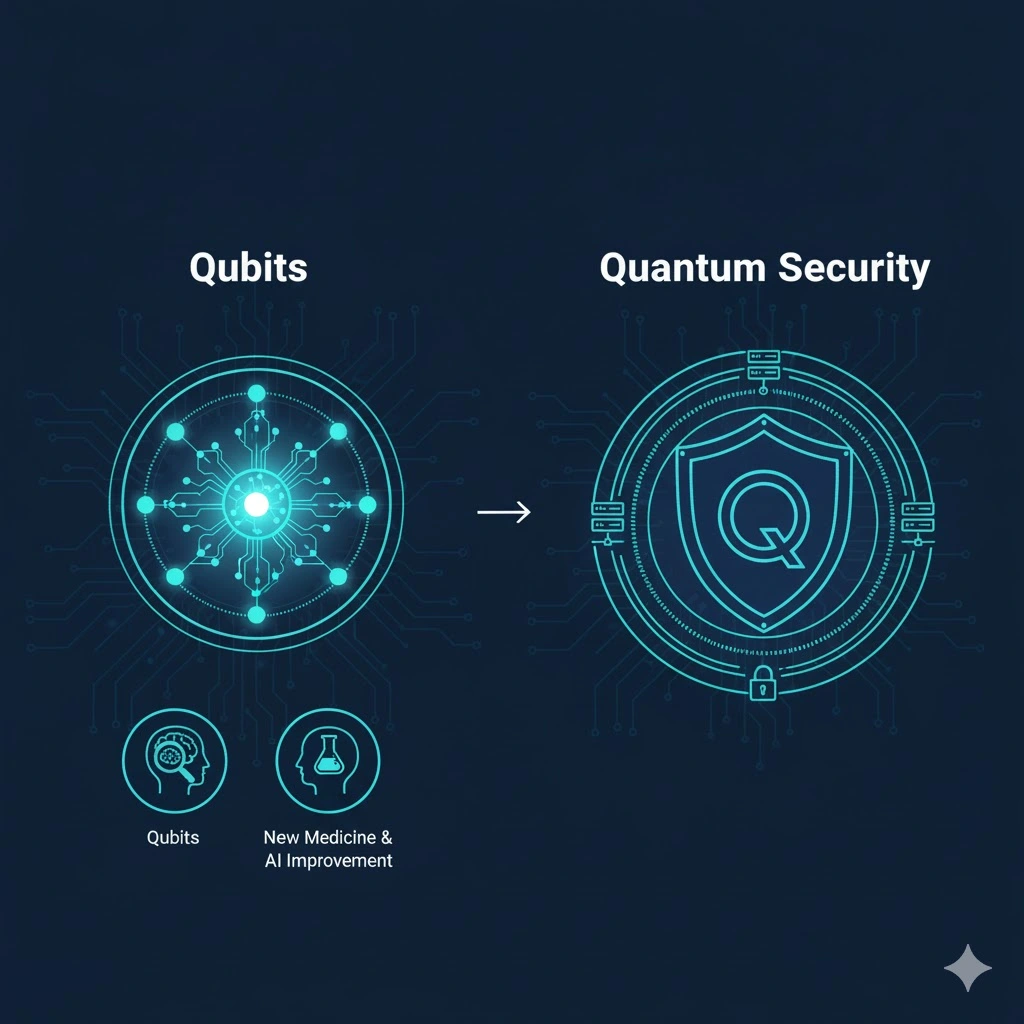
One of the most rapidly growing tech trends today is quantum computing. As the world moves so fast, there will come a time when normal computers might not be able to keep up. The key difference is that quantum computers work on qubits, which are far faster and more powerful, helping solve tough problems more easily. These quantum computers can do anything from discovering new medicines to improving AI. Many big companies, like Google and Meta, use quantum computers, and this technology is recognized as one of the top 10 technology trends, even though it is still under development.
There must be a method of securing the use of computers that process this much power and as quantum computers in the future are very likely to crack any old encryption method, there must be a means of ensuring that the computers remain secure enough. This is the reason why researchers are working on the concept of quantum-safe security that will ensure governments and companies keep their data safe and not run into problems in the future. These are the latest security measures in the top 10 technology trends that enable protection of information in case there is an attack by the power of quantum.
Quantum computing is the future but building security measures for that future is also very important.
7. Automation of Workflows & “Invisible” Productivity Tools
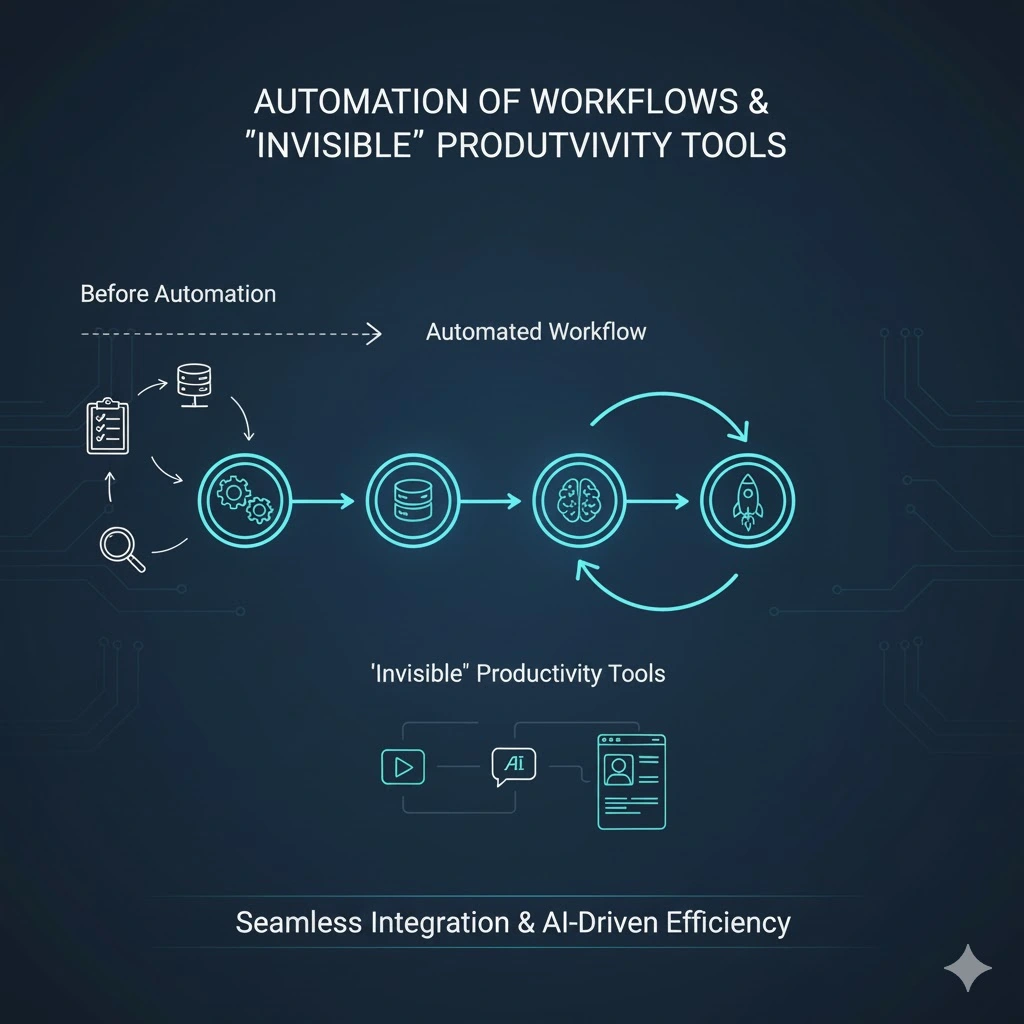
The trend of Automation of Workflows & “Invisible” Productivity Tools involved much more than just any simple task automation, there was something that was much more required than just that. It involved procedures like The direction of Automation of Workflows and Invisible Productivity Tools entailed much more than merely any sort of automation of tasks, there was something that was very much needed over and above that. It entailed processes such as orchestration of a complete workflow, integration of the heterogenous systems, and even the use of AI such that they may make intelligent decisions in the processes.
Invisible Productivity tools were made keeping in mind some objectives: to triple the productivity of the user and with effortless ease at minimum effort of the user. They can be background run or one can be built into the existing applications. Invisible Productivity tools are ranked among the top 10 technology trends, which define how individuals and organizations attain the greater productivity with ease.
8. New Interfaces: Brain-Computer Interfaces And Smart Glasses
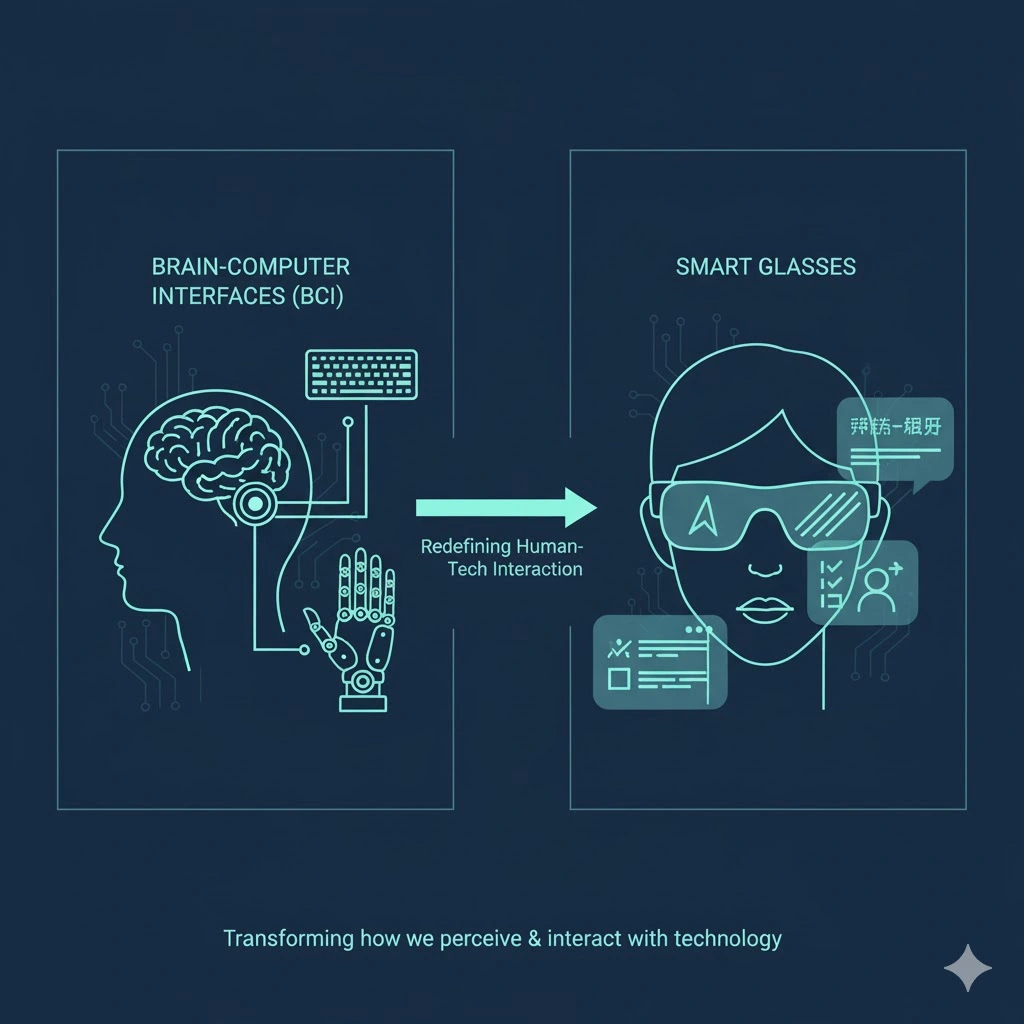
Two new versions of interfaces exist: the brain-computer interfaces (BCI) and smart glasses. These technologies are also providing human beings with the chance to reconsider the way human beings relate to technology. Brain-computer interfaces are used in assisting individuals to integrate the human brain with the digital devices. This technology is basically readings of the neural signal in the brain and then sent to the BCI device where it is converted to be used in the digital systems. BCIs and smart glasses are considered in the list of the top 10 technology trends that shape the future of human-computer interaction.
It is a technology that is not only beneficial to people to improve their lifestyle but this will actually benefit the people with disabilities. It has the potential to manage the prosthetics, type using keyboards and so much more this technology is still in its infancy but once mastered, it will revolutionize accessibility.
The whole world is talking about them, and eyewear and tech companies are working hard to create their own versions. There is a good reason why smart glasses make life much easier than phones, which need to be constantly picked up. People who love smart glasses are mostly travelers, as these devices enhance productivity, provide real-time directions while on the move, and offer instant translation features that are like finding gold in a coal mine. Smart glasses are considered one of the top 10 technology trends revolutionizing personal and mobile technology.
9. Sustainability & Green Technologies
Sustainability & Green Technologies: Green Is the New Gold
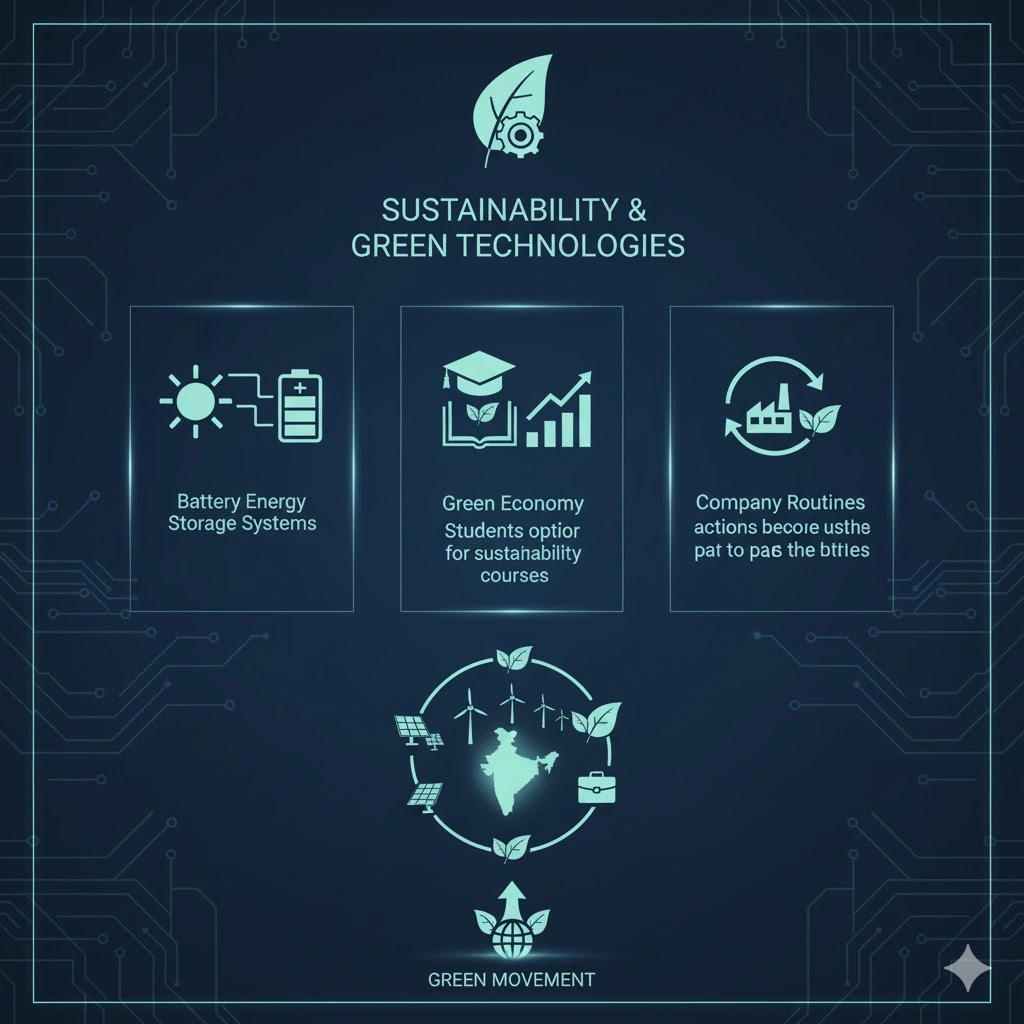
So sustainability and green tech are not just buzzwords anymore they are fast becoming the backbone of how countries, companies, and even startups think about growth. With climate change knocking at the door and people (including students) caring more, there’s a real shift. Sustainability and green tech are recognized as part of the top 10 technology trends, especially in India, shaping the way organizations address environmental challenges and innovate for a greener future.
Trends in Green Tech & Sustainability
- Growing interest in battery energy storage systems (BESS) so that solar/wind can work even when the sun isn’t shining or wind isn’t blowing. In rural India, this is super important.
- More students are opting for sustainability related courses in Indian colleges/universities as the green economy grows. Courses in environment, sustainable development, etc. “Green economy” isn’t just “nice to have” it’s becoming a career path.
- companies are not treating eco-friendly actions as a side project anymore. They are making it part of their regular routine, like how they handle finances or staffing.
Wrapping Up – Sustainability and green technologies are not future stuff they are now. India is pushing ahead with solar, wind, storage, sustainable materials, green classrooms, and green jobs. The more people (including us) push for green solutions, support policies, and choose eco-friendly products, the faster the change. Sustainability and green technologies are considered part of the top 10 technology trends, making individuals and organizations part of a global movement toward a greener future.
10. Cross-Cutting Supporting Technologies
In this trend, some foundational technologies were laid down to act as critical enablers for the broader technological landscape, accelerating the adoption and effectiveness of other major trends. There are several key examples of unexpected breakthroughs made possible because of the underlying infrastructure and advancements, rather than typical standalone innovations. These foundational technologies are recognized as part of the top 10 technology trends, shaping the pace and direction of future innovations
- High-tech Connections- We have all seen the advent of 5G network and even heard that 6G is soon coming to us as well so, that would mean every new network with every new generation, would be providing a better bandwidth with less latency and a lot of device connectivity.
- Data management – In the near future, there will be advanced platforms that will be made available to collect, process, store and analyze massive amounts of data where there will also be i.e. it will contain analytics that will entirely be done by AI and which will also have real time data processing abilities.
- Improvement of Cybersecurity – As the trend changes and the new generation comes in, the new frameworks of security will be developed, quantum resistance cryptography, and even the extremely efficient threat detection, which will be possible only being powered by the AI.
Business, Policy & Societal Implications: Opportunities,Risks and Governance of Emerging Tech
Artificial intelligence, quantum computers, and wearables are some of the technologies that are transforming the lifestyle and workforce entirely. It not only makes business quicker, but it also opens the eyes to new customers, not to mention that it makes day to day life a little more bearable. Still, there exist real threats too- including the leakage of data, the replacement of jobs, or biasing algorithms. This is the reason why good rules and good governance are important. To ensure that these technologies that are among the top 10 technology trends are not only making a few rich but safe and profitable to everyone, governments and businesses are struggling to be more transparent and involve the masses in the making of decisions.
Skills & Capabilities for the 2026 Workforce: Upskilling Priorities and Innovation Mindsets
The machine and robots are absorbing more tasks, and it is becoming more vital to acquire new skills. People are undergoing online classes and training in order to be competitive and especially in technology. Experts believe that almost a quarter of our job skills will be evolving shortly with the most important elements being flexibility and readiness to learn. Critical thinking skills, creativity, emotional intelligence will be of great importance. Employers are also assisting the workers to digitally upgrade in such a way that all individuals can be able to confront the challenges that may arise in the future and be in a position to further develop in this fast changing world. This is very much aligned to the top 10 technology trends that are redefining the skills and capabilities required in the future work force.
Implementation Challenges And Risks
Trendy tech brings a lot of big opportunities, but there are some challenges on the way to their success as well. Many factors can hold back the innovation of these technologies, including ethical, legal, and regulatory issues. Having so many rules can slow down the process of innovation. The top 10 technology trends do not only face these challenges security and privacy are major concerns too. As the world advances, companies become increasingly worried about protecting their data. To address this, strong cybersecurity practices are essential, ensuring that technology can grow without putting people or their data at risk.
Market Outlook And Investment Trends
One of the most significant forces in the world is technology, but as new trends emerge, people respond to them differently, and various places accept technology in different ways. AI and quantum computing are currently among the most popular technologies, and investors are heavily funding businesses in China and the United States. Other tech trends, like green technology and a greater emphasis on cybersecurity, are more prevalent in Europe and Southeast Asia. Companies that are easily scalable, have a strong innovation drive, and innovate creatively are preferred by investors. All things considered, these investments are in line with the top ten technological trends, and as more cross-border transactions take place, the global IT scene is probably going to grow even more.
Conclusion
Intelligence, connectivity, and sustainability are some of the technologies that will define the world in 2026 and beyond. From Agentic AI and AI-Native Infrastructure to Quantum Computing and Green Technologies, all these trends bring both opportunities and challenges. For AI startups in India, these trends present unique avenues for innovation and growth. As a whole, they are not just tools they are part of the top 10 technology trends that are reshaping the way business, society, and people will operate in the future.
Innovation, good and bad governance, and inclusivity are the balance of success in this journey. Organizations that are ready to invest in skills, use hardened infrastructure, and adopt responsibly will take the lead. Digital marketing agencies like Shark Mondo can help businesses leverage the top 10 technology trends effectively. These trends are not just dreams for the future they are the building blocks of a digitalized world that is already taking shape today.