
Table of Contents
How to Invest in Stock Market: 15 Proven Steps for Beginners
1). Primary market vs. Secondary market
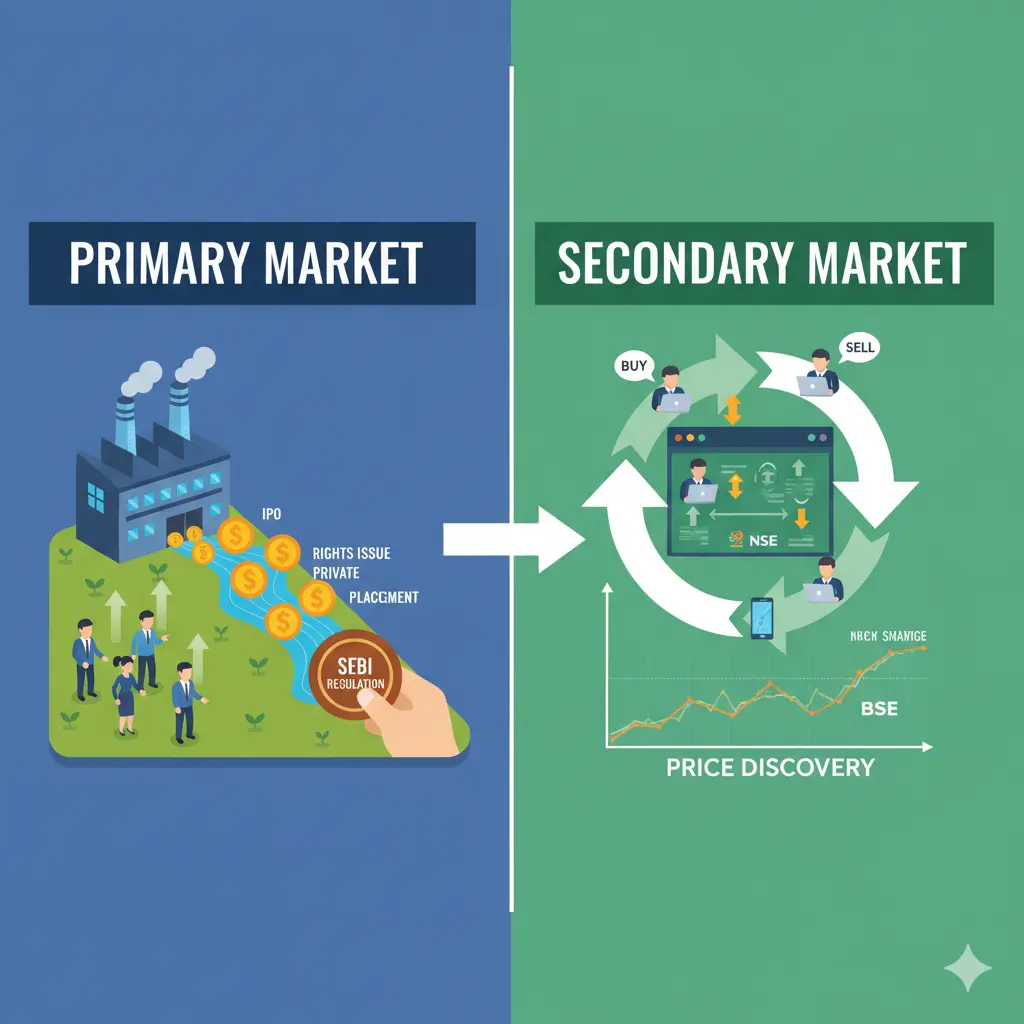
The Primary market is where securities are created and issued for the first time. Companies raise capital directly from investors through instruments like original Public Immolations (IPOs), rights issues, or private placements. Here, the money paid by investors goes straight to the issuing company, helping it fund growth, expansion, or debt repayment. Pricing is generally fixed or decided through book building, and regulatory bodies like SEBI ensure transparency and investor protection. Understanding the functioning of the primary market is an essential step for anyone learning how to invest in stock market, as it helps identify opportunities to participate in new company offerings from the very beginning.
The Secondary market is on the other hand where these issued securities are sold to the investors. This is on popular platforms like BSE and NSE stock exchanges. The company in this market is not directly paid, investors buy and sell among themselves and this provides liquidity and the on-going price discovery given the demand and supply.
Financial Prerequisites – What You Must Do Before Investing
Build an Emergency Fund for investing and trading
Before you start investing and trading, make sure you have an emergency fund, for emergency time .
- Save at least 6 months of living expenses in an emergency fund.
- And Keep this money in the savings account or fixed deposit (not in risky assets
Clear And High-Interest Debt
- Credit card bills
- Your Personal loans
- And Buy Now Pay Later (BNPL)
Investing and Trading while having high-interest debt can hurt your financial growth.
Decide Your Monthly Investment Amount
- Fix a monthly amount For SIP And DCA
- Stay consistent and avoid emotional decisions And Clear Mindset
2). SEBI rules and Investor protection

The Indian capital markets are very crucial and regulated by the Securities and Exchange Board of India (SEBI). SEBI was founded in 1992 and transparency, fairness, and investor trust is achieved through the formulation of harsh regulations to companies, brokers, and market intermediaries.
To safeguard the investors, SEBI requires full disclosures in the prospectuses and annual reports, which ensure that the investors obtain the correct information to make a decision. It regulates insider trading, fraudulent actions and price manipulations and thus ensures that the market is clean.
SEBI also regulates the operations of stock exchanges, mutual funds and credit rating agencies. Investors have a direct complaint against the market participants through grievance redressal mechanisms such as SCORES (SEBI Complaints Redress System). Financial awareness is also spread by investor education programs.
By combining regulation, monitoring, and enforcement, SEBI provides a safe and transparent environment, where investors’ interests are prioritized and capital markets function smoothly. Understanding SEBI’s role is crucial for anyone exploring how to invest in stock market, as it ensures that every transaction takes place in a fair and well-regulated ecosystem.
Risk Management – How to Protect Your Capital

What Is a Stop-Loss?
A stop-loss limits of your losses if the market moves against your target.
Example in Sensex: Buy price = 100 & Stop-loss = 90
Dollar cost Averaging – (DCA)
Invest The fixed amount regularly with consistency
Works well in the volatile markets
Investing Psychology
Avoid the panic selling
Do not invest in greed, fear and Revenge
3). Keeping up with market trends
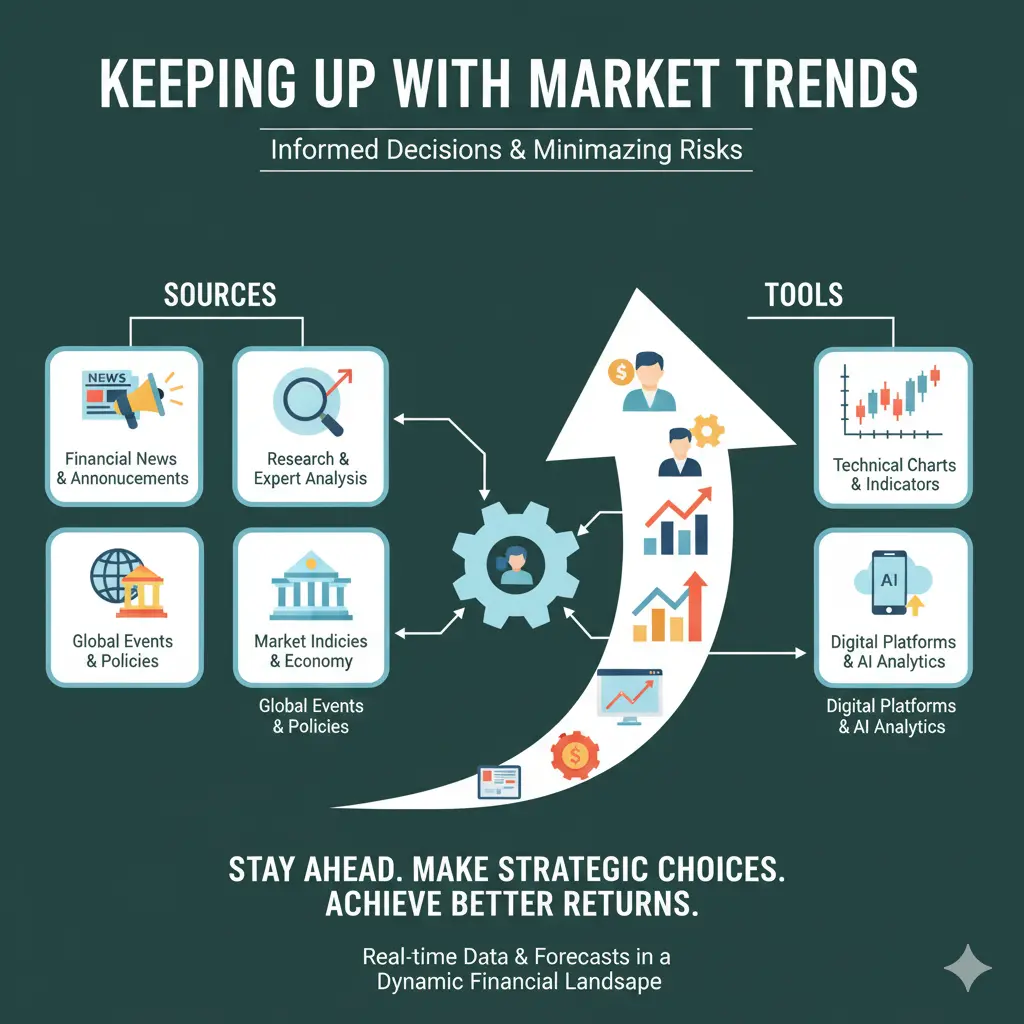
In the hectic investment world, it is vital to ensure that the trends in the market are below par to achieve an efficient decision-making and reduce risks. Market trends encompass the overall trend of the price of stocks, industries, or the economy within a given time span. Keeping in touch assists the investor to know about the opportunities, change strategies, and pitfalls to be steered away of.
Investors can track trends through financial news, stock exchange updates, research reports, and expert analysis. Tools like technical charts, market indices, and economic indicators provide valuable insights into short-term and long-term movements. Following corporate announcements, government policies, and global events is equally important, as they directly influence markets. Gaining an understanding of these factors is essential for anyone learning how to invest in stock market, as it helps in making informed and timely investment decisions.
Investors nowadays could access real time information and predictions in the form of mobile applications, digital platforms, and AI powered analytics. Finally, proactivity and consistency in tracking the dynamics of the market will help investors to respond in advance, make decisions, and get higher returns in an unstable financial environment.
4). Demat account and Trading account
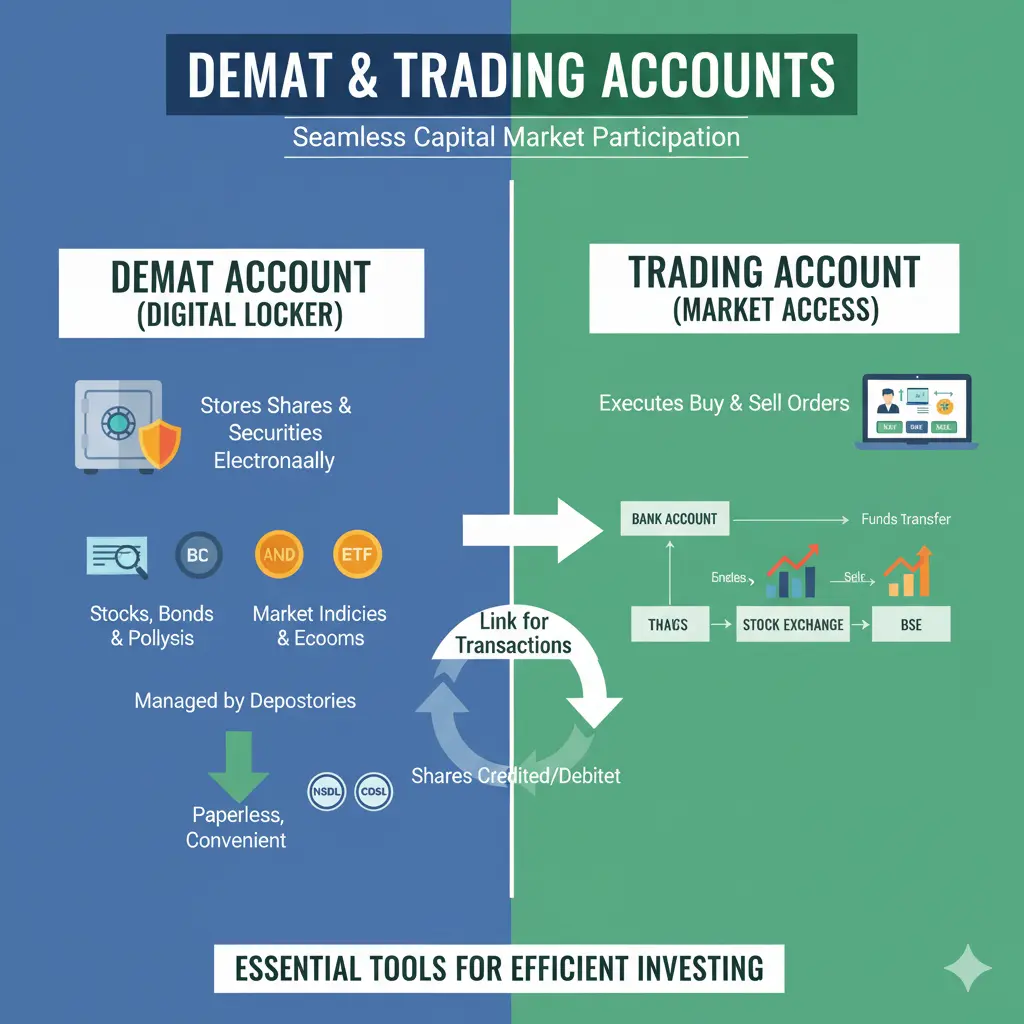
A Demat account (Dematerialized Account) is used to store shares and securities in electronic form. Instead of holding physical share certificates, investors keep them digitally, making the process secure, paperless, and convenient. It acts like a digital locker, holding assets such as stocks, bonds, mutual funds, and ETFs. Managed by depositories like NSDL and CDSL, a Demat account ensures safety, easy transfer, and reduced risk of loss or forgery. Understanding how a Demat account works is a fundamental step for beginners learning how to invest in stock market, as it serves as the foundation for trading and holding investments electronically.
Instead, a Trading account is obliged to sell or purchase these securities at the stock market. It is a connection between the bank account of an investor and the Demat account. An investor makes an order and the trading account carries out the trade in the exchange and the shares are subsequently credited or debited in the Demat account. Collectively, Demat and Trading accounts are indispensable instruments, which allow efficient participation in the capital markets in a manner that proves to be transparent and smooth.
Stock Research & Fundamental Analysis (Basics)

How to Evaluate a Stock – Quick Guide
1. P/E Ratio- (Price-to-Earnings)
Helps to determine whether a stock is overvalued or undervalued
2. EPS- (Earnings Per Share)
He is Shows company profitability
3. Debt-to-Equity Ratio
Indicates how much debt in company has
Simple Example: Low debt & consistent profits usually indicate a healthy company.
5). Long-Term Investing vs. Short-Term Trading
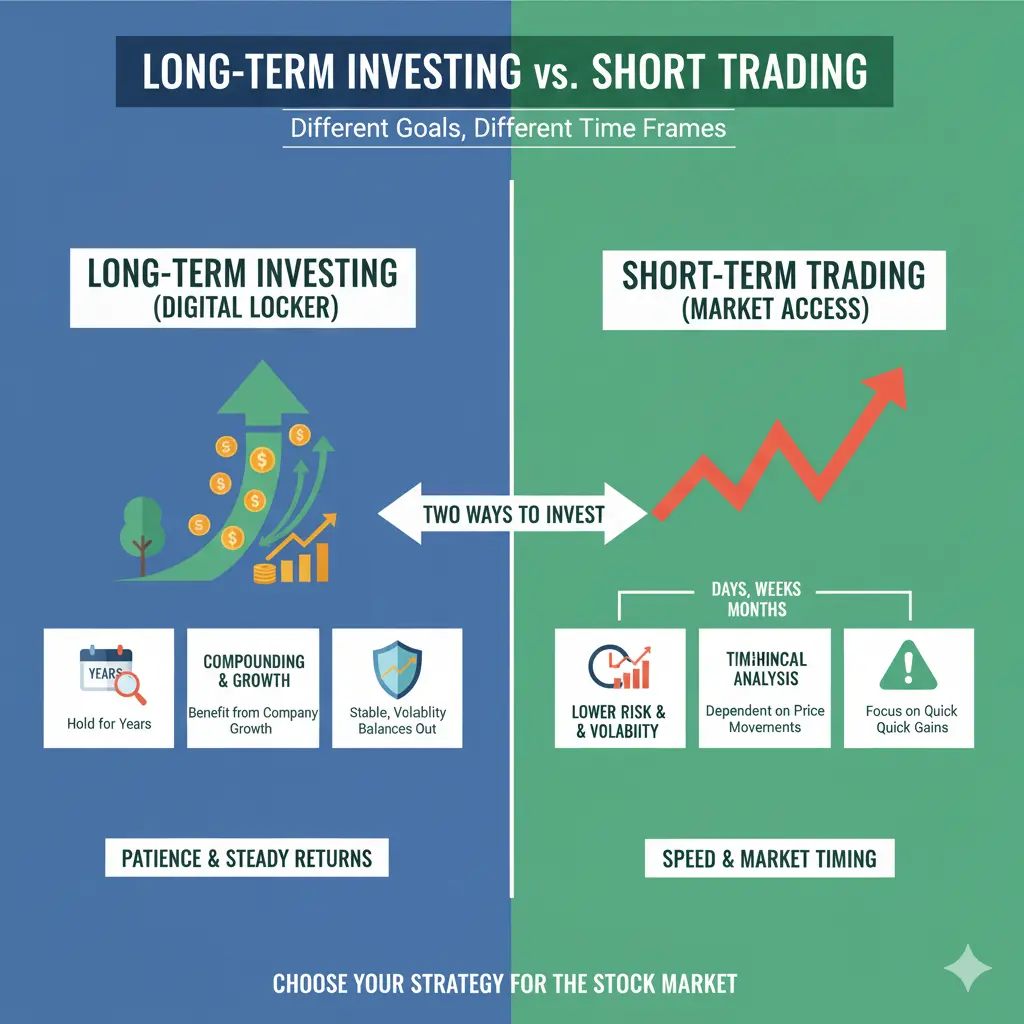
Long-term investing and short-term trading are parts of the stock market. There are two ways to put in money in the stock market the two main approaches known as long-term investing and short-term trading. Both aim to earn profits, but their time frames and strategies differ. Understanding these approaches is essential for anyone learning how to invest in stock market, as it helps in choosing the right method based on financial goals, risk tolerance, and investment horizon.
Long-Term Investing is a way to participate in the stock market in which investors hold stocks in mutual funds and ETFS for years. then make benefit from the company growth and also compounding and dividends. This mode is stable and also risk is low because this is a long run market and volatility gets balanced out.
Short-Term Trading investors makes profits quickly some time like over a few days , weeks, or months profits can earn easily but the risk is also high.
This is dependent on price movements timing and technical analysis.who was unlike long term investing so choose short term trading for quickly making profits.
6). Fundamental Analysis Basics
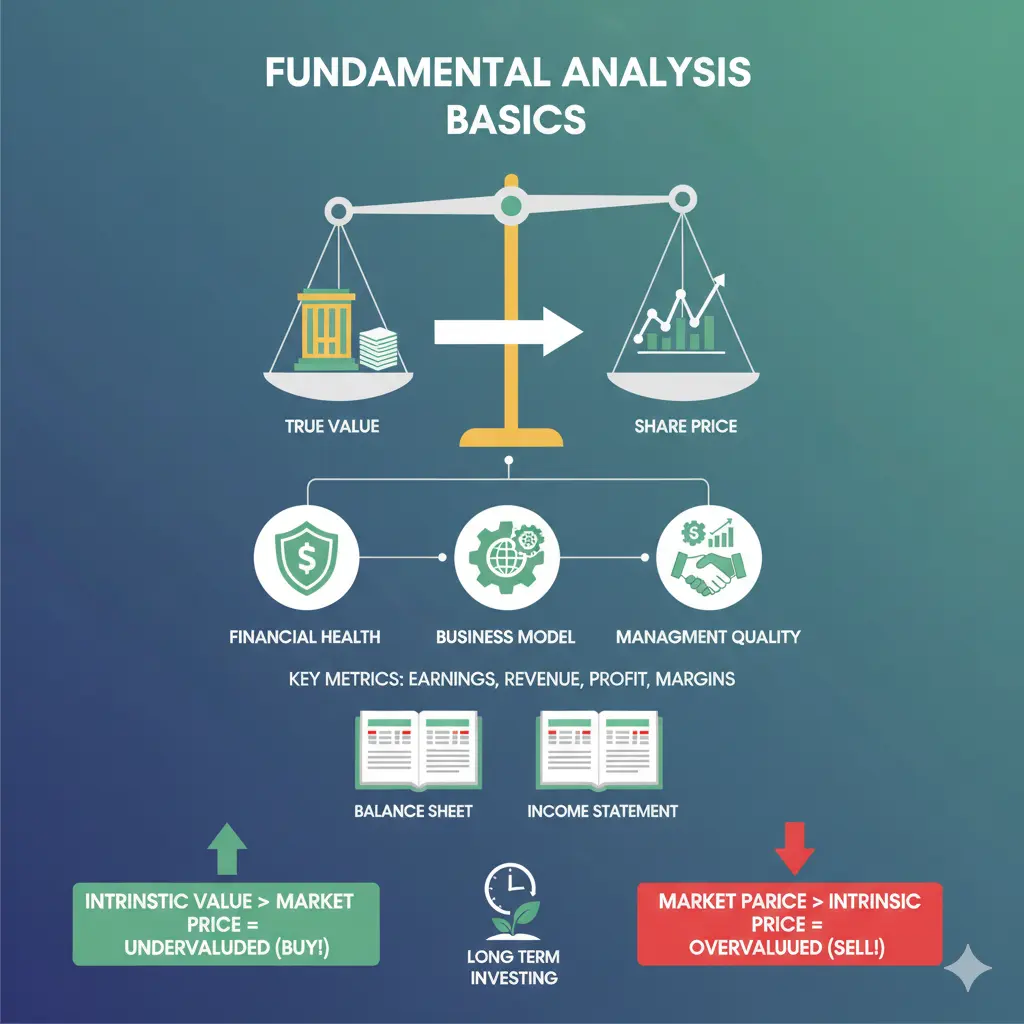
fundamental analysis is a technique where we are able to know the real worth of a company and their not to concentrate on share prices that are prevailing but to study the financial health of the business, the model that it is running and also the quality of the management that the company is in and also the future growth prospects. The financial statements analysis of the company in terms of the balance sheet and the income statement including the earnings, revenue, profit and margin of the same. This is a significant aspect of long term investing as fundamental analysis reveals the company strength as well as reveals the growth of the company.
The main thing is, if the intrinsic value of a company is higher than its current market price, then the stock is known as undervalued it is a good time to purchase it. On the other hand, if the market price is higher than the intrinsic value, the stock is known as overvalued. Instead of tracking daily stock price movements, understanding intrinsic value helps investors make smarter decisions and is an important concept for anyone learning how to invest in stock market effectively.
7). Technical Analysis Basics
Technical analysis is a method used to predict the future price movements of a company or its financial assets. It relies on various tools like candlestick charts, moving averages, RSI (Relative Strength Index), MACD, and support and resistance levels. These indicators help identify whether a stock is overbought or oversold and determine the right time for buying or selling.
The point is that when the intrinsic value of a company is greater than its present market price, then the stock is called undervalued the stock is a good time to buy. Conversely, when the intrinsic value falls below the market price, the stock is referred to as over valued. Rather than following the day to day stock prices, learning how to invest in stock market well or any other fund type requires one to understand intrinsic value and this is a valuable aspect to consider when learning to invest in stock market successfully.
8). Value Investing vs. Growth Investing
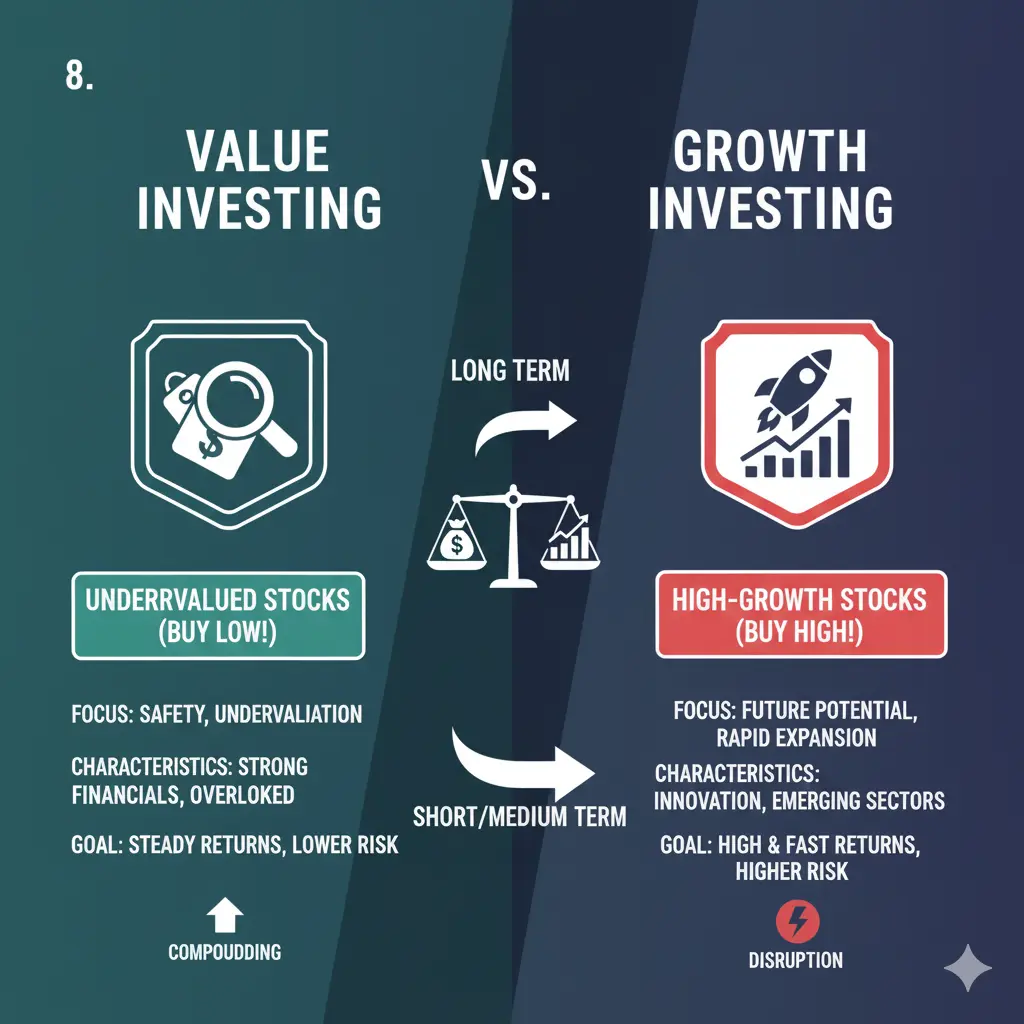
Value Investing and Growth Investing are famous strategies of the stock markets that are known to invest in that company since stock is undervalued and as such the real price value of the stocks of the company is a little higher than the current value of the commodity investors seek such company which has a store of finance yet are temporarily forgotten by this market this strategy has been known to have the least risk and a stable income.
Growth investing Growth investing in this investor focus on whose company is earning and revenue growing at a good rate and this company are often in a new technologies and innovations or new sectors and the other thing is that their stocks is often expensive and it is expecting to take higher returns and higher generated in future.
Growth Investing in this investors are interested in the companies whose incomes and revenues are increasing fast. Such companies are usually associated with innovative technologies, innovations, or a new field. Their shares tend to be pricier, although the growth investors anticipate better returns in the future. Growth investing focuses on potential in the future and wants to make more returns sooner. This strategy is significant in understanding how to invest in a stock market since it enables one to know those companies that hold good long-term growth prospects.
9). Common stocks
Common stocks denote the ownership of a company. In purchasing common stocks, you in a way become part-owner of such a business. This would provide you with two key advantages: first, you will have the ability to get money in the form of dividends (a portion of the companies profits) and secondly, in the event that the company expands, then the value of your share can go up providing you with a capital gain. Learning the concept of common stocks is a key attribute to any individual who seeks to learn how to invest in stock market since they are the basis of a majority of investment portfolios and provide both income and long-term growth prospects.
Being a common stockholder, you receive as well the voting rights in key company decisions, such as the selection of the board of directors. However, there’s a risk too. In case the company does not perform well, the share value might fall, and you might make a loss. Despite these risks, common stocks are believed to be one of the most appropriate methods of accumulating wealth in the long run. They compensate long-suffering, intelligent investing, in quality firms.
10).Preferred stocks
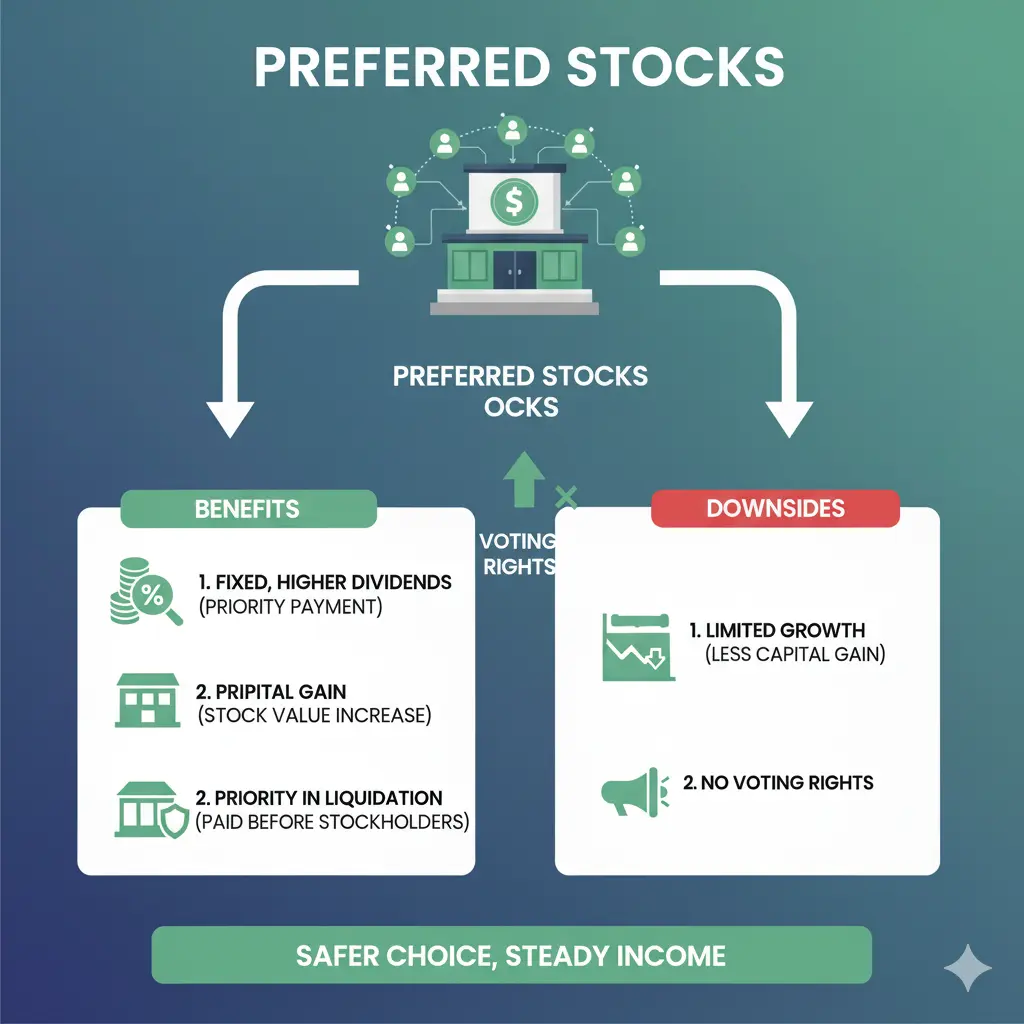
Preferred stocks are a form of investing in a company like the common stocks although there are a few major differences. Preferred stockholders are typically given regular fixed dividends which are higher payments than the common shareholders normally get. These dividends are normally paid out prior to any cash being received by the common stock holders. The role of the preferred stock is something that one must know when learning to make investment in the stock market because it provides the balance between the low risk and high risk of the presence of the stable income and moderate risk, so it is an excellent means of diversified investment.
In contrast to common stocks, preferred ones do not typically grant a vote and therefore, their owners have no influence on decision making in the company. Nonetheless, in case the company in question is in bad financial trouble or even bankrupt, the preference stockholders get precedence over the common stockholders in the payment order.
Preferred stocks are considered to be a safer alternative to common stocks due to the fixed income and better standing during liquidation. On the downside, they are not likely to be able to make huge profits, as they do not increase their value to significant levels in case the company becomes very successful. Being equipped with the pros and cons of preferred stock is something one must know when getting to know how to invest in stock market since this will help them make sound decisions between the stability and the growth potential.
11).Swing trading
Swing trading involves a trader purchasing and selling stocks, crypto, or other assets in a short-term (days to weeks) to enjoy a profit off of short to medium-term price fluctuations. As opposed to day trading, you do not need to follow the market throughout the day, you hold your positions longer so as to be able to get the swings in the market. Charts, patterns, and market news are tools used by the traders in making the decision of either entering a trade or leaving it at the right time. Swing trading is not as stressful as day trading but involves attention, patience, and savvy.
The idea is simple: buy when the price is likely to rise, sell when it peaks, and repeat making steady gains over time. Learning swing trading techniques is a practical step for anyone exploring how to invest in stock market, as it provides a method to profit from short- and medium-term market movements.
12). Risks of investing in the stock market
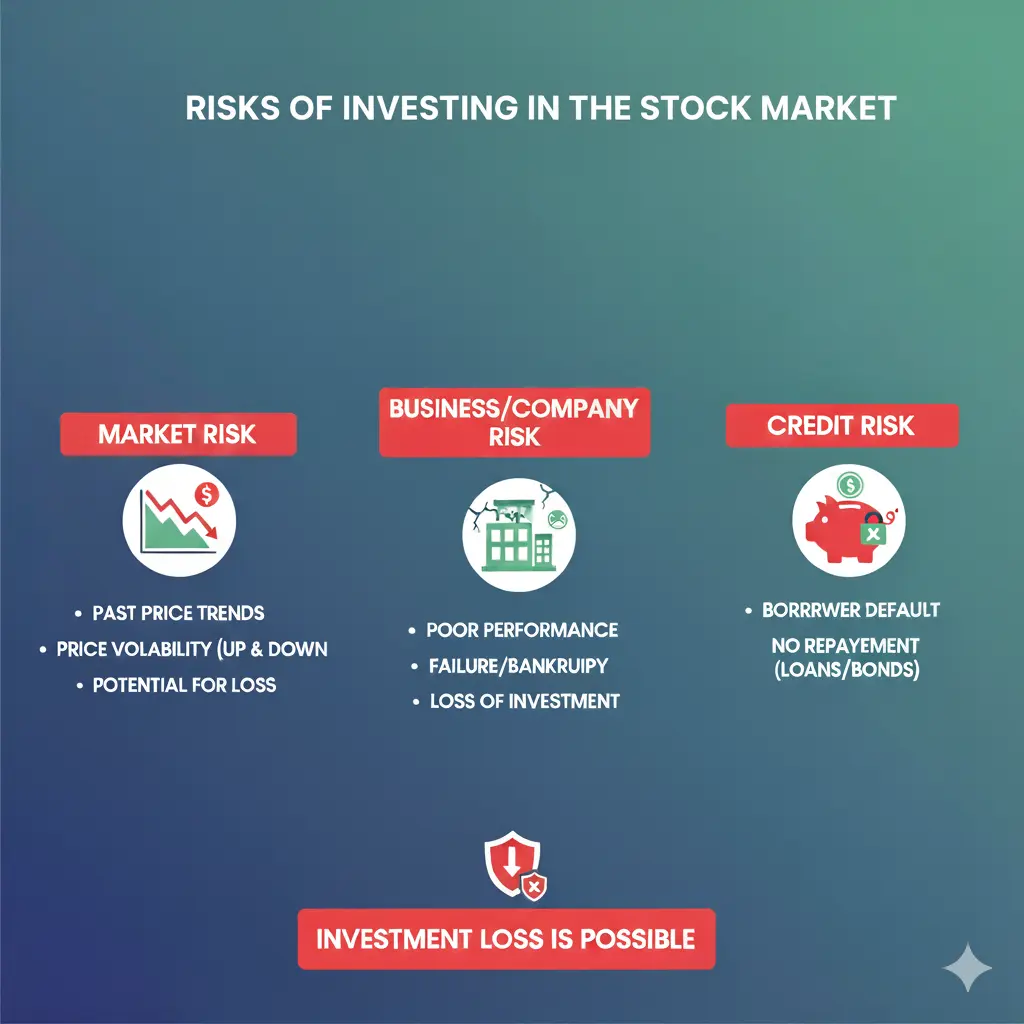
The share market has a lot of risk since at times prices can increase or decrease thus when we invest our money we may get a loss or even a profit. It may also happen that the company we invest is poor or fails; the company may be unwilling to accept the shares at the current price we offer and that the price is too low, we may incur losses.
On the same note, when an individual, business, or a government obtains money as a loan, there is the risk that he or she will not be in time to repay the money or interest, this is termed as credit risk. These are important risks that one ought to know when How to invest in stock market as it will help in making decisions in an informed way and to control any losses that might arise.
13).Rewards of investing in the stock market
By investing in the share market, our money can grow over time. When a company’s value and profit increase, the price of its shares automatically goes up. By investing in the share market, one can build good wealth for the future. Shares can be easily sold when needed. Learning the basics of how to invest in stock market is essential to make informed investment choices and maximize potential returns over time.
14).Different ways to invest in the stock market
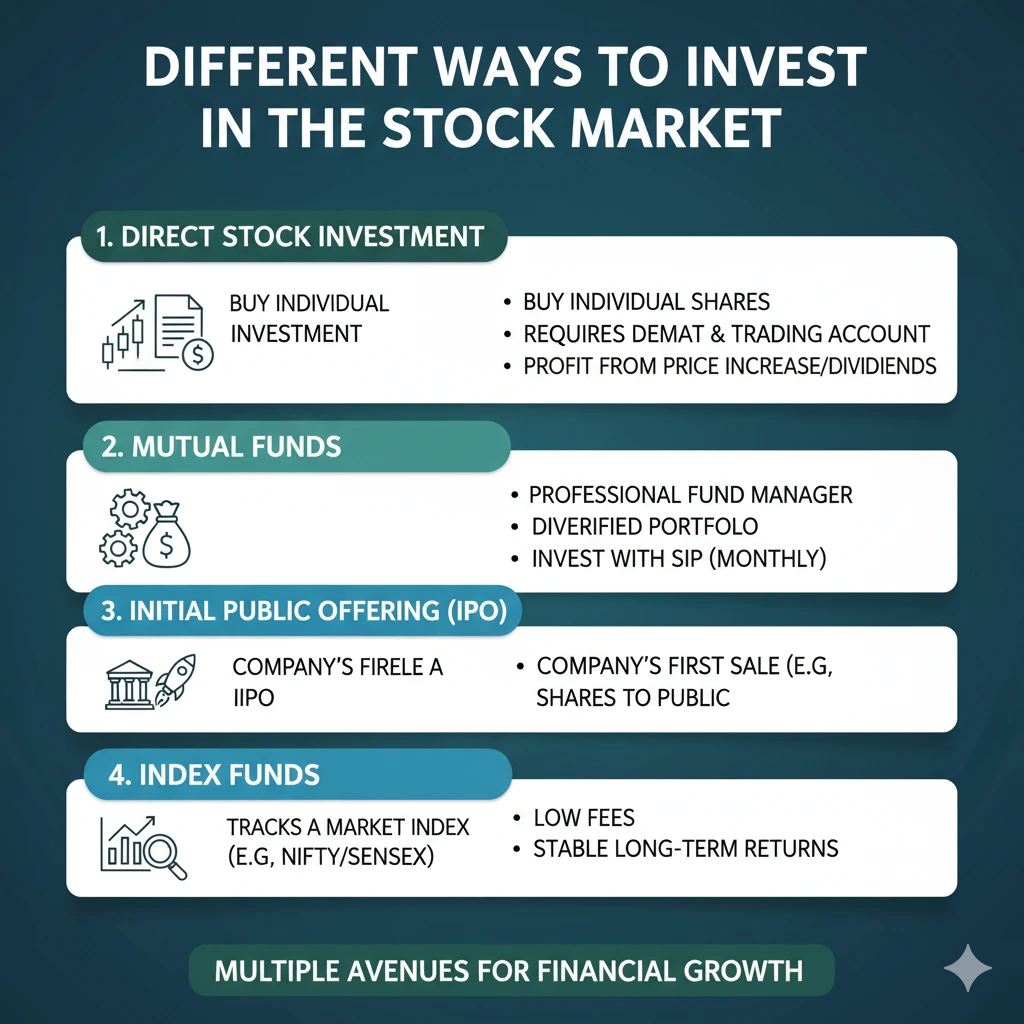
1- Direct stock investment :- In this you can directly buy shares of any company for this a demat account and a trading account are required profit is earned when the share price increases or when the company gives dividends.
2- Mutual funds :- In this the money is invested in multiple companies by a fund managerYou can also invest a small amount every month through SIP.
3- Initial Public Offering When a company sells its shares in the stock market for the first time, it is called an IPO.
4- Index funds :- This is also a type of mutual fund, but it specifically follows an index (like Nifty or Sensex). It has low fees and provides stable returns in the long term.
15). High growth potential
When a business is growing rapidly and its demand in the market is increasing, it is said to have high growth potential. For example, when Zomato started, it was seen as having high growth potential because the trend of online food delivery was growing rapidly. Companies with rapid growth in sales, profits, and expansion can be beneficial to invest in, as they have high growth potential. Understanding how to identify such companies is important for anyone learning how to invest in stock market, as it helps in selecting stocks with strong future growth prospects
conclusion
The stock market serves as a robust platform for wealth accumulation and the attainment of financial independence; however, achieving success is contingent upon awareness, discipline, and strategic planning. Just as understanding the difference between AI and Machine Learning is crucial in the tech world, a comprehensive understanding of both primary and secondary markets, adherence to SEBI regulations, and the utilization of instruments such as Demat and Trading accounts establish a solid groundwork for secure investing. Learning these fundamentals is essential for anyone exploring how to invest in stock market, as it provides the knowledge and tools needed to make informed and profitable investment decisions.
By acquiring knowledge in fundamental and technical analysis, investors are better equipped to make informed decisions and reduce risks.
Staying abreast of market trends, selecting the appropriate strategy between long-term investing and short-term trading, and considering options such as mutual funds, IPOs, or index funds contribute to diversification and the enhancement of returns. Platforms and insights from trusted agencies like Shark Mondo can further guide investors in making informed choices. Ultimately, ongoing education, patience, and well-informed decisions empower investors to capitalize on high-growth opportunities and achieve enduring financial stability. Understanding these strategies is vital for anyone learning how to invest in stock market, as it helps in making smarter, goal-oriented investment decisions.