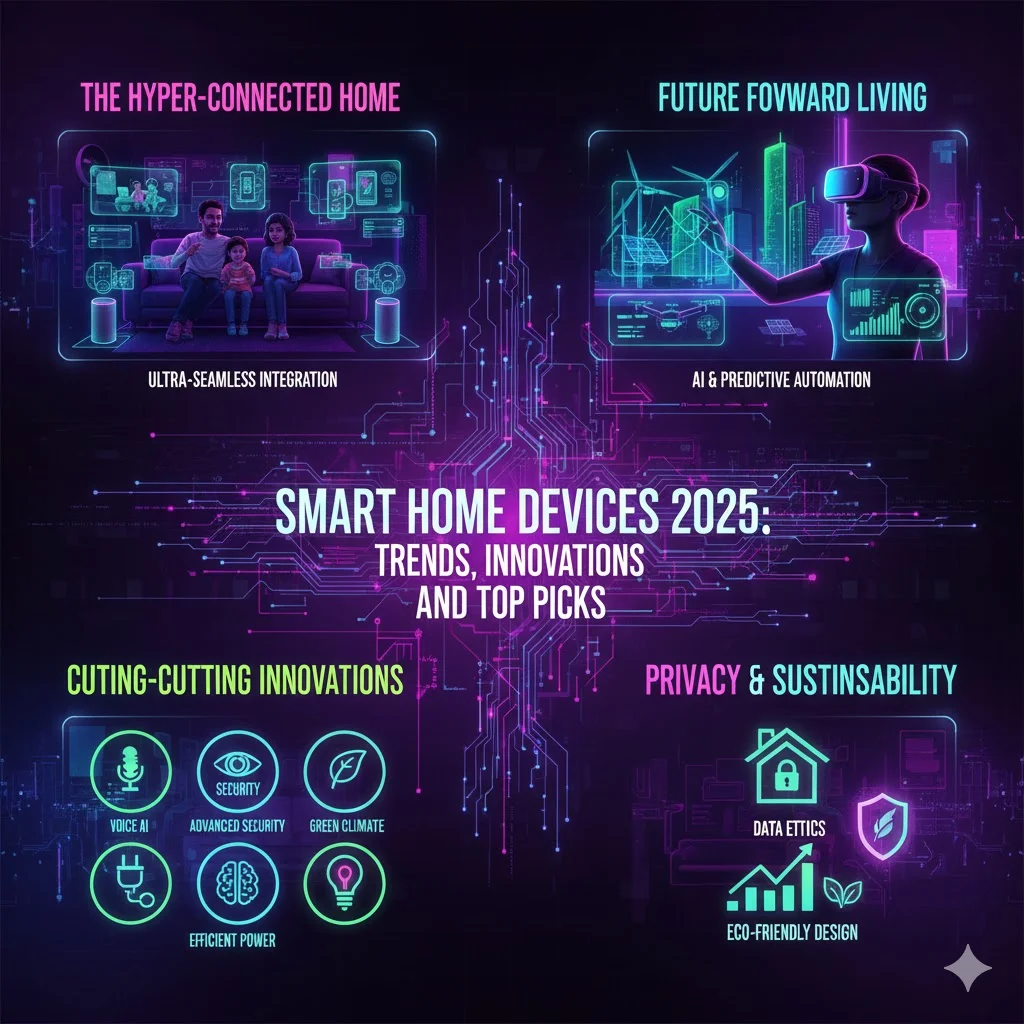
Table of Contents
Smart Home Devices 2025: Trends, Innovations, and Top Picks
1. Introduction
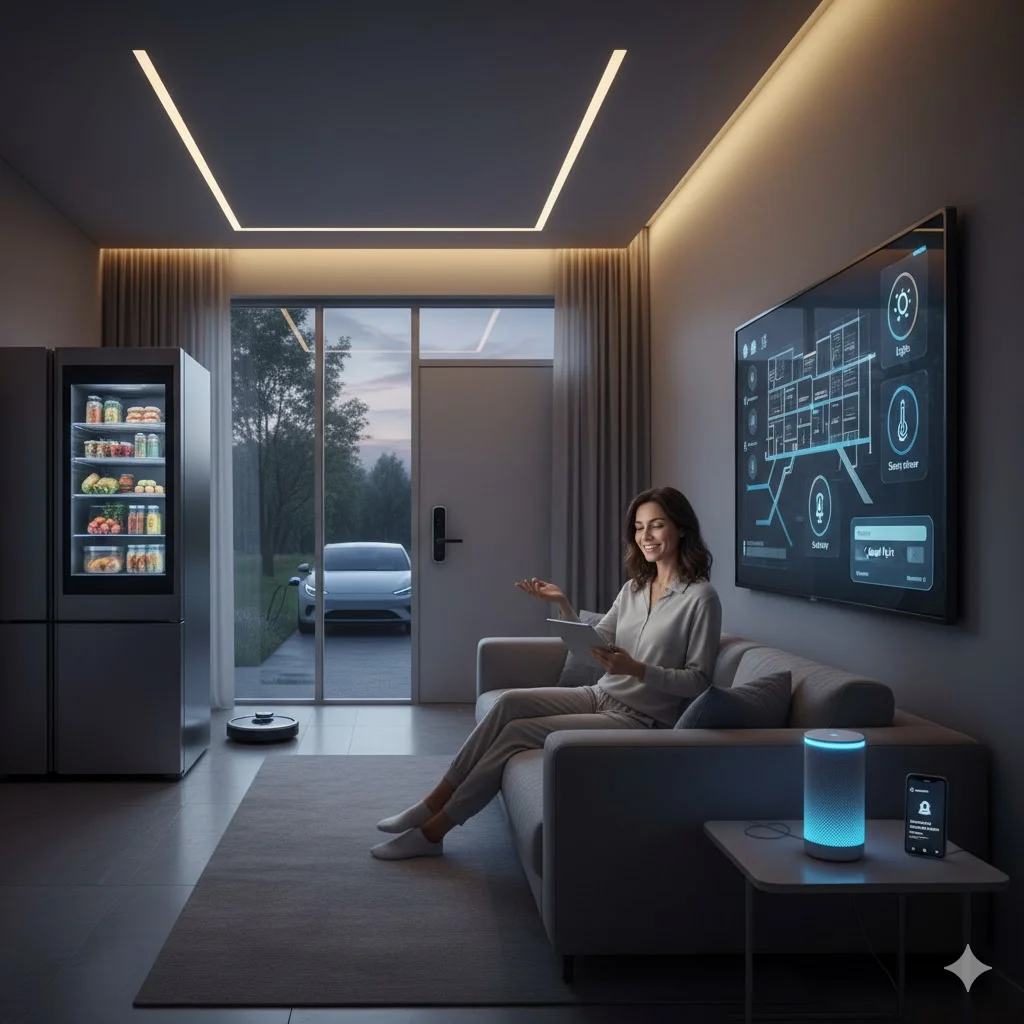
- What’s a Smart Home? Definition & Key Concepts = A smart home is a house where common devices like locks, lights, fans, or even refrigerators are connected to the internet in today’s digital world and can “talk” to each other. These smart home devices can be controlled from your phone, laptop, tablet, or even through your own voice. Just imagine switching off all the lights just by saying “Good night” or getting a notification on your device if someone rings the doorbell at your home while you’re not there. These ideas are designed to make life simpler, safer, and more comfortable.
- Difference Between Smart Home & Home Automation = Many people are confuse “smart home” with “home automation,” but there is a small difference in that. Home automation is refers to pre programmed actions. For example, your lights automatically turn off at 10PM. A smart home is on the other hand, is more flexible. It lets you to control and monitor the devices in the real time, even from the outside your home, only by using the internet.
- Why Smart Home Devices Are Gaining Popularity = Smart home devices are becoming popular in today’s digital world because they save time for humans, cut electricity costs, and provide safety. With busy lifestyles, people love the convenience of controlling smart home devices from their phones. Rising energy bills also push families to adopt smart home devices like smart there most or smart bulbs that reduce power usage.
2. How Smart Home System Works
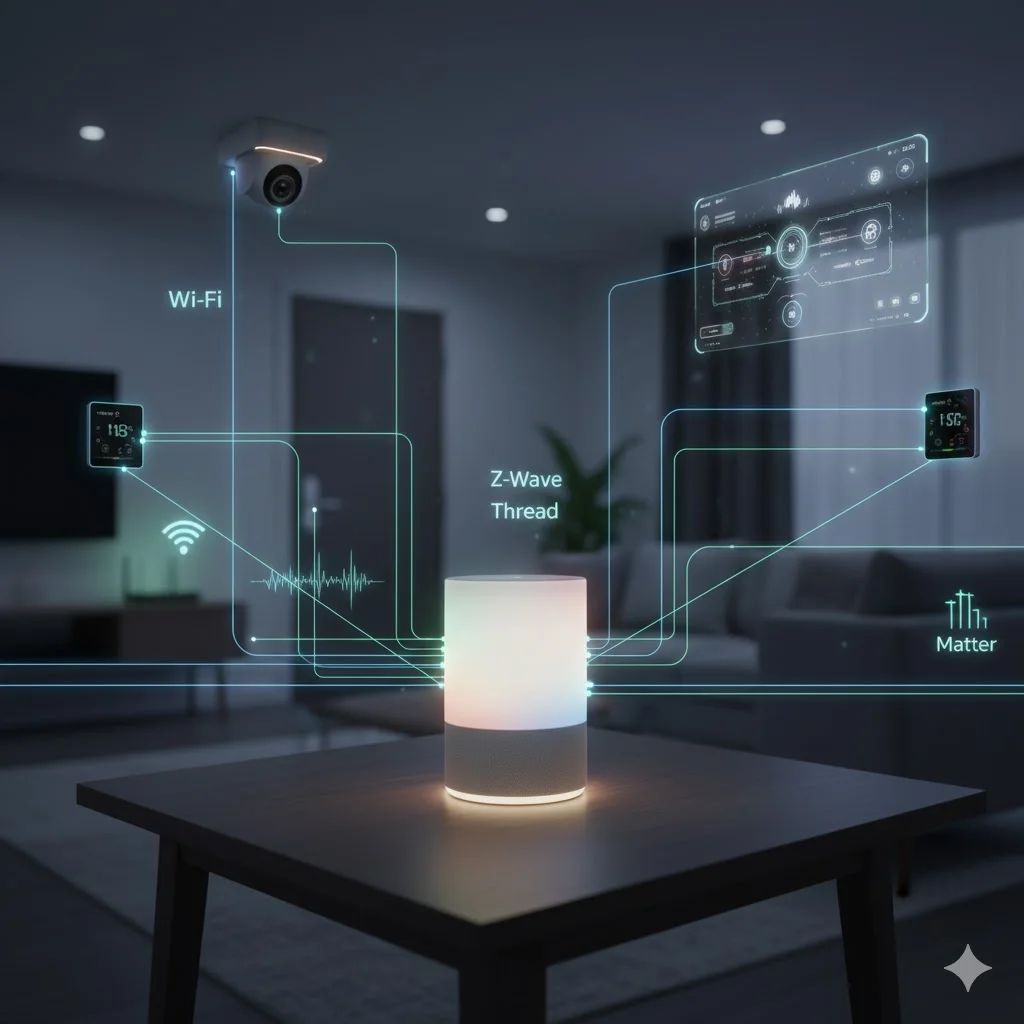
- Components of a Smart Home: Devices, Network, Interfaces and hubs = A smart home system is like a team working together in one place. The smart home devices are the players bulbs, locks, or cameras. The hub (or controller) is the captain, managing communication between the smart home devices. The network, usually WiFi, is the ground where the team plays. Interfaces like mobile apps or voice assistants are the coaches, giving commands. Together, they create a smooth experience and deliver truly smart living.
- Communication Protocols : WiFi, Z Wave, Thread, Matter, Bluetooth = Smart devices don’t just connect randomly to your phones or devices, they use communication languages called protocols. WiFi is the most common, but it can also drain the power. Bluetooth is good for short distances but not for the long range where it fails. Zigbee and Z Wave are popular for stable, low power connections, often used in the sensors or lights. Thread and Matter are new technologies that promise the better compatibility, meaning your devices will work well together, no matter the brand.
- Role of a Smart Home Hub / Smart Home Controller = If you have smart home devices using different communication methods, the hub brings them together and ensures that they understand each other well. Some popular hubs are the Amazon Echo and Google Nest Hub. Without a hub, managing multiple smart home devices may feel like juggling too many balls at once. With a hub, everything works in balance, making your smart home easier to control.
3. Types of Smart Home Devices
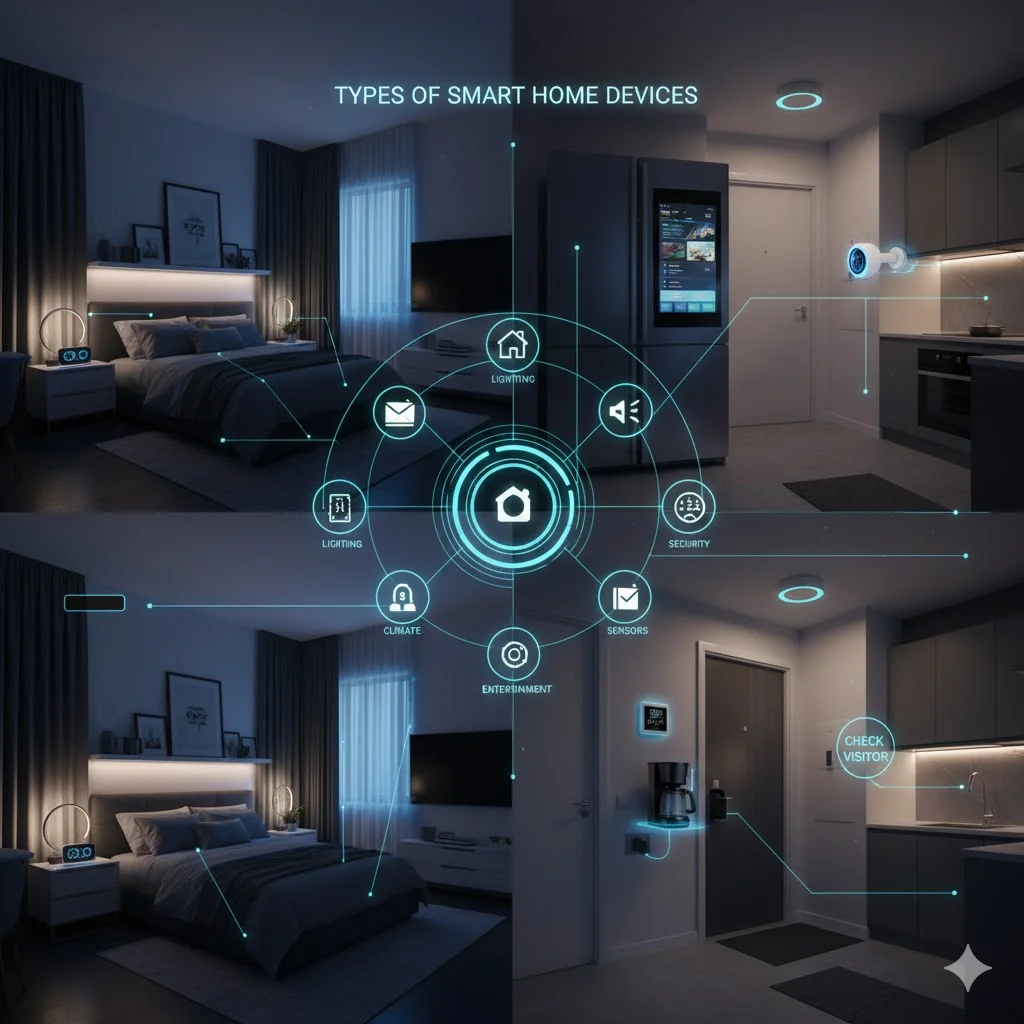
Smart homes are the devices that make our everyday life and tasks easier, safer, and more comfortable. Let’s look at some the most popular types of smart home devices.
- Smart Lighting & Bulbs = These let you the control brightness and colour from your phone or your own voice. You can set the schedules also can create moods, or even it save energy by turning them off or on by remotely.
- Smart Thermostats & Climate Control = They learn your routine and adjust heating or cooling automatically according to your need . This not only keeps your home comfortable and easy but also lowers energy bills.
- Smart Security Devices = From the video cameras to lock your smart locks of door, these gadgets protect your home by smart security. You can check visitors at your home by camera or another sensors also unlock doors remotely, or get the instant alerts if something seems wrong at the home.
- Smart Sensors = Smoke, gases, water leak, or motion sensors keep you safe by the detecting issues early and sending alerts before accidents.
- Smart Plugs & Switches = These convert normal devices into the smart devices. Plug in a lamp or fan, and suddenly you can control it from your phone as your needs.
- Smart Entertainment & Appliances = Smart TVs, speakers, fridges, or ovens make your daily tasks fun and comfortable, You can just ask to your Smart TVs “Play Tmkoc Show” it will play the show.
4. Benefits of Using Smart Home Devices
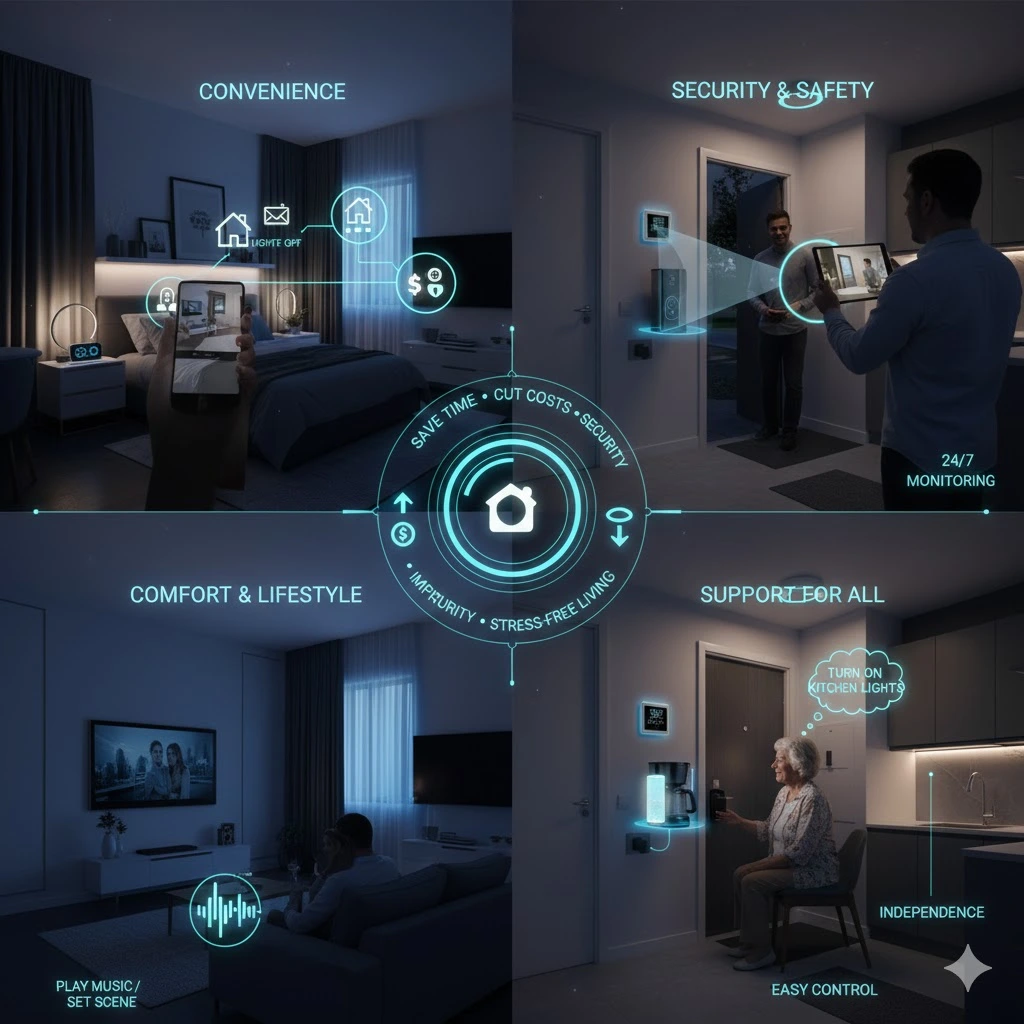
- Smart home devices are becoming a part of our modern living because they bring the real benefits to our everyday life. The biggest advantage is the convenience and comfort. You can control lights, appliances, or even your door lock from anywhere using by just your phones or your own voice. No need to check that fun is of or not.
- Security and safety are also the top reasons people are choosing smart homes. Smart cameras, doorbells, locks, and sensors keep your home protected 24/7, Also when your are not at the home, giving you peace of mind when you are at work or traveling.
- These devices also enhance the comfort and lifestyle. You can dim your lights for watching movies at night, play music hands free by just telling the device, or set the perfect room temperature before you arrive home by giving instructions to your ac.
- Lastly, smart homes provide a support for the aged and differently abled peoples. Voice assistants make everyday tasks easier, safer, and more independent to them because they suffer everyday to control all devices physically.
- In short, smart home devices save the time, cut costs, and improve the security, and makes your lifestyle more enjoyable and stress free.
4.1 Smart Homes & Financial Benefits (Insurance and Resale Value)
Smart home security systems can help lower home insurance premiums”
Smart homes tend to give superior resale value
Preference for energy efficient, automated homes
To be
5. Challenges & Considerations Before Buying

- Issues of Compatibility & Interoperability = Not everything works well together in the smart world. Since differing brands use their own systems, you end up managing a proliferation of apps, and you lose the convenience of having a system that is a “smart” system.
- Issues of Privacy & Data Protection = They keep their tabs on a day tod ay schedule and the personal details. If their security isn’t good enough, hackers can gain the access and steal those details and cause the real privacy and security problems.
- Cost: Initial Outlay & Maintenance = The cost of smart home systems is high. Despite the high initial cost, the cost of repairs and software upgrade may render it unaffordable for many people to purchase.
- Network Requirements & Reliability = They rely heavily on a good and quick Internet connection. If the WiFi connection is bad or goes off, the complete system of smart home devices may malfunction and completely nullify the convenience aspect.
- Power Usage & Environmental Impact: Smart home devices are kept operational as much as possible, which can lead to greater utilization of power.
6. How to Choose the Best Smart Home Device
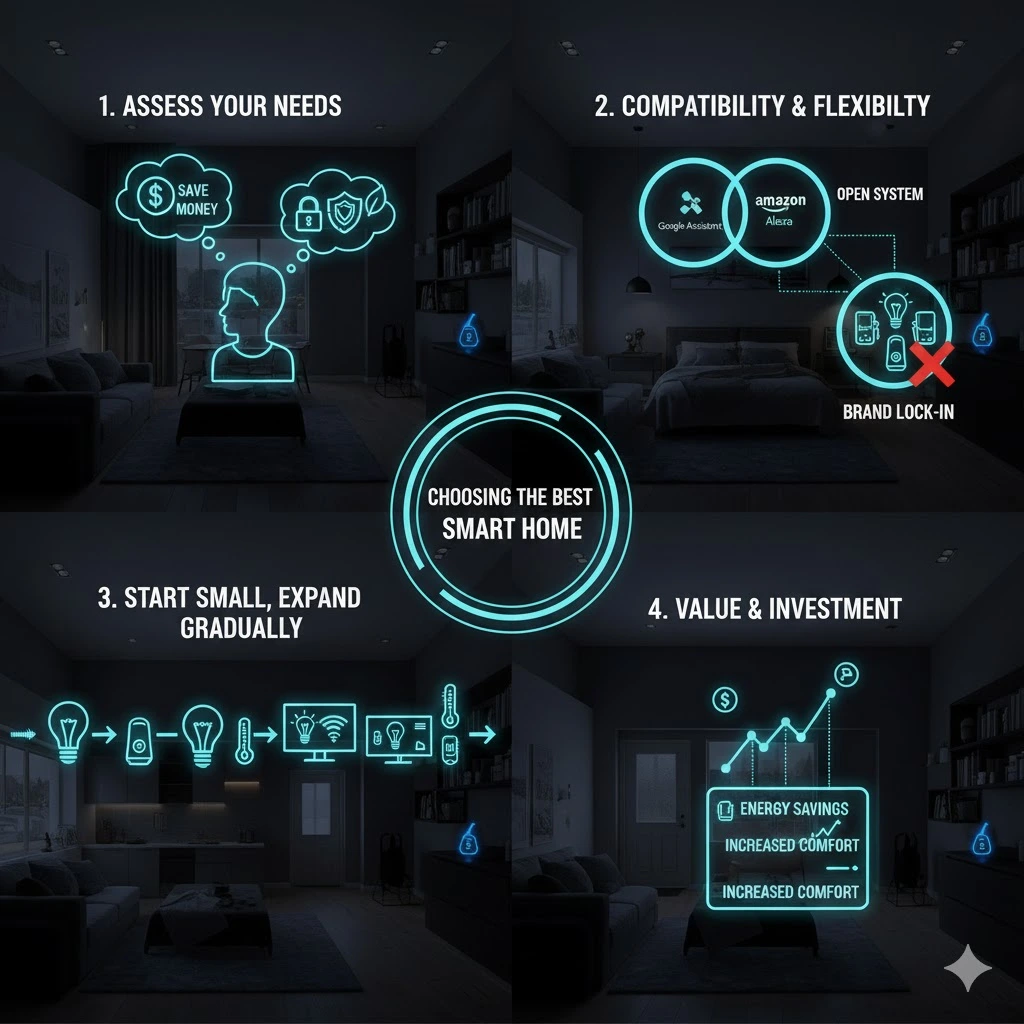
- Learn the Needs First = hink about whether you simply require comfort or longer term benefits such as reducing your current cost of power bills and home protection.
- Brand Lock in vs. Open Choice = Some brands will remain with their products, yet with open systems you are able to fit a TV from one and lights from another. Flexibility suits us best.
- Key Features = Get voice enabled products (Google/Alexa), convenience of operating a mobile app, and choice of automation features to automate everyday activities.
- Expand Gradually = You don’t have to buy everything at one go. Begin with a low key setup and upgrade with gadgets as time goes. 5. Think Money Value Smart devices are an investment more comfort and safety and energy savings back to you in the long run.
6.1 Smart Living on a Budget: Affordable Starter Kits and Systems
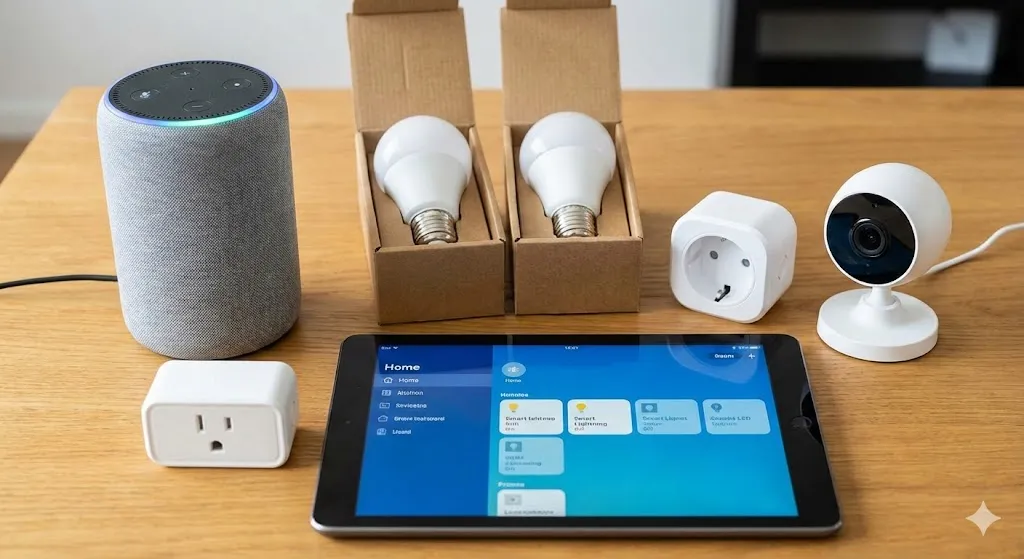
Budget Friendly Smart Home Starter Kits :
If you are a beginner, you can start with inexpensive devices such as smart lighting, smart plug devices, and a smart speaker device. The devices are very inexpensive and offer instant benefits and functionality.
Affordable Devices for Everyday Use
Brands such as Xiaomi, TP Link, and Amazon provide cost effective smart home products that can do all fundamental jobs, including tracking energy, light, and home security.
DIY & Open Source Smart Home Solutions
Tech savvy consumers, however, have the advantage of do it yourself approaches powered by Raspberry Pi or open source alternatives, which could decrease the reliance on costly proprietary environments.
Tips to Save Money While Building a Smart Home
Start small and scale up gradually
Choose devices compatible with Matter
Avoid brand lock in
Focus on energy saving devices first
7. Setting Up Smart Home Devices
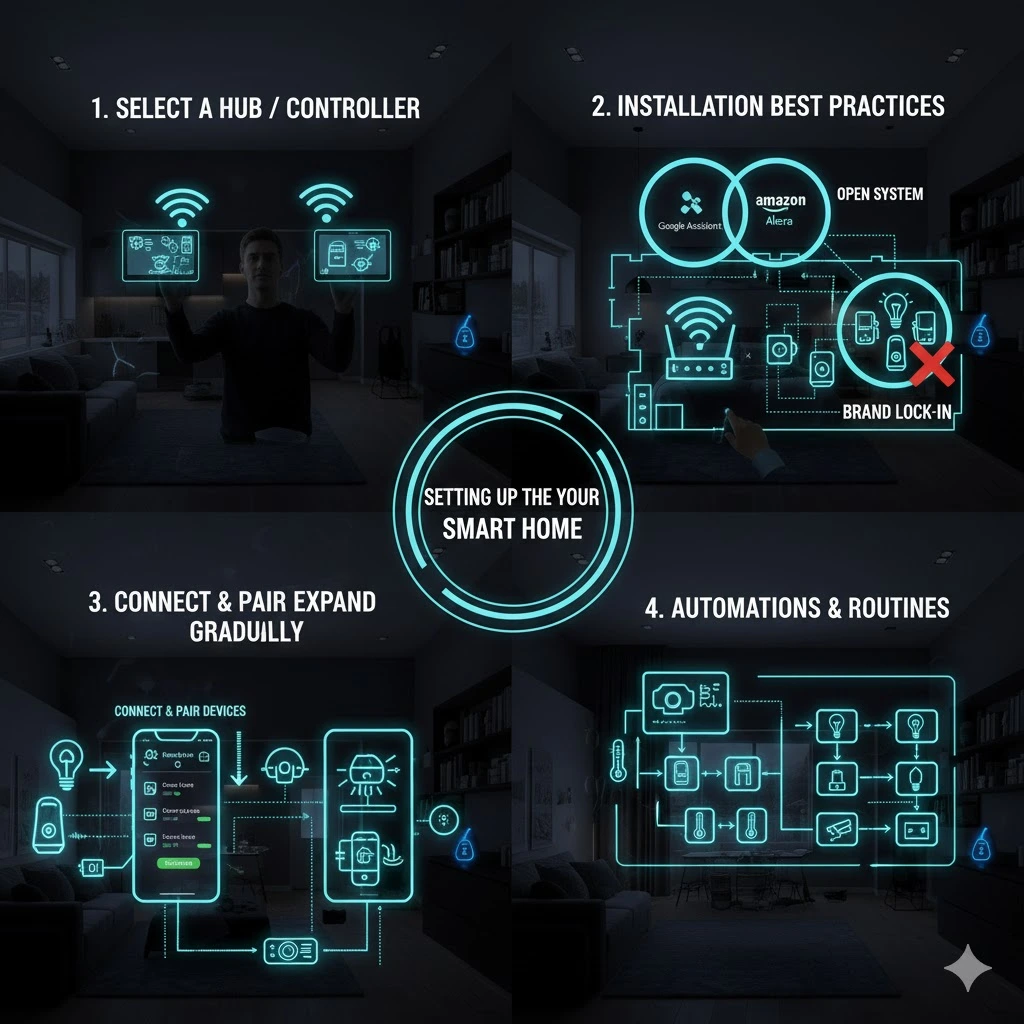
- Selecting a Hub or Controller = The initial step is to select the appropriate hub or controller it’s the central brain that operates all your smart devices at home.
- Installation Best Practices = Plan first before you begin installing. Install devices in good locations where they will function well and ensure your WiFi is powerful. If in doubt, better call an expert to assist with wiring.
- Connecting & Pairing Devices = Next, connect and pair your devices with the hub through the right app. That way, all your things communicate with one another effectively.
- Setting Up Automations & Routines = Then, automate things such as turning lights on or off automatically at scheduled times. It truly saves time and simplifies everyday work.
- Maintaining & Updating Devices = Lastly, regularly check for updates on devices and hub software. Solve minor problems immediately so everything works problem free without glitches
8. Advanced Features & Trends
- AI and Machine Learning in Smart Homes = AI and machine learning are essentially a sort of intelligent assistant in the home. They know our full routine, conserve the electricity and power, and even enhance security such as turning off lights when there is not needed or automatically locking the doors.
- Voice AI and The Predictive Automation = Envision your home already knowing when you will require the fan or AC. That is the power of predictive automation. And with smart home devices and voice assistant technologies like Alexa or Google Home, you don’t even have to use the remote you only need to say it, and the task is immediately done.
- Integration with IOT & smart cities = When houses are connected with smart city infrastructure, things get better like better traffic lights, better power supply, and generally more convenience in day to day living.
- New Protocols and Standards (Matter, etc.) = New standards such as Matter ensure that devices across various brands interoperate. So, whether your light bulb is from Philips or a fan from Havells, they fit seamlessly in one system.
- Smart Home and Health Monitoring = Smart homes also manage health. Devices can monitor heart rate, raise an alarm in cases of emergencies, and keep the elderly family members secure.
8.1The Cultural Shift: Smart Homes and Modern Life
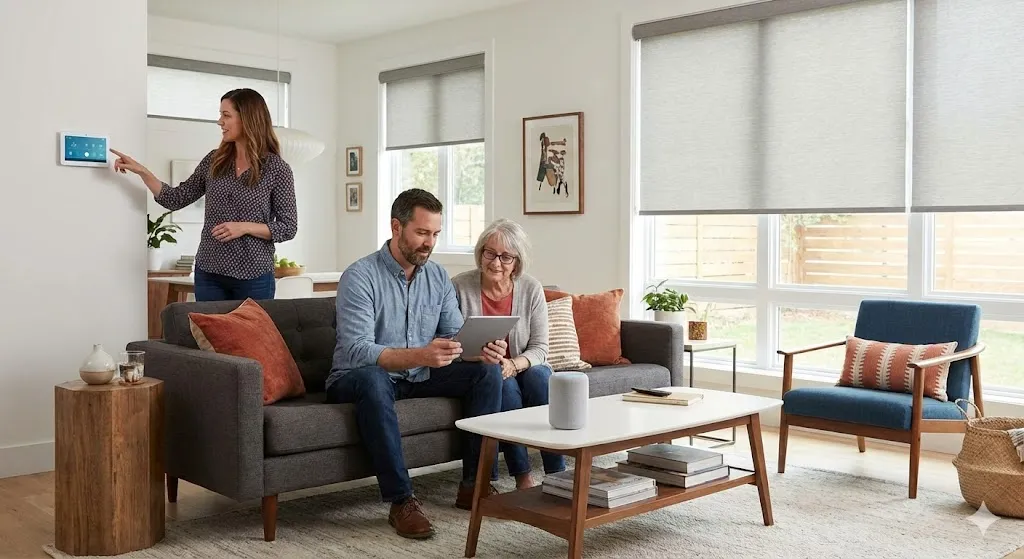
Changing Family Routines and Daily Habits
Automation has also made mundane chores such as lighting, cooking, and security easier for families to be more together and engaged in such meaningful pursuits.
Work From Home and Smart Living
With the rise of remote working culture, the role of “smart homes” gains prominence because they enable the creation of effective workplaces through intelligent lighting systems, climate control solutions, and noise management solutions
Redefining Privacy and Home Ownership
Even as smart homes make life easier, they also restructure privacy. Homeowners are becoming increasingly concerned about data privacy, permissions, and digital ownership.
Smart Homes as a Lifestyle Upgrade
Contemporary homes undergo the criteria not only for size and location, but also for the intelligence they apply in responding to the residents’ requirements.
9. Case Studies / Real World Examples
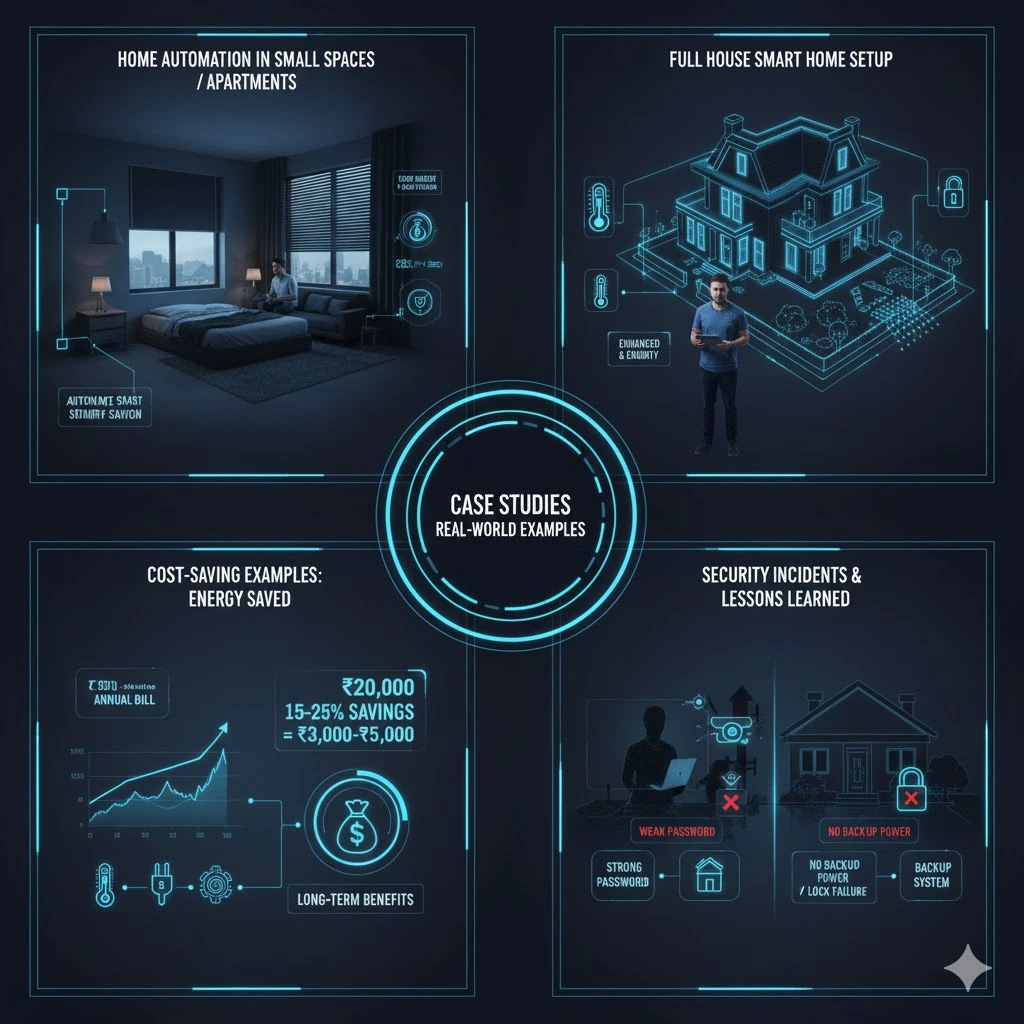
- Home Automation in Small Spaces / Apartments = Smart home devices are compact and multi functional, making them ideal for small flats or studio apartments. Smart home devices like smart lighting, motion sensors, and smart plugs not only save electricity but also make better use of every corner. Smart blinds can control sunlight and temperature, adding convenience and energy savings to a small home.
- FULL HOUSE SMART HOME SETUP = Smart technology and even more beneficial is in large spaces, allowing for simultaneous control of different floors of the rooms. A smart thermostat can reduce AC/heater usage. Smart locks and cameras increase security, and its smart irrigation system saves water for the home. Integrating the entire home improves time, energy, and safety.
- COST SAVING EXAMPLES: HOW MUCH ENERGY SAVED = Research in several countries has shown that installing smart home devices like a smart thermostat, smart plugs, and motion sensors can reduce a home’s electricity bill by 15 to 25%. For a family with an annual bill of ₹20,000, this can mean savings of approximately ₹3,000–₹5,000. Smart home devices not only save money but also provide significant long term benefits after the initial investment.
- SECURE INCIDENTS & LESSONS LEARNED = Smart devices are convenient, and ignoring security can increase risks. For example, how a stranger, after turning off the camera, spoke to his family because of a weak password. During a power outage the a smart lock failed because there was no backup. The lesson learned is to always keep a storage password and to have a 2FA and backup system.
9.1 Smart Homes & Financial Gains (Insurance and Property Value)
Homeowners with ‘smart’ home security systems received lower insurance premiums
Homes that featured intelligent automation were sold quicker and for lower prices
10. Smart Home Device Market & Trends
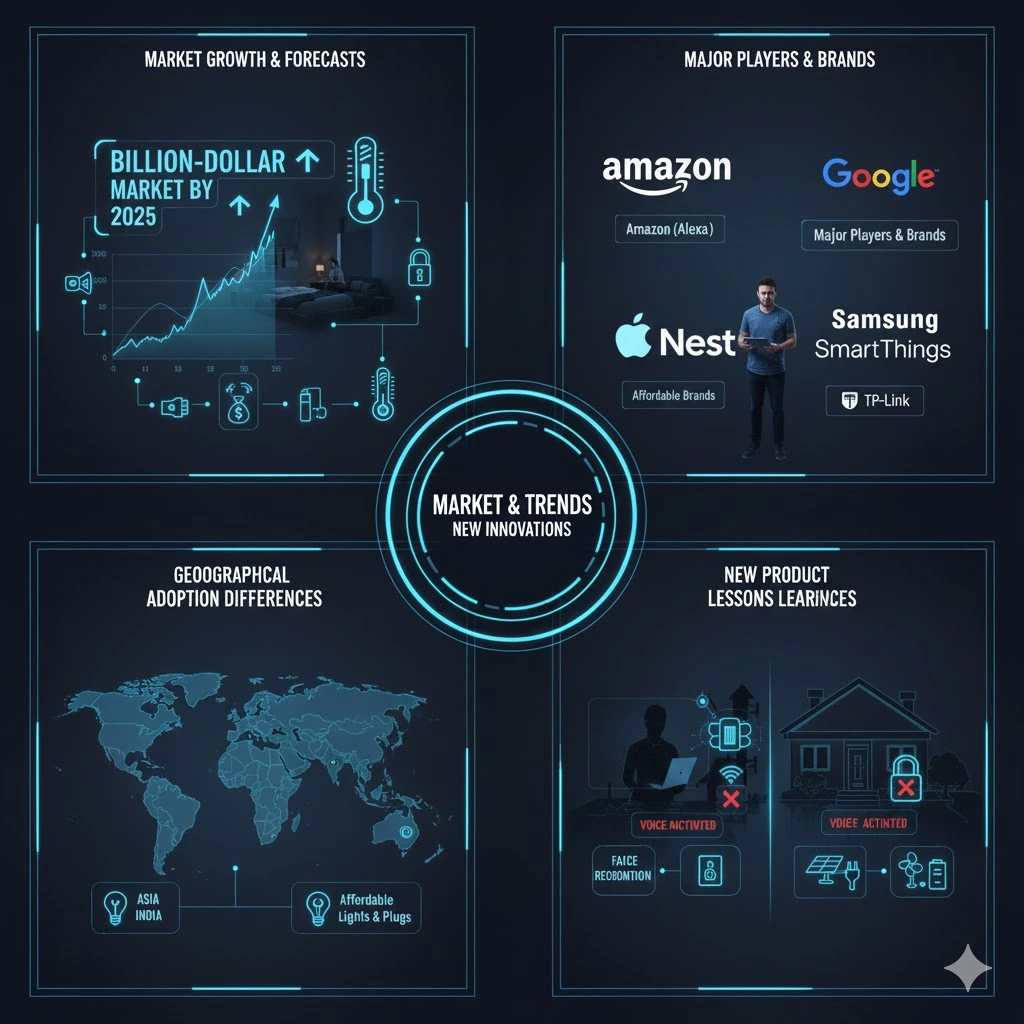
- Market Growth & Forecasts = The smart home market is growing rapidly. Research suggests it will reach a billion dollar market by 2025 due to people’s increasing need for safety, convenience, and energy efficiency. Smart speakers and cameras and thermostats and plugs are the most popular products.
- Major Players & Brands = The biggest names in the industry, such as Amazon (Alexa),and Google (Nest), and Apple (HomeKit), Samsung (SmartThings), and affordable brands like this Xiaomi/TP Link, are leading the way.
- Geographical Adoption Differences = Security and thermostats in the US and Europe While affordable smart lights and plugs are becoming more popular, they are becoming more popular.
- New product innovations are increasing. = With AI and IoT, smart devices are becoming more energy efficient, automated, and interconnected, such as cameras with phase regression, voice activated devices, and solar powered smart devices.
11. Comparison: Top Smart Home Devices Updated December 2025
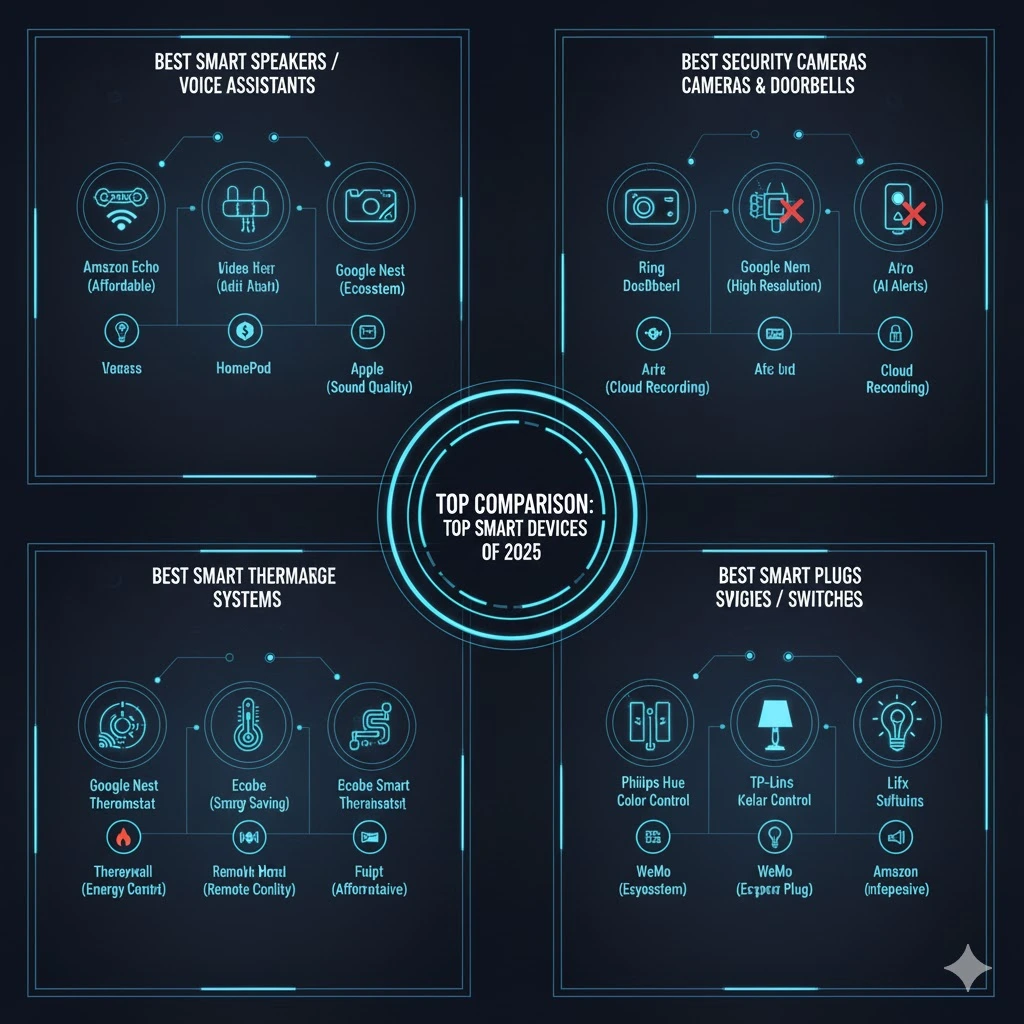
- Best Smart Speakers and Voice Assistants = The Amazon Echo and Google Nest Audio and Apple HomePod are the most popular in 2025. The Echo is affordable and Nest’s Google ecosystem is better and the HomePod has the best sound quality.
- Best Security Cameras & Doorbells = The Ring Video Doorbell (Amazon), Google Nest Cam, and Arlo Pro are great for security; they offer high resolution and AI alerts.
- The Best Smart Thermostats = The Google Nest Thermostat and Ecobee Smart Thermostat and Honeywell are top choices: they save energy and offer remote control.
- Best Smart Lighting Systems = Philips Hue, Lifx, and WYZW bulbs are great for lighting. Most commonly used are color controls, scheduling, and more.
- Best Smart Plugs/Switches = TP Link Kasa, WeMo, and Amazon smart plugs are considered fast and inexpensive. They can even the turn non smart devices into a smart devices.
12. DIY vs Professional Installation
- When a DIY Makes Sense = If the product is simple, like a smart bulb or speaker, DIY installation is ideal. It saves money and keeps the controls in your hands.
- When you Hire Professionals = For complex systems and like a complete home security network & CCTV and smart locks or HVAC controls and professional installation is best.
- Safety and The Legal Considerations = Some countries require a permit for electronic installation or camera setup. Professional hair removal is a surefire way to avoid both safety and legal issues.
13. Smart Home Maintenance & Troubleshooting
Running a smart home isn’t only about buying shiny new gadgets it’s also about keeping them in shape
- Software & Firmware Updates = Think of updates as “health check ups” for your devices. They don’t just add new features; they also fix bugs and seal security gaps. Turning on auto updates saves you from future headaches.
- Network & Connectivity Problems = Let’s be real if your WiFi is weak, half your smart devices will act like they’re on strike. Mesh WiFi systems, a central router placement, or even just rebooting once in a while can do wonders.
- Device Failures = Sometimes a smart bulb just stops responding, or a camera gives up. Resetting works… until it doesn’t. When replacement is the only option, it pays off to stick with brands that offer long term support.
- Security Over Time = Cybersecurity is never a one time job. Strong passwords, two factor authentication, and occasional “check ups” on which devices are connected are basic but very effective.
13.1 Common Smart Home Integration Issues and Fixes
Alexa routine not triggering devices
Incompatible cross brand data
App sync and pairing problems
Device Reset
High Level Security Upkeep
14. Future of Smart Home Devices
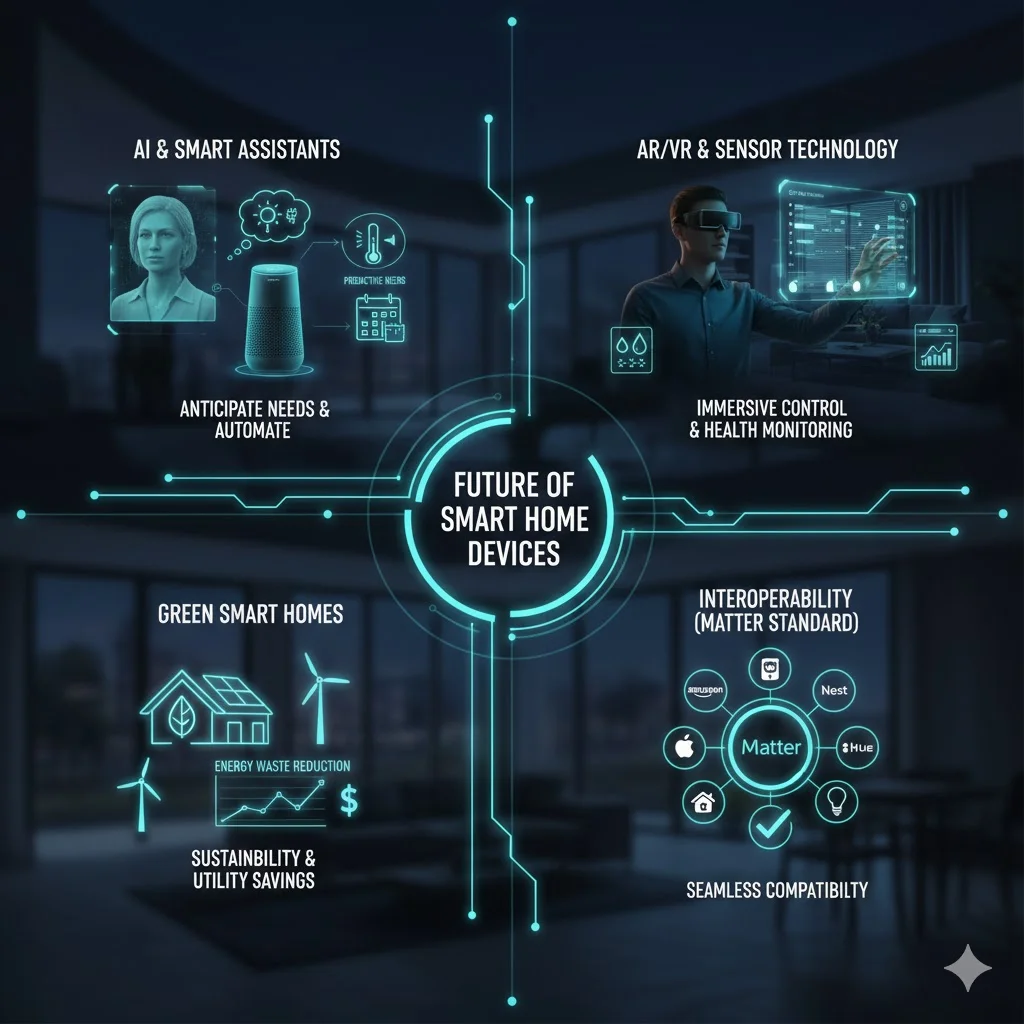
The smart home industry is moving at a crazy pace, and honestly, it looks like this out of a science fi film. What is coming here next:
- AI and smart assistants = The devices are getting better to understand us. Soon, they do not only respond to the orders they will guess the needs, such as adjusting the thermostat before you feel the cold.
- AR/VR & Sensor Technology = Pictures to walk in your living room and control everything through an Ar dashboard or sensors that quietly track air quality, water use, or even your sleep patterns. It is about the facility, but also about making homes healthy.
- Green Smart Homes = Stability is no longer a discussion. Smart devices are being designed to cut energy waste, low utility bill and reduce carbon footprints. A house that is smart and greenery is the direction we are giving the title.
- Interoperability = “Will this work be done with Alexa or Google on the day of asking?” Are disappearing. With standards such as Matter, it is finally becoming comfortable to mix equipment from various brands. This means low compatibility headache for users.
15. Environmental & Ethical Impacts
- Aspect of Privacy, Surveillance, and Ownership = Smart home devices procure large amounts of data from voice recordings, camera feeds, and usage behavior. If this data is handled poorly, privacy can potentially be compromised. Ethical issues arise when surveillance and data use by a company or other third parties is disclosed. Therefore, consumers should be educated to read and understand the policies and do business with companies that are the most transparent.
- Aspect of Energy Usage and Carbon Footprints = Many smart devices were created with energy saving purposes; the on going connectivity to the internet and data servers accounts for, and adds to, global carbon emissions. The challenge would be to create a smart system that promotes energy savings but does not increase the overall energy footprint.
- Aspect of Electronic Waste and Sustainability = Due to the quick turnover of new technology, almost any smart home device can become electronic waste, which compounds the e waste issue. Sustainability can be addressed through recycling programs and modular designs that allow parts to be replaced rather than replacing the entire unit. Consumers can also be encouraged to seek out eco certified smart home devices and products made from recyclable materials.
Conclusion
At the end of the day, the Smart houses are not after the science stories they are daily real realistics. Most of the necessary equipments: smarts, light, light, rhythm, thermostate and camera. How many are they safe? For example, the user user makes them the present and the present tense are very important. Do they work without the Internet? Some do the work, but the most part of the tool still relies on the YFI Fai. Is it worthy of money? Energy and Bachat devices are about 1–3 years. Others are more about life style. Can I mimper the brahm? Yes, it is easy to get interaction with the interaction.
Finding the Best Exercise to Lose Weight is not just about following trends but choosing what truly works for your body and lifestyle. From cardio and strength training to yoga and HIIT workouts, every fitness routine offers unique benefits. Consistency and balance are the real keys to sustainable results. Digital marketing agency Shark mondo helps promote fitness brands and health programs that guide people toward discovering their Best Exercise to Lose Weight effectively.