Table of Contents
Introduction
Starting a business has never been easy. Even many entrepreneurs struggle for years to built a stable company even in their own country. However, some leaders appear to sense opportunities where others perceive obstacles. Ratan Tata was one such leader. The plans he formulated, the steps he made can inspire any businessman. The journey to success is beset with numerous uncertainties and challenges, and so many entrepreneurs fight hard to get their businesses up and running. However, Ratan Tata stands out as a real industrial legend whose life exemplifies visionary leadership and strategic brilliance.
Ratan Tata’s success was not just about luck. It came from his clear thinking, strategic planning and ability to see opportunities where other’s saw risks His business judgement, planning, and innovative steps were guided by a profound grasp of the markets, risks, and opportunities. These decisions didn’t just grow his business empire but also changed the way other industries operate.
This blog is for all businesspeople who are confused or overburdened. Let’s explore some of Ratan Tata’s most amazing strategies that could propel your company forward and help you achieve success!
Ratan Tata was not just a man of work. He made new ways for business in India. When he got the top job in 1991, the Tata Group was many bits. It was not one big thing. Later, when he left, the group was worth $100B. It was big in the world. He had a “10-point plan.” It was not in a book. You could see it in what he did. He bought big firms. He made things in new, cheap ways. He stuck to what is good & right, even when the world was in bad times. His work helped make Tata strong & bold.
1. Champion of the Middle Class Dream
While many businessmen were attempting to make their products luxurious, Ratan Tata’s goal was to create reasonably priced goods that every household could use. He wanted all Indians to have access to high-quality goods at a lower cost than other brands so they could enhance their quality of life. Some of his most well-known inventions are
He introduced Tata Nano because he wanted middle-class individuals who were riding two-wheelers with their families to switch to a compact automobile that was less likely to be involved in accidents and cost the same as two-wheelers.
Ratan Tata’s initiative, Tata Swatch, was a water purifier that was only introduced to rural residents so that they could drink clean, purified water. In addition to products, Ratan Tata helped middle-class families during the 26/11 attack by treating all citizens as if they were members of his own family.
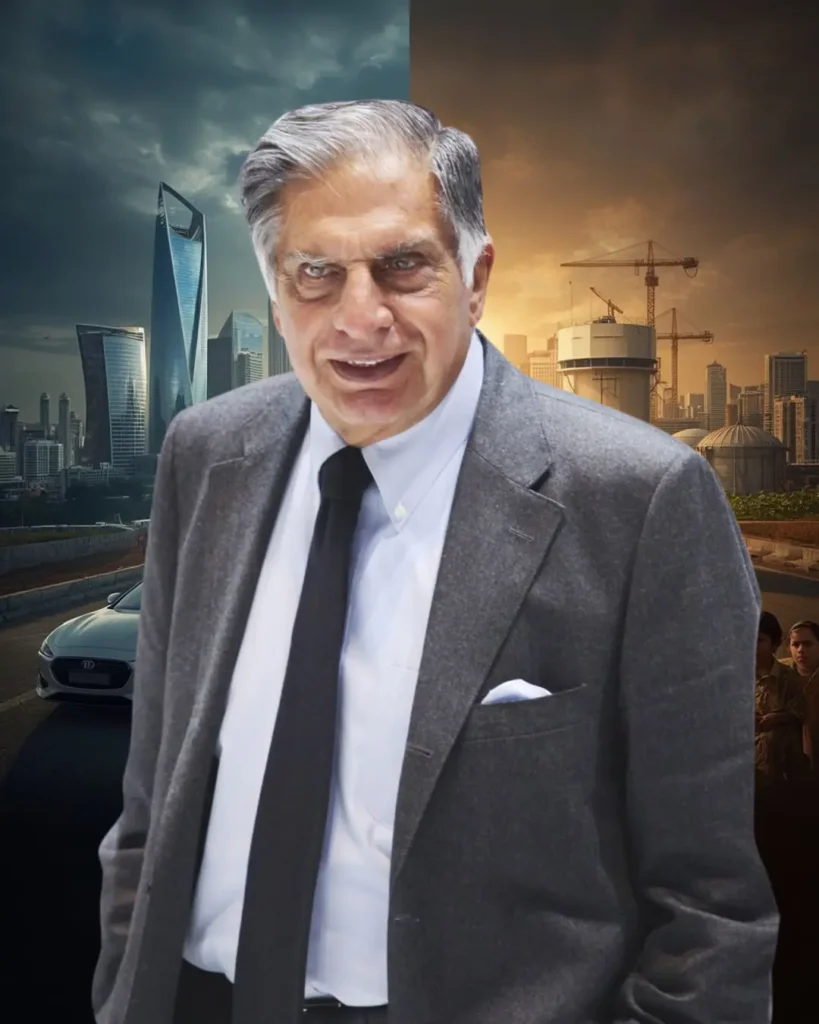
2. He Never Waited for the Green Signal, He Himself Became One
The Tata Group’s visionary leader, Ratan Tata, is renowned throughout the world for his abilities, the empire he built with his creative ideas, and the contemporary elements he worked on. He is an expert in his field because of his values, ambition, and lack of waiting for the appropriate moment. He thought that the only path to achievement was to work hard and not wait for it.
The Tata Group expanded under his direction and saw tremendous success. He never depended on the trends to shift in his favour; instead, he put in more effort and adapted his concepts and creations to fit the newest fashions. Whether by investing in companies like Ola and Paytm, or by introducing the Tata Nano, the most economical vehicle, or Land Rover, which has cutting-edge technology and opulent vehicles. He spearheaded an innovative strategy without fear.
He supported research and development within Tata firms and encouraged engineers and designers to explore new concepts. Long before electric vehicles gained popularity in India, he pioneered the technology. He encouraged the integration of digital technologies in conventional businesses in an effort to establish Tata Consultancy Services as a leader in IT. Ratan Tata held the straightforward belief that instead of waiting for the ideal chance, one should create it. Just by having faith in his inventions and taking calculated chances, he made every moment matter.
3. Ratan Tata Treated Employees as His Own Family
Ratan Tata has always treated his staff like family, even though he is a well-known and wealthy businessman. Ratan Tata stood apart by appreciating and respecting the thoughts and efforts of his employees, in contrast to many business leaders who frequently ignore the demands of their employees. His approach to leadership was centred on compassion, inclusivity, and inspiration.
He introduced several employee-friendly policies aimed at improving their well-being. For instance, he provided housing to employees at affordable prices and offered support during critical times, such as the COVID-19 pandemic. The Tata Group is also known for offering exceptional job security, making it one of the most desirable companies to work for in India.
One of the main factors contributing to Tata’s continuous growth and success is the strong employer-employee relationship, which is frequently absent in other organisations. Ratan Tata increased staff morale and performance by creating a safe and encouraging work environment, which ultimately benefited the entire company.
4. Ethics as a Competitive Edge
➣ In a world that measures success by how quickly and how large you become.
Ratan Tata showed that ideals may be more powerful than speed. Ratan Tata believed that long-term trust was more important than short-term earnings, while the majority of corporate leaders chose to prioritise profits above people. On multiple occasions, Tata Sons has backed out of extremely lucrative transactions simply because they violated the company’s code of ethics. Most companies would have prioritised profit, but Ratan Tata and his colleagues prioritised values. Tata never shied away from speaking up, even if it meant losing money, when there was a disagreement about transparency or concerns about unethical behaviour. This was a deliberate move to protect the brand’s reputation and long-term trust, not a weakness.
Even if it cost him time or profitable transactions, Ratan Tata always chose the right course. “If business means corruption, I don’t want to be in it,” he told his employees as he left an unlawful meeting, showing that he didn’t compromise on ethics.
The “People First” Crisis Plan
The large Taj Hotel in Mumbai was visited by armed men in 2008. Tata was in command. He didn’t consider lost money. He considered lives lost.
Tata visited each of the eighty employees who were injured or lost family members. He spent time in every house.
He ensured that street vendors in the area of the hotel received payment as well.
People began to trust Tata more as a result. It strengthened the organization, and many claim that this is his greatest gift to them.
5. Rebuilding with calm, not chaos
➣ The Tata Group was in chaos when Ratan Tata bought it in 1991. At the time, Tata was in charge of around 300 businesses, the majority of which operated independently and lacked top-level coordination. Combining all of these businesses under Tata Sons was one of Ratan Tata’s first significant actions.. This strategic decision helped implement a common vision and brought order to the group’s functioning.
In addition to merging the businesses, he made tough decisions by shutting down those that were unprofitable or unviable. By doing this, he reorganised the entire team to make them more adaptable and in line with the rapidly evolving global business landscape.
The Tata sons were not taking any risks for their business before Ratan Tata took over.However, he altered the organization’s perspective, and it began to take risks and foster an innovative culture. Under his direction, Tata began taking measured risks, launching new projects, and entering international markets.
Ratan Tata created a solid foundation and helped to clean up the internal mess. Through his efforts, the Tata Group was modernised and equipped to compete and thrive on the world stage.
6. TCS: The Silent Giant
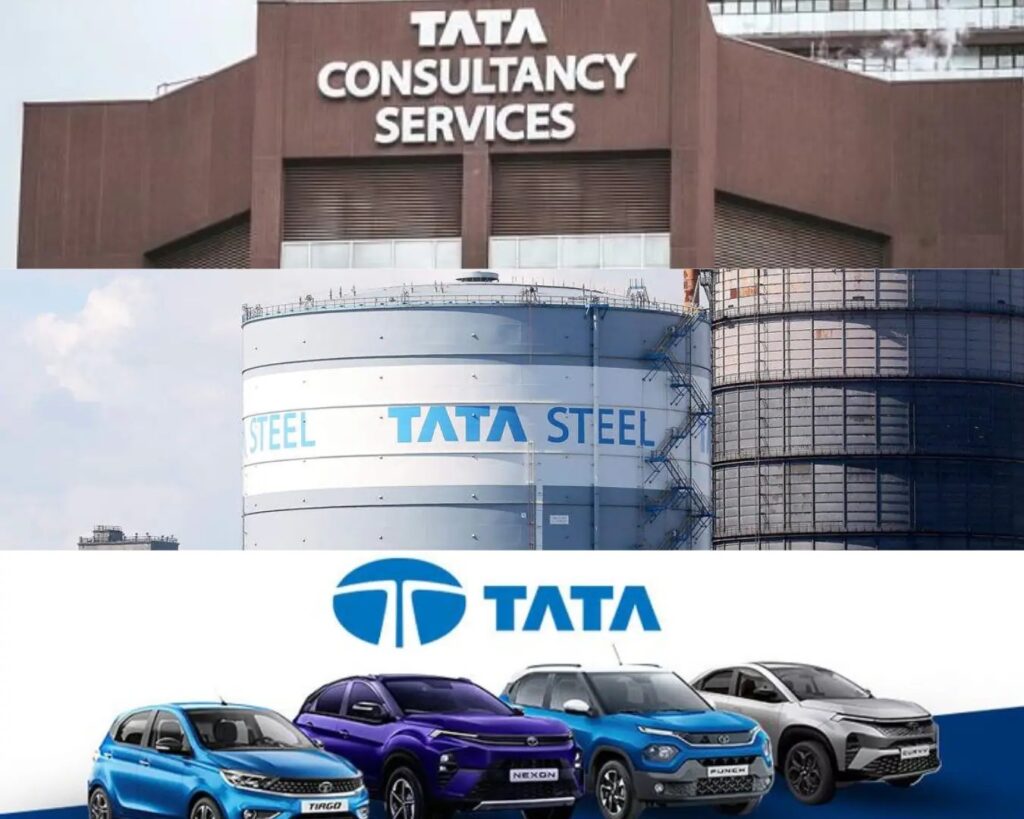
➣ In 1968, Tata Consultant Services (TCS) was established. It is among India’s biggest and oldest IT companies. TCS employs more than 6 lakh people and works in more than 50 countries. Building solid interpersonal relationships and a drive for success were TCS’s primary goals. When no one believed in technology, Ratan Tata began working in silence. TCS has achieved great success in this field by being at the forefront of its offerings.
IT solutions, cloud computing, artificial intelligence, consulting, banking, healthcare, retail, manufacturing, and transportation are just a few of the domains and technologies under which TCS works worldwide.
The company’s significant achievements include becoming the first to exceed 100 billion dollars in market capitalisation and ranking among the top three global IT service providers in the world based on revenue generation methods. In addition to being well-known for its end-user services, TCS is a global recruiter that offers professionals widespread employability. TCS is a focused company that strives for long-term growth across all industries while upholding its ethics and values of customer trust.
7. Ratan Tata: The Quiet Billionaire
➣ Ratan Tata is a role model for integrity in the business sector, believing in people rather than headlines. He demonstrated a great degree of humility and soft-spokenness throughout his career. He never showed off his power and remained grounded despite his boundless fortune. He travelled in economy class and stood in queue to avoid the spotlight. He personally visited the victims of the 26/11 Mumbai incident, provided them with financial support, and promised their children an education.
His primary concerns were social service and empathy.He made significant and influential contributions. He was well-known for his significant contributions to NGOs and charities. Tata Trusts for Children’s Education, Rural Development, Healthcare, Research Centers, and Social Justice receive 60% of Tata Sons’ profits.Numerous NGOs and cancer hospitals are supported by the Tata Group. During the COVID-19 pandemic, he personally donated. Building companies is just one aspect of Ratan Tata’s legacy; another is improving people’s lives. Generations after generation are still impacted by his commitment to the welfare of society.
8. Ratan Tata’s Faith in Indian Innovation
➣ Ratan Tata’s Trust in Indian Innovation
➣ Sir Ratan Tata was a visionary who supported the ‘Made in India’ campaign, whereas established businesspeople and entrepreneurs were only considering growing their companies. He sought to transform Tata into a brand that was really Indian in terms of origin, manufacture, and mission because he was persuaded of the enormous talent and potential that existed in India.
“Made in India” was seen by Sir Ratan Tata as both a slogan and an instrument for economic growth. He believed that by making items domestically, India could create a large number of jobs, reduce its dependency on foreign markets, and become a global hub for manufacturing. His commitment was motivated by the desire to advance the nation’s social and economic conditions.
Affordability was another major motivator for this effort. Ratan Tata saw that if the products were manufactured in India, the costs would be significantly reduced, making them affordable for the average person. His goal was to offer premium goods at affordable costs; this would only be feasible if India could produce its own goods.
The majority of Tata’s products, including Tata Motors, Tata Steel, Tata Advanced Systems, Tata Power, Tata Swachh, Tata Consumer Products, Tata Consultancy Services (TCS), and Tata Lifestyle Brands, are proudly produced in India today.
Ratan Tata’s “Made in India” philosophy still inspires and directs the country toward independence and inclusive development.
9. From Steel To Software, The Expansion of Tata
➣ Under Ratan Tata’s leadership, the Tata Group significantly expanded its global reach, transforming from a primarily Indian business empire to a daring global force. Diversification, innovation, and strengthening Tata’s position internationally through calculated acquisitions and natural growth were the cornerstones of his strategy.
Using Tata Consultancy Services (TCS) to enter the software and IT industry was one of his most bold choices. Ratan Tata made investments in skill and technology when others were unsure, turning TCS become one of the world’s top providers of IT services. However, they didn’t stop there.
He led Tata into automobiles (Tata Motors), telecommunications (Tata Indicom), hotels (Taj expansion), chemicals, and even retail. His decision to purchase international brands like Tetley Tea and Jaguar Land Rover demonstrated how Indian companies might lead the world.
10. The Global Vision
The $12 billion chance: Ratan Tata made two significant business decisions in India in 2007 and 2008. He received a Jaguar Land Rover and Corus Steel. It was deemed a dangerous risk by some. Tata, however, recognised the future. He didn’t purchase names alone. He gained knowledge and expertise in international trading. JLR generated the majority of Tata Motors’ revenue in a matter of years. This demonstrated that Indian executives are capable of reviving vintage British brands.
11. Legacy Built on Long-Term Vision, Not Short-Term Wins
➣ Tata’s leadership is an excellent illustration of building a legacy through long-term planning as opposed to pursuing quick success. As the head of the Tata Group, he transformed the Indian industry by making decisions that prioritised values, sustainable growth, and global reputation. Instead of focusing on immediate profits, he made audacious investments, like buying foreign businesses like Jaguar Land Rover, which first raised questions but proved to be fantastic.
Ratan Tata saw India as a significant player in the economy, therefore he founded companies that balanced purpose and profitability. His goals were always to rise, inspire, and innovate. From the launch of the Tata Nano to enabling customers to invest in social welfare through Tata Trusts, this was evident. All of his ambitious objectives, whether they were in business, philanthropy, or innovation, were guided by patience, ethics, and an enduring mindset. Ratan Tata not only created an empire but also values, trust, and a path forward for future generations.
Similarly, Sharkmondo helps businesses grow in the digital era with expert SEO, social media marketing, Google Ads, and content creation. Since 2014, it has supported over 200 brands in building visibility, trust, and long-term success online.
12. The Startup Mentor (Modern Era)
Ratan Tata: A Guide for New India
Ratan Tata became older. He made the decision to assist young people in beginning new careers. He was aware that India will advance with technology and new applications. He had a scheme. He invested money in the individual as well as the work.
Ola, Paytm, Urban Co., and Snapdeal were among the new work groups he assisted. He witnessed their growth much before most others did.
His wish: Encourage children to create new things. He helped and showed concern. He understood that morality transcends material wealth. For new work, the group served as a solid home. Youngsters felt secure. An elderly man stood beside them. For him, morality was more important than money.
13. The Growth Under Ratan Tata
| Metric | 1991 (When he started) | 2012 (When he retired) |
| Total Revenue | ₹10,000 Crores | ₹4,75,000 Crores ($100B+) |
| Global Presence | Primarily India | Operations in 100+ Countries |
| Key Acquisitions | 0 | Tetley, Corus, Jaguar Land Rover |
| Philanthropy | Standard CSR | 66% of profits to Tata Trusts |
Conclusion
Ratan Tata’s legacy is more than just history; it serves as a model for all aspirants with moral principles and a clear vision. His decisions demonstrate that strategy, bravery, and integrity are more important for success than taking cheap routes. Sometimes the quiet voice leaves the greatest legacy, therefore return to his story whenever you are lost in the chaos of competition.
In addition to building a commercial empire, Ratan Tata left behind a legacy of principles, trust, and inspiration for future generations. His actions were intended to build the country rather than just succeed in the market. Therefore, whether you are a start-up or a scale-up, remember that integrity and purpose are the foundations of long-term success.
Ratan Tata left us with a lot. “Business is not just for cash,” he taught. It’s also to assist. He created the inexpensive Nano for everyone. He also acquired large companies like Corus. He enjoyed helping everyone and having high dreams. He has a firm yet kind approach.
The Tata Group is now visible. It is significant and large. It demonstrates what one man can accomplish if he takes action, puts in a lot of effort, and never gives up. He took decisions, stuck to them, and put in a lot of effort to make things right. We can still view and consider his work.
FAQ Section
FAQs about Ratan Tata’s Lead:
1. What was Ratan Tata’s top deal?
He bought Corus Steel. It cost $12 billion. He got Jaguar Land Rover, too. That cost $2.3 billion.
2. How did Ratan Tata change the Tata Group?
He made all the big parts work as one. He moved the group from split firms to a strong world brand.
3. What is Ratan Tata’s way to invest?
He put the group’s good first. He pushed for fair ways & slow, safe growth. He helped new & smart firms. He liked to back fresh, bold ideas.